Blog
What Are the Benefits of Using Nitrogen in Car Tyres?

Updated October 2026.
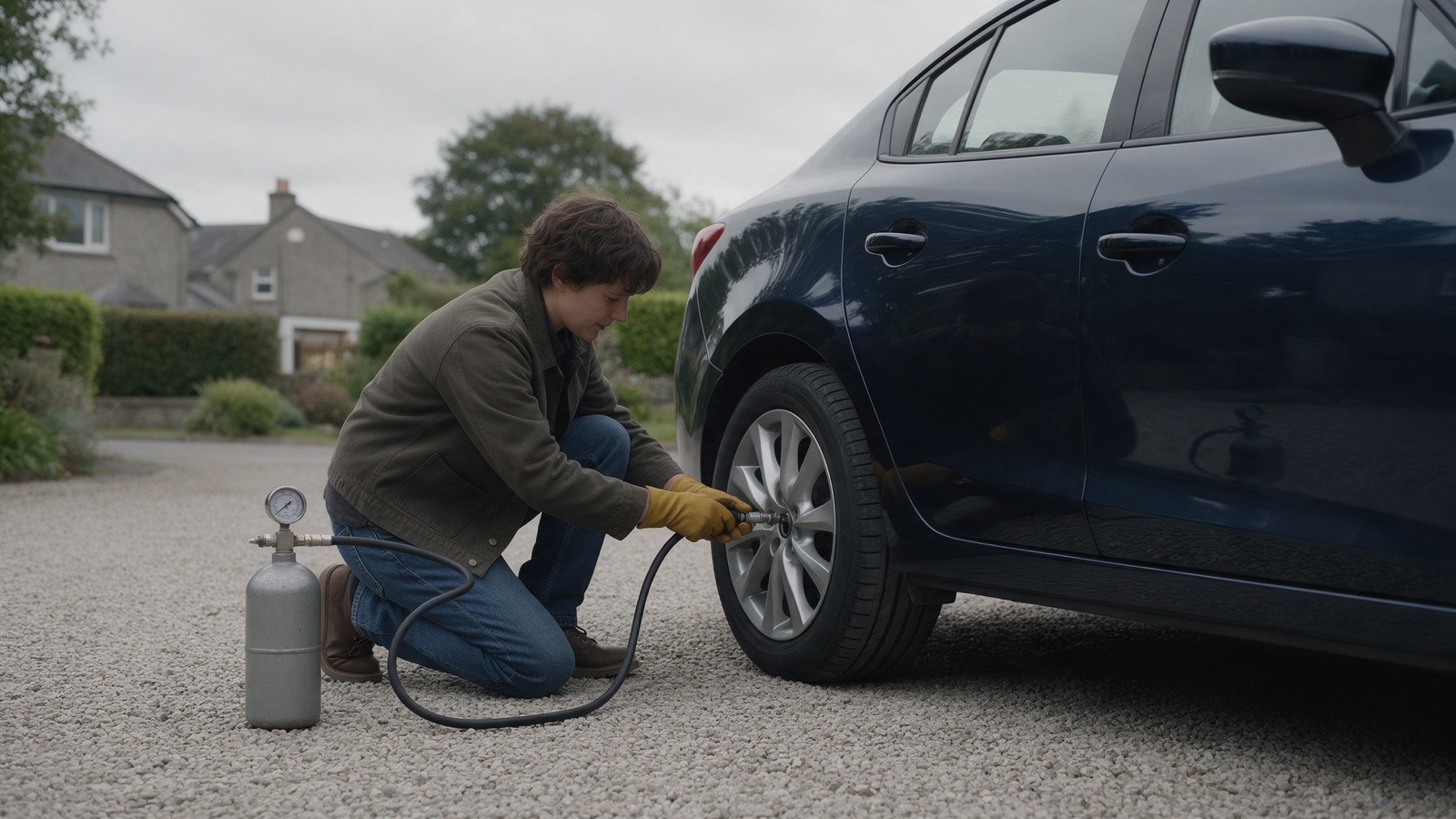
Nitrogen-filled tyres used to be a motorsport and aviation thing. Now plenty of tyre centres offer it, and you can buy a small nitrogen bottle and do it yourself on the driveway. The honest short answer: nitrogen holds pressure for longer and keeps the inside of the tyre drier than ordinary air, which helps with fuel economy, tyre life and consistency. For most road cars the gain is real but modest. Here is what it does, what it does not do, and how to inflate your own tyres with it.
First, a quick word on tyre pressure
Tyre pressure matters more than which gas is inside. Under-inflated tyres wear faster, steer heavier and use more fuel; over-inflated tyres grip less. Check pressures when the tyres are cold, set them to the figure in your handbook or door-jamb sticker, and check at least once a month and before a long trip. Every tyre loses pressure over time. The gas you use only changes how quickly.
The benefits of nitrogen over air
| Nitrogen | Ordinary compressed air | |
|---|---|---|
| Pressure loss | Slower. Nitrogen molecules seep through tyre rubber more slowly than the oxygen in air, so pressure holds for longer between checks. | Faster. Oxygen permeates the rubber more readily. |
| Moisture | Dry. Bottled nitrogen contains no water vapour, so pressure is more stable as the tyre heats and cools. | Compressor air often carries moisture, which expands and contracts with temperature. |
| Corrosion and ageing | Less oxygen and moisture inside means less corrosion on steel wheel rims and less oxidation of the tyre’s inner liner. | Oxygen and moisture slowly attack the rim and liner from the inside. |
| Cost | A small bottle or a tyre-centre fill costs more than free forecourt air. | Usually free or a few pence. |
Three benefits follow from that table. Tyres that hold pressure longer stay closer to their correct pressure between checks, which is where the fuel-economy and even-wear gains come from. Dry gas gives a more predictable pressure as the tyre warms up, which is why racing teams care. And a drier, lower-oxygen tyre cavity is kinder to steel wheels and the rubber liner over the years.
The honest limits
Air is already about 78% nitrogen, so you are not swapping one gas for something exotic; you are removing the oxygen and the water. For a road car checked monthly, the saving in top-ups is modest, and nitrogen costs more than forecourt air. If a nitrogen-filled tyre is low and all you have is an air line, top it up with air: it is safe, you simply dilute the nitrogen. Nitrogen does not fix a leak, a slow puncture or a tyre that is past its best, and it does not change your handbook pressures.
Where it pays off is consistency: track days, caravans and motorhomes that sit for weeks, classic cars in storage, and anyone who wants pressures to stay put between checks.
Where nitrogen really earns its place: motorsport and aircraft
Racing teams run nitrogen because tyre pressure changes with temperature and a dry, consistent gas makes those changes predictable lap after lap. Aircraft tyres are filled with nitrogen because it is inert and dry: no moisture to freeze at altitude and no oxygen to feed a fire in an overheated brake assembly. Shock absorbers and some suspension units are nitrogen-charged for the same reason.
How to inflate your own tyres with nitrogen
You do not need a tyre centre. A small nitrogen bottle, a suitable regulator or inflator and a pressure gauge are enough for a car, a caravan or a set of track wheels.
- Let the tyre down most of the way, then fill with nitrogen. One purge and refill removes most of the air; a second gets the cavity close to pure nitrogen. Topping up a full tyre of air with nitrogen does very little.
- Set the pressure cold, to the handbook figure, using a gauge you trust.
- Re-check after a few days. Pressure should hold noticeably better than it did on air.
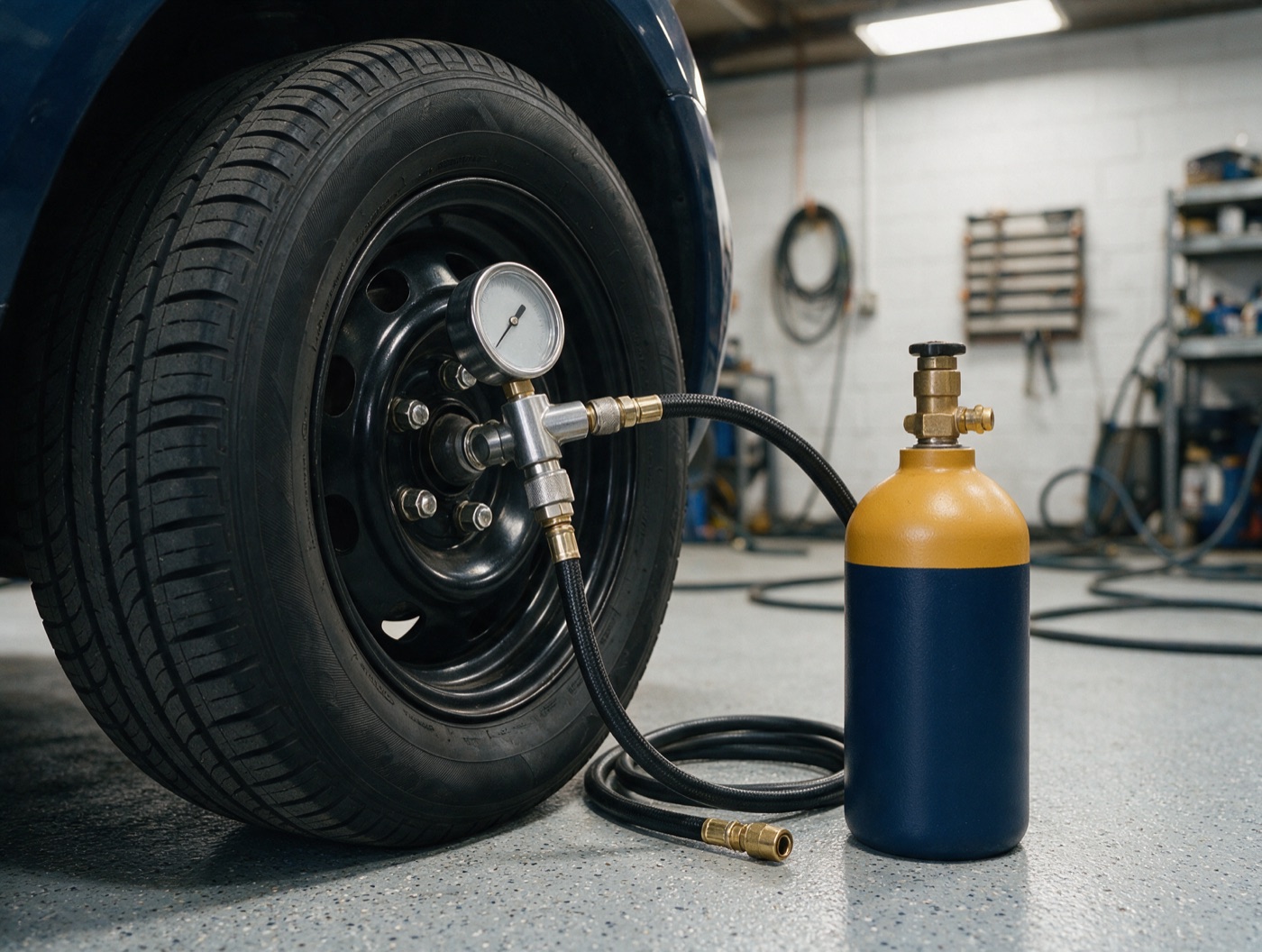
For the bottle, Bottle Gases supplies nitrogen for tyre inflation in two formats:
| Cylinder | Format | Best for |
|---|---|---|
| 0.95L disposable (M10 valve) | Single-use, small enough for the boot | Occasional top-ups, one car, caravan or motorhome |
| 2.2L disposable (M10 valve) | Single-use, more gas | A full purge-and-fill of a car’s tyres, track-day spares |
| 9.4L refillable (137 bar) | Swap when empty, no monthly rental | Home workshop, regular track days, several vehicles |
| 20L refillable (200 bar) | Swap when empty, no monthly rental | Garages and race teams filling tyres and shocks every week |
The disposables take a regulator or inflator with an M10 cylinder fitting. The refillables take a standard nitrogen regulator; Bottle Gases stocks a single-stage twin-gauge nitrogen regulator for them. Never connect a cylinder directly to a tyre valve without a regulator.
Using nitrogen safely
Nitrogen is non-flammable and non-toxic, but it displaces oxygen, so change and store cylinders in a ventilated space, upright and away from heat. Use a regulator rated for the cylinder pressure, follow the cylinder label and safety data sheet, and never exceed the tyre maker’s maximum pressure.
Where to buy
See the full nitrogen for tyres range, or go straight to the 0.95L disposable, the 2.2L disposable, or the 9.4L and 20L refillables. Delivered across the UK; contact the team if you are unsure which fitting your inflator takes.
Frequently asked questions
Is nitrogen in car tyres worth it?
For most road cars the benefit is modest but real: pressure holds for longer and stays more stable with temperature, which helps fuel economy and even wear. It pays off most for vehicles that sit for weeks, caravans and motorhomes, classic cars in storage, and track-day use.
Can I top up nitrogen-filled tyres with normal air?
Yes. It is safe; you simply dilute the nitrogen with air. Purge and refill with nitrogen again when convenient if you want the full benefit back.
Why do racing cars and aircraft use nitrogen in their tyres?
Because it is dry and inert. Pressure changes with temperature are more predictable without water vapour inside, and there is no oxygen to feed a fire or corrode the wheel.
Can I fill my own tyres with nitrogen at home?
Yes. A small nitrogen bottle with a suitable regulator or inflator and a pressure gauge is all you need. Let the tyre down, fill with nitrogen, set the cold pressure to the handbook figure, and repeat the purge once for a near-pure fill.
Which nitrogen bottle do I need for tyres?
A 0.95L or 2.2L disposable (M10 valve) covers one car, a caravan or occasional top-ups. A 9.4L or 20L refillable, swapped when empty with no monthly rental, suits a home workshop, regular track days or a garage.