Blog
Argon vs CO2: Which Is Better for Your MIG Gas Bottle Setup?

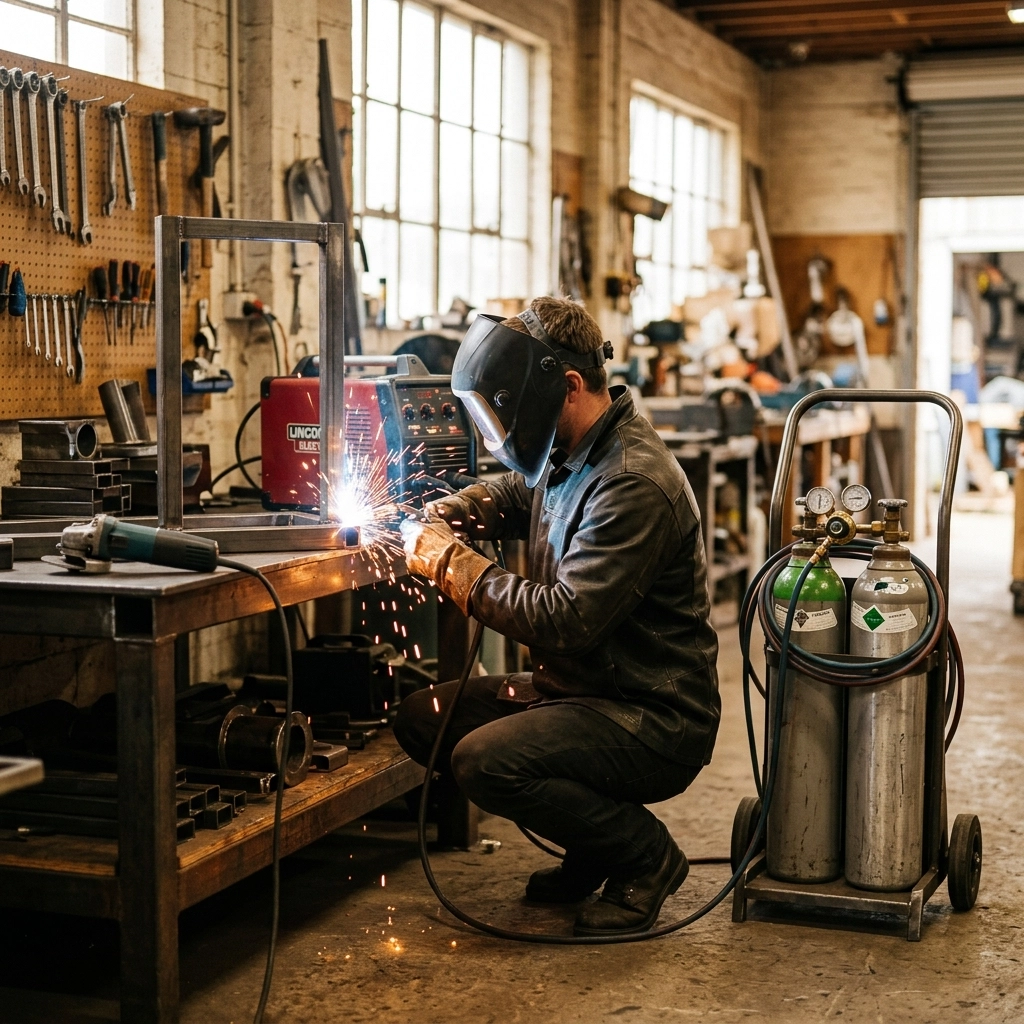
Have you ever stood in your workshop, welder in hand, staring at a row of gas cylinders and wondered if you’re actually using the right stuff? Does it really matter if you grab a bottle of pure CO2 versus a fancy Argon mix? Will your weld hold up, or are you just asking for an afternoon of grinding away messy spatter?
Choosing the right gas for your MIG (Metal Inert Gas) welding setup can feel like a bit of a dark art. If you’re a hobbyist working in your garage, you want something affordable and easy to use. If you’re a professional fabricator, you need speed, penetration, and a finish that doesn’t require hours of post-weld cleanup.
At Bottle Gases, we know that the "best" gas isn't always the most expensive one, it’s the one that fits your specific project and your budget. Let’s dive into the great Argon vs. CO2 debate and find out which one belongs in your workshop.
Why Do We Even Need Shielding Gas?
Before we pit these two against each other, let’s quickly talk about why we need them at all. Think of shielding gas as a protective invisible "bubble" around your weld pool. Without it, the oxygen and nitrogen in the air would jump into the molten metal, causing porosity (those annoying little holes that make your weld look like Swiss cheese) and making the joint incredibly weak.
In the world of MIG welding, your choice of gas dictates how the arc behaves, how deep the heat goes into the metal, and how much "mess" (spatter) you’ll have to deal with afterward.
The Budget Workhorse: 100% CO2
Is cost your biggest concern? If so, pure CO2 is likely calling your name. It’s the only reactive gas that can be used on its own for MIG welding without an inert gas like Argon mixed in.
The Benefits of Pure CO2
Pure CO2 is the "old reliable" of the welding world. It’s widely available and, most importantly, it’s the most cost-effective option on the market. Because it provides very deep penetration, it’s a fantastic choice for welding thick heavy-duty steel plates where you need to ensure the joint is solid all the way through.
The Trade-offs
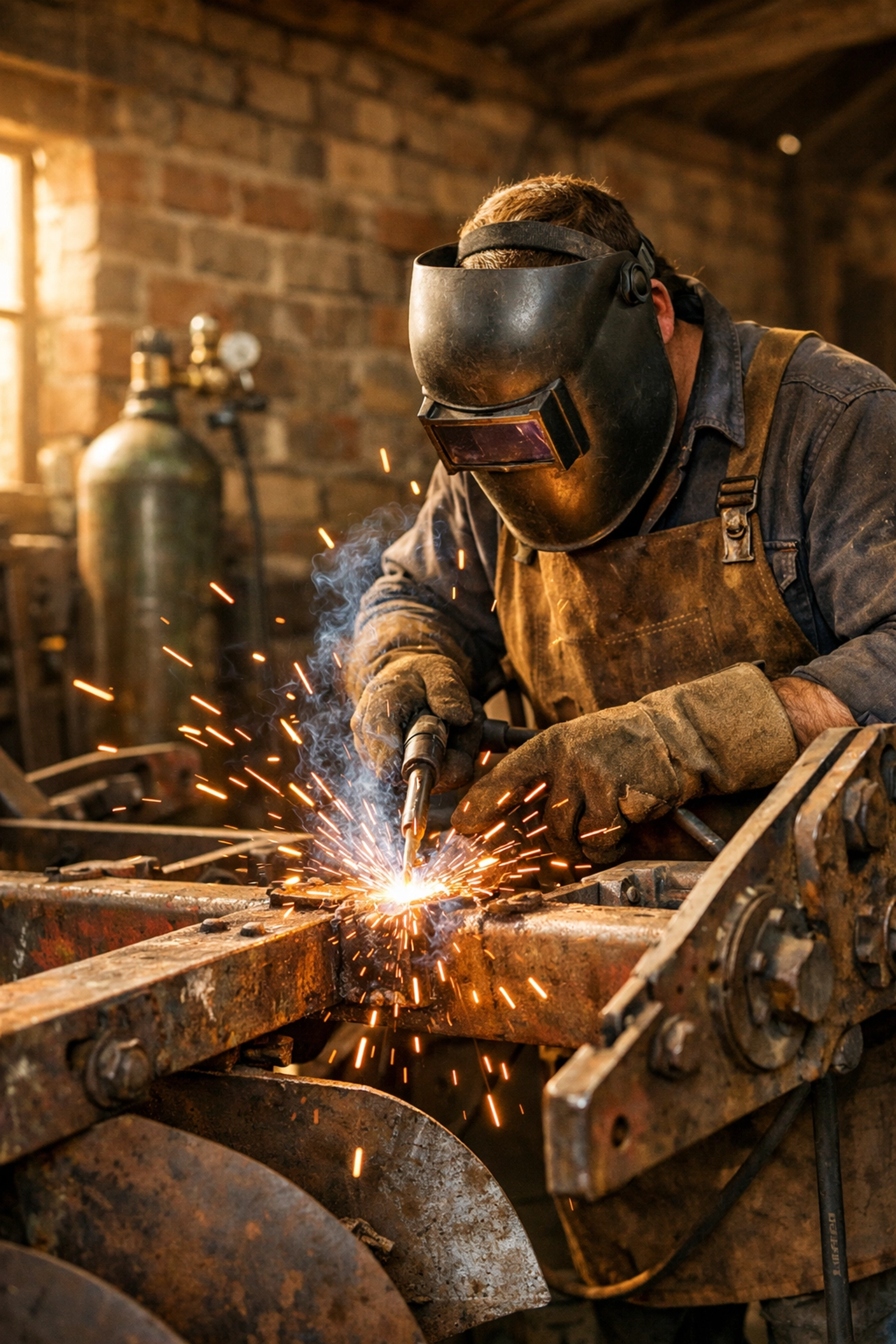
However, there’s no such thing as a free lunch. CO2 creates a "harsh" arc. It’s a bit like trying to drive a tractor down a motorway, it gets you there, but it’s not a smooth ride. You’ll notice significantly more spatter (molten metal droplets) flying around. This means you’ll spend more time with a chisel or a grinder cleaning up your workpiece after you’ve finished welding. It’s also prone to "blow-through" on very thin sheet metal because the arc is so hot and concentrated.
If you are working on a farm gate or a heavy structural beam where looks don't matter as much as strength and cost, CO2 bottles are a great way to go.
The Smooth Operator: Argon/CO2 Blends
What if you want a weld that looks like it was done by a robot, with almost no cleanup? That’s where the blends come in. Most UK welders opt for a mix, typically 75% Argon and 25% CO2 (often called C25) or a 95% Argon and 5% CO2 mix for thinner materials.
Why Blends are the Professional’s Choice
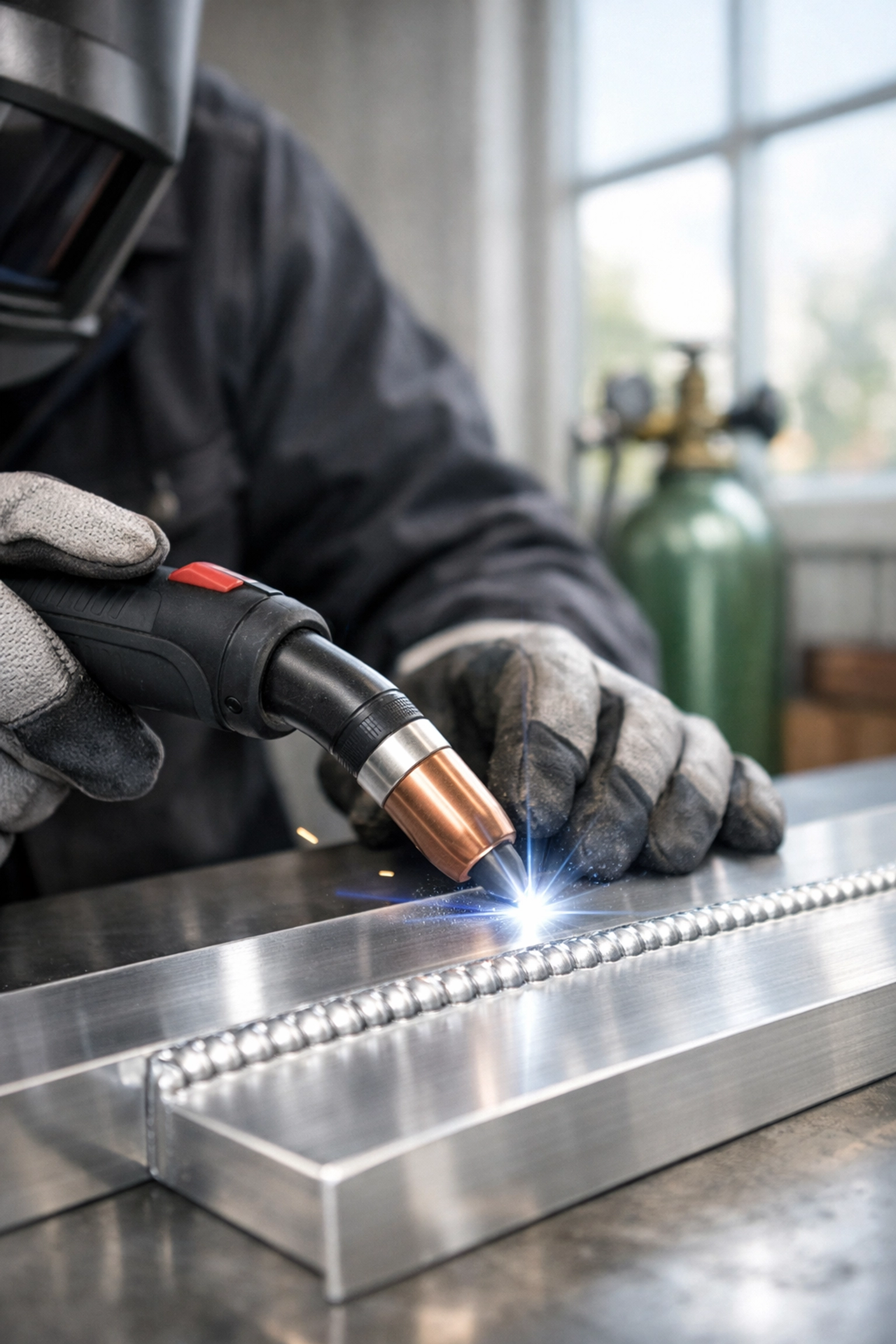
Mixing Argon with CO2 gives you the best of both worlds. The Argon stabilizes the arc, making it much smoother and easier to control. It reduces spatter significantly, leaving you with a clean, aesthetically pleasing weld bead.
Think of it like upgrading from a rough-riding tractor to a smooth saloon car. The 25% CO2 in the mix still provides enough heat for good penetration, but the Argon keeps the "splatter" under control. This makes it the "go-to" for automotive repair, general fabrication, and any project where the visual finish is important.
The Cost Factor
Yes, Argon blends are more expensive than pure CO2. However, many of our customers find that the extra cost of the gas is easily offset by the time saved on grinding and cleaning. If you value your time (and your sanity), a MIG welding gas bottle with an Argon mix is usually the smarter investment.
Wait, Can I Use 100% Argon for MIG?
This is a common question, and the answer is: It depends on what you're welding.
If you are welding mild steel, 100% Argon is actually a bad choice. It doesn't provide enough heat or "wetting" action, resulting in a weld that sits on top of the metal like a bead of cold wax rather than penetrating into it.
However, if you are MIG welding Aluminum, then 100% Argon is exactly what you need. Aluminum is a different beast entirely and requires an inert shield to prevent oxidation. For those doing high-end precision work or switching between MIG and TIG, you might also look into our TIG welding gas options, which often utilize pure Argon.
A Quick Comparison Table
| Feature | 100% CO2 | Argon/CO2 Mix (C25) | Pure Argon |
|---|---|---|---|
| Cost | Lowest | Medium | Higher |
| Spatter Level | High | Very Low | Low |
| Penetration | Very Deep | Good/Balanced | Shallow (on steel) |
| Arc Stability | Harsh/Violent | Smooth/Stable | Very Stable |
| Best For | Thick Steel, Budget Projects | General Fab, Automotive | Aluminum MIG / TIG |
Scenario: Which One Should You Choose?
Let’s look at a few real-world examples to see which gas bottle setup makes sense for you.
The "Weekend Warrior" Restoring a Classic Car
You’re in your garage working on a 1970s Mini. The bodywork is thin, and you don’t want to blow holes in the wings. You also don't want to spend four hours grinding in a cramped space.
- The Choice: Argon/CO2 Mix (95/5 or 75/25). The smooth arc will help you tackle thin sheet metal without the mess.
The Farmer Fixing a Broken Plough
It’s raining, the plough is snapped, and it needs to be back in the field by morning. The steel is 10mm thick, and you don't care if the weld is pretty: you just need it to hold.
- The Choice: 100% CO2. It’s cheap, penetrates deep into the thick steel, and the extra spatter doesn't matter on a piece of farm machinery.
The Small Fabrication Shop
You’re making bespoke steel furniture for a local café. The welds will be visible, and the customer expects a high-end finish.
- The Choice: Argon/CO2 Mix (75/25). You’ll save money on labor costs because your team won't be wasting time cleaning up spatter, and the finish will be top-tier.
The "No Rental" Revolution: Why Bottle Gases is Different
If you’ve dealt with the "big" industrial gas companies before, you know the headache: the dreaded monthly rental fee. It feels like paying for a car you only drive once a month. You look at the invoice and realize you’ve paid £200 in "rent" for a bottle that’s still half full.
At Bottle Gases, we do things differently. We offer a no recurring rental fee model. You buy the gas, pay a one-off deposit for the bottle, and that’s it. When you’re empty, you just swap it for a full one and pay only for the gas. It’s like owning your car instead of leasing it: you have the freedom to use it whenever you want without the clock ticking on your wallet.
Whether you need a 10L, 20L, or even a 50L cylinder, we provide competitive pricing and nationwide delivery across the UK. We handle the logistics so you can focus on the welding.
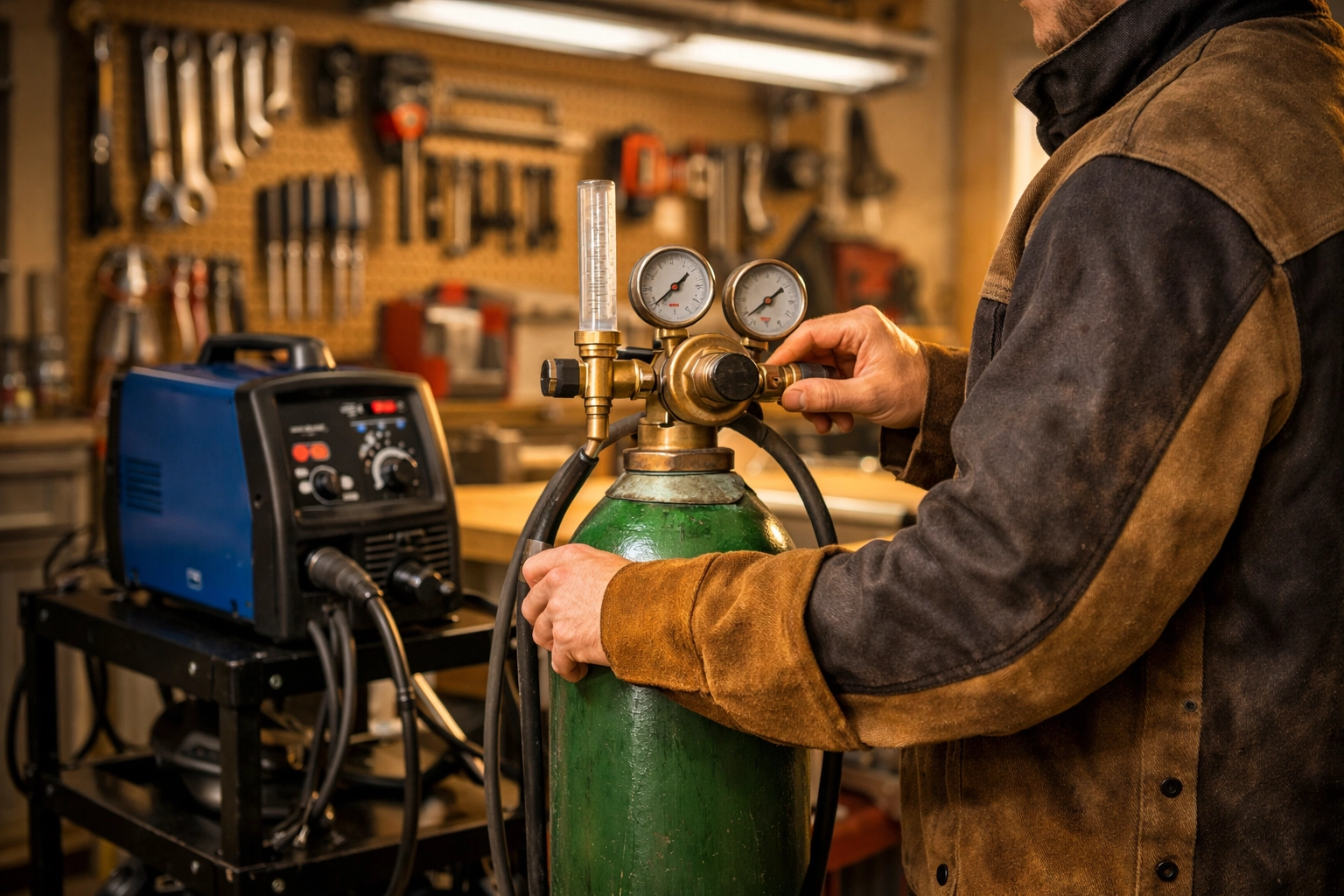
Essential Equipment for Your Gas Setup
Once you’ve picked your gas, you need to make sure your delivery system is up to scratch. A gas bottle is only as good as the regulator attached to it.
If you are switching from a disposable canister system to a refillable cylinder, you will need a proper industrial regulator. These allow you to precisely control the flow rate (measured in Liters per minute). For most MIG welding, a flow rate of 10-15 L/min is the "sweet spot." Setting it too high just wastes gas; setting it too low allows the air to contaminate your weld.
You can find everything you need in our Gas Regulators & Equipment section to ensure your setup is safe and efficient.
Safety First: Storing Your Cylinders
No matter which gas you choose, safety is paramount. Gas cylinders are heavy (some of our 50L bottles can weigh over 70kg!) and under high pressure.
- Store Upright: Always keep your bottles vertical and secured with a chain or strap.
- Ventilation: Ensure your welding area is well-ventilated. While Argon and CO2 aren't toxic, they can displace oxygen in confined spaces.
- Check for Leaks: Use a simple soapy water spray on your connections to check for bubbles. A small leak can empty an expensive bottle overnight.
For more tips on staying safe, check out our Welding Gas Safety Guide.
Final Thoughts: Which Is Better?
So, back to the original question: Argon or CO2?
If you want the absolute best results with the least amount of effort, the Argon/CO2 mix is the undisputed king for MIG welding steel. It’s a breath of fresh air for anyone tired of cleaning up spatter and struggling with a wild arc.
However, if you’re on a tight budget and working on heavy, non-critical projects, 100% CO2 is a capable and powerful ally.
At the end of the day, having the right gas feels like a lifeline when you’re mid-project. It gives you the confidence that your welds are strong, your finish is clean, and your wallet isn't being drained by hidden rental fees.
Ready to upgrade your setup? Explore our full range of MIG welding gas bottles today and get nationwide delivery straight to your workshop door. Whether you're a pro or just starting out, we've got the gas to keep your projects moving.