Blog
CO2 vs Argon Mix: Which Is Better For Your MIG Gas Bottle?

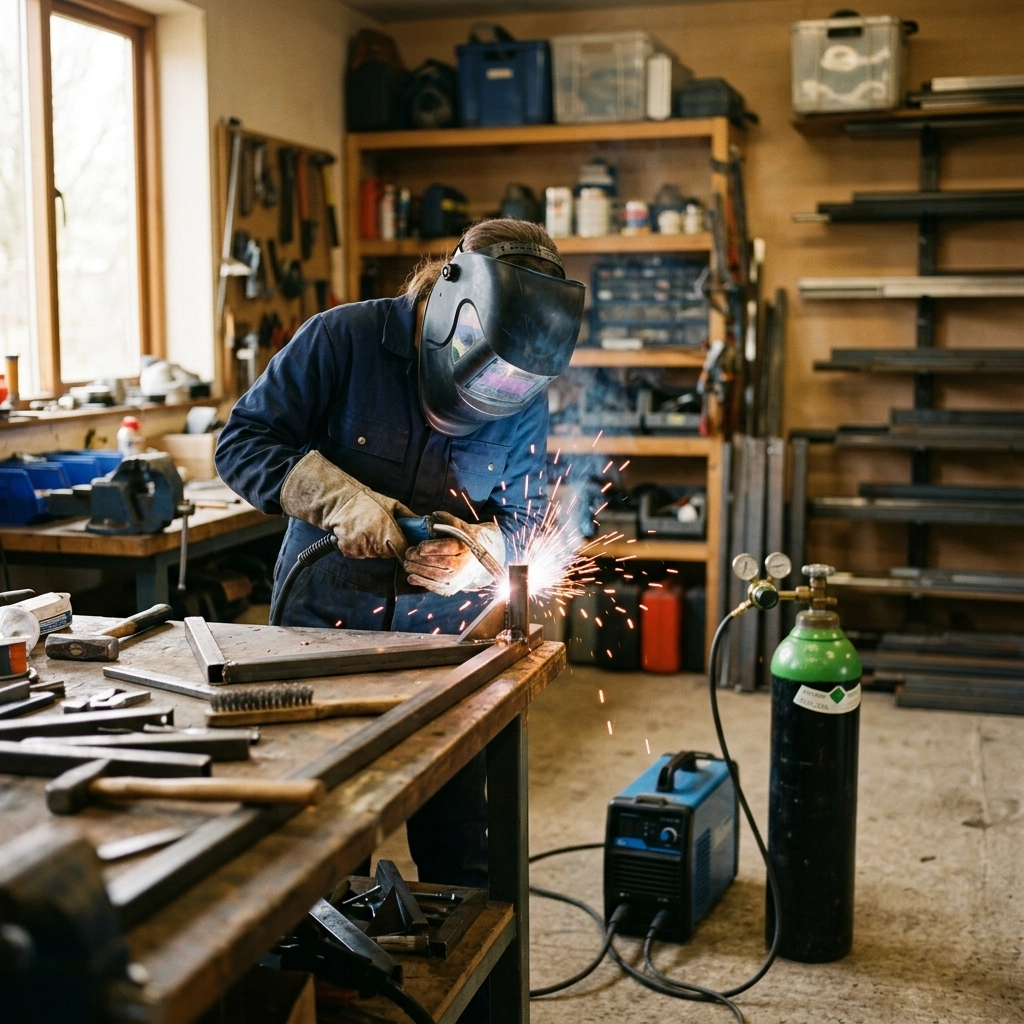
Have you ever spent hours prepping a piece of metal, getting your settings just right, only to pull the trigger and watch your weld spit, pop, and leave behind a trail of "bird poop" spatter? It’s incredibly frustrating, isn't it? You start questioning your technique, your wire speed, or even your eyesight. But more often than not, the culprit isn't you, it’s what’s inside your gas bottle.
Choosing between pure CO2 and an Argon mix is one of the most debated topics in the welding community. Is the cost saving of CO2 worth the extra cleanup? Does an Argon mix really make that much of a difference for a hobbyist? Whether you are a professional fabricator or a DIY enthusiast working in your garage, picking the right MIG welding gas bottle is the difference between a weld you’re proud of and one you want to hide under a coat of thick paint.
At Bottle Gases, we see this dilemma every day. Steve, our Director, always says that gas is like the "invisible tool" in your workshop. You can’t see it while it’s working, but you certainly see the results when it’s gone. Let’s dive into the details so you can decide which gas deserves a spot on your welding trolley.
Why Do You Need Gas Anyway? (The Invisible Shield)
Before we pit these two against each other, why do we even use gas for MIG welding? Think of your shielding gas as a literal protective bubble. When you strike an arc, the metal becomes molten and incredibly reactive. If oxygen or nitrogen from the air gets into that molten pool, it creates porosity, basically tiny bubbles that make your weld weak and brittle.
The gas flows out of your torch and pushes the air away, allowing the metal to cool in a pure environment. Without it, your weld would look like a piece of Aero chocolate, and it would have about the same structural integrity.
Pure CO2: The Rugged Workhorse
If you’re looking for the most bang for your buck, pure CO2 is the traditional champion. It is the only "reactive" gas that can be used on its own for MIG welding without being mixed with an inert gas like Argon.
The Benefits of CO2
For many, the biggest draw is the price. CO2 is significantly cheaper than Argon-based mixes. If you are running a high-volume shop or you’re on a tight budget, the savings over a year can be substantial.
But it’s not just about the pennies. CO2 provides very deep penetration. If you are welding thick structural steel: think farm gates, heavy machinery, or thick plates: CO2 gets in there deep and ensures a strong bond. It’s also quite forgiving if the metal isn't perfectly clean, as the heat and reactivity can help bite through light surface contaminants.
The Trade-offs
The "catch" with pure CO2 is the arc quality. It tends to be a bit "harsh." Because CO2 is a reactive gas, it creates a lot of spatter: those little balls of molten metal that stick to everything except the weld. You’ll spend more time with a grinder or a chisel cleaning up your workpiece afterwards.
Furthermore, CO2 doesn't play well with thin materials. It runs "hot," which means if you’re trying to weld thin car body panels, you run a high risk of blowing holes straight through the metal.

Argon Mix: The Smooth Operator
Now, let’s talk about the Argon/CO2 mix (often referred to as "Corgon" or "Argoshield"). Typically, for MIG welding mild steel, you’re looking at a mix of 85% Argon and 15% CO2, or 95% Argon and 5% CO2 for thinner work.
Why Welder's Love It
If pure CO2 is a rugged 4×4, an Argon mix is a luxury saloon. The addition of Argon: an inert gas: stabilises the arc. It makes the arc feel "softer" and much more consistent. The most immediate benefit you’ll notice is the lack of spatter. Your welds will come out looking cleaner, flatter, and more professional.
For anyone working on car restorations or thin sheet metal, an Argon mix is almost essential. It allows for better control at lower voltages, meaning you can lay down a beautiful bead on thin material without the fear of the metal disappearing before your eyes.
Is There a Downside?
The primary downside is the cost. Argon is more expensive to produce and bottle than CO2. However, many welders find that the money they save on grinding discs and "clean-up time" more than makes up for the higher price of the gas bottle.
CO2 vs. Argon Mix: A Side-by-Side Comparison
| Feature | Pure CO2 | Argon / CO2 Mix |
|---|---|---|
| Cost | Low / Very Budget Friendly | Higher |
| Spatter Level | High (Expect cleanup) | Very Low (Clean finish) |
| Arc Stability | Harsh / Unstable at low volts | Smooth / Very Stable |
| Penetration | Deep (Great for thick steel) | Moderate (Better for thin/med) |
| Best For | Heavy structural, thick plate | Car bodywork, general fab, DIY |
| Ease of Use | Requires more skill to master | Beginner-friendly |
The "No Rental" Revolution: A Game Changer for You
One of the biggest frustrations we hear from our customers: whether they are hobbyists or small business owners: is the dreaded "monthly rental fee." Traditional gas suppliers often tie you into a contract where you pay for the bottle every month, even if it’s just sitting in your shed gathering dust.
At Bottle Gases, we do things differently. We believe that when you buy a MIG gas bottle, it should be yours to use whenever you need it. Our business model focuses on no recurring rental fees. You buy the bottle, and when it’s empty, you simply pay for a refill. It’s competitive pricing with no hidden surprises.
This is a "breath of fresh air" for DIYers. Imagine you’re restoring a classic car. You might weld every weekend for a month, then not touch the welder for three months while you wait for parts. With a rental bottle, you’re paying for those three months of inactivity. With our bottles, you don't pay a penny more until you need more gas.

Real-World Scenarios: Which Should You Buy?
Still undecided? Let’s look at three common personas we help every day:
1. The Car Restorer (Meet Dave)
Dave is working on a 1970s Mini in his garage. The metal is thin, and he needs to do delicate plug welds and seams.
- Recommendation: Argon Mix (5%). Dave needs the arc stability to avoid blowing holes in the thin panels. The clean finish means less grinding in tight spots, preserving the original metal as much as possible.
2. The Farm Repairer (Meet John)
John needs to fix a snapped hinge on a heavy steel cattle gate. The steel is 6mm thick, and the finish doesn't need to be pretty: it just needs to hold.
- Recommendation: Pure CO2. John benefits from the deep penetration of CO2. Since he’s working outdoors or in a drafty barn, the higher pressure and flow of CO2 are effective, and he doesn't care about a bit of spatter on a gate. You can find our CO2 bottles here.
3. The General Hobbyist (Meet Sarah)
Sarah builds bespoke metal furniture and garden art. She works with a mix of box section and decorative plate.
- Recommendation: Argon Mix (15%). This is the best "all-rounder." It gives Sarah a professional look for her customers with minimal cleanup, while still providing enough "bite" for the structural parts of her furniture.
Don't Forget the Regulator!
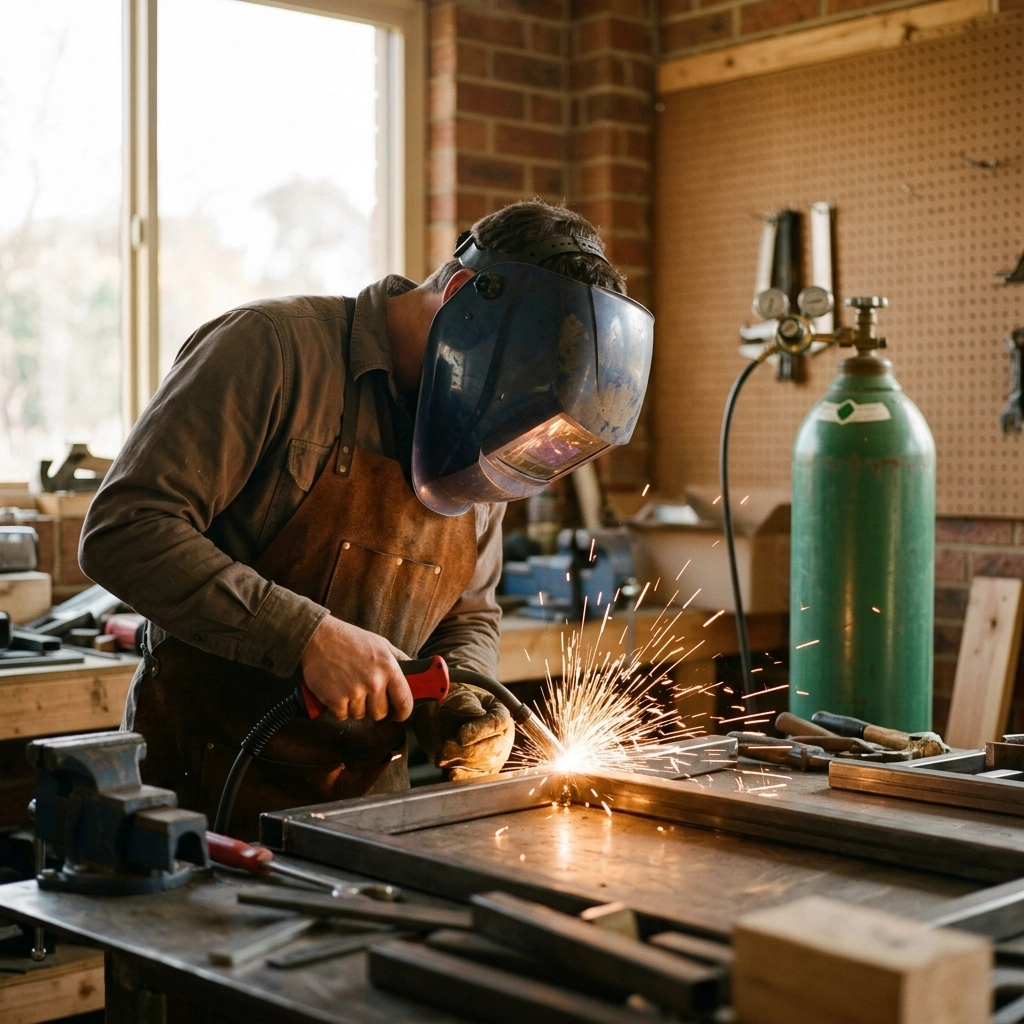
Regardless of which gas you choose, you need a way to get it from the bottle to the welder. A high-quality Argon regulator is vital. It ensures a steady, consistent flow. If your flow rate is too low, you get porosity. If it's too high, you’re literally blowing money into the air and creating turbulence that can actually suck air into the weld.

How to Get Your Gas
We know that getting a heavy gas cylinder to your doorstep can be a hassle. That’s why we offer nationwide delivery across the UK. Whether you need a small 2-litre bottle for a quick fix or a larger 20-litre cylinder for a major project, we’ve got you covered.
If you’re unsure about which size or mix is right for your specific welder, our team is always happy to help. You can check out our delivery information or browse our full shop to see the range of options available.
Final Thoughts: Empowerment in Every Weld
At the end of the day, the choice between CO2 and an Argon mix comes down to what you value most: initial cost vs. final quality.
If you are just starting out, we almost always recommend an Argon mix. It removes one of the most frustrating variables of learning to weld (spatter and arc instability) and lets you focus on your technique. If you’re a seasoned pro on a budget, pure CO2 is a reliable friend that won't let you down on the heavy stuff.
Ready to upgrade your welding game? Stop paying those "zombie" rental fees and take control of your workshop. Browse our range of MIG welding gas today and feel the difference that the right gas can make.
Whether it’s Argon, CO2, or even Helium for the weekend's party, Bottle Gases is here to keep you flowing. Happy welding!