
Blog
Frequently Asked Questions About Gas

As a trusted gas supplier, we often get asked questions about gas safety, the precautions to be taken while using gas, and the best uses for our gas products.
In this blog, we’ll answer some of the main questions we get asked about our gases.
How long should an LPG gas bottle last?
Generally, each kg of propane and butane gas will produce up to 14kwh (kilowatt-hours) of heat energy.
To work out how long your bottle will last, you should multiply the cylinder size in kg by 14. Although, it’s important to consider what appliance you are using and how you are using it. For example, using a heater on a medium setting for a few hours will burn more energy than using a stove on the maximum setting to boil water.
If you operate your cylinder at 1 bar, you can expect to improve your cylinder life by 150 hours!
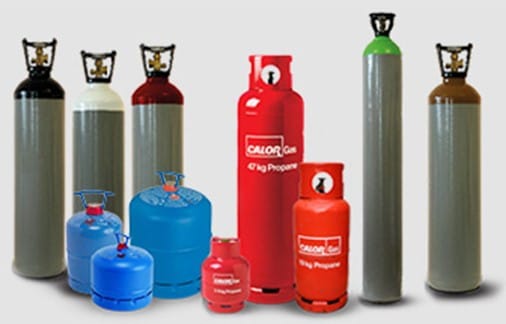
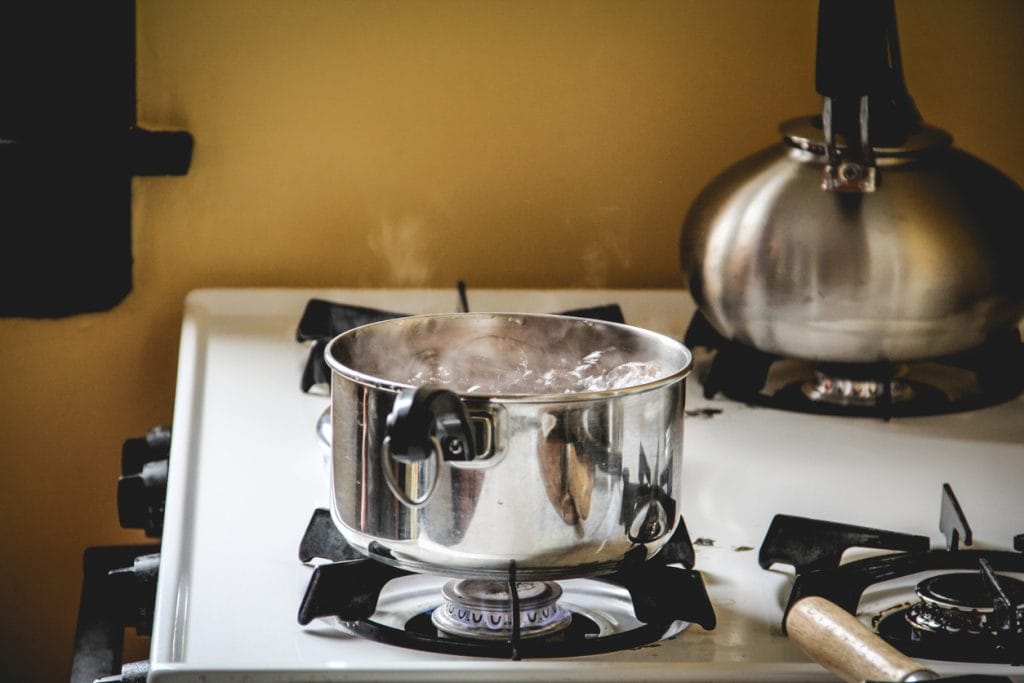
Cooking gas typically uses little energy and so a large 47kg propane gas bottle can last up to 244 days if used for an hour a day on a medium heat setting. As always, gas usage will depend on your burner and the frequency with which you use the gas.
How can you tell how full a gas bottle is?
Weighing gas is just one way of showing how much is left in the bottle. Another method of testing how much gas you have left is to fill a jug with warm (NOT boiling) water and carefully pour it down the side of your bottle. After about 5-10 seconds, you should be able to feel with your hands for a temperature change on the side of the cylinder. Where the bottle is cold to touch, this will indicate the level of gas inside the bottle.
What are the precautions to be taken while using gas?
When preparing to use gas or operating a cylinder, you should always ensure adequate ventilation and never use it indoors or in confined spaces. You should always read the manufacturers instructions or ask if you are unsure.
Never connect or disconnect cylinders near a naked flame and always make sure cylinders are kept away from fire, heat and sparks.
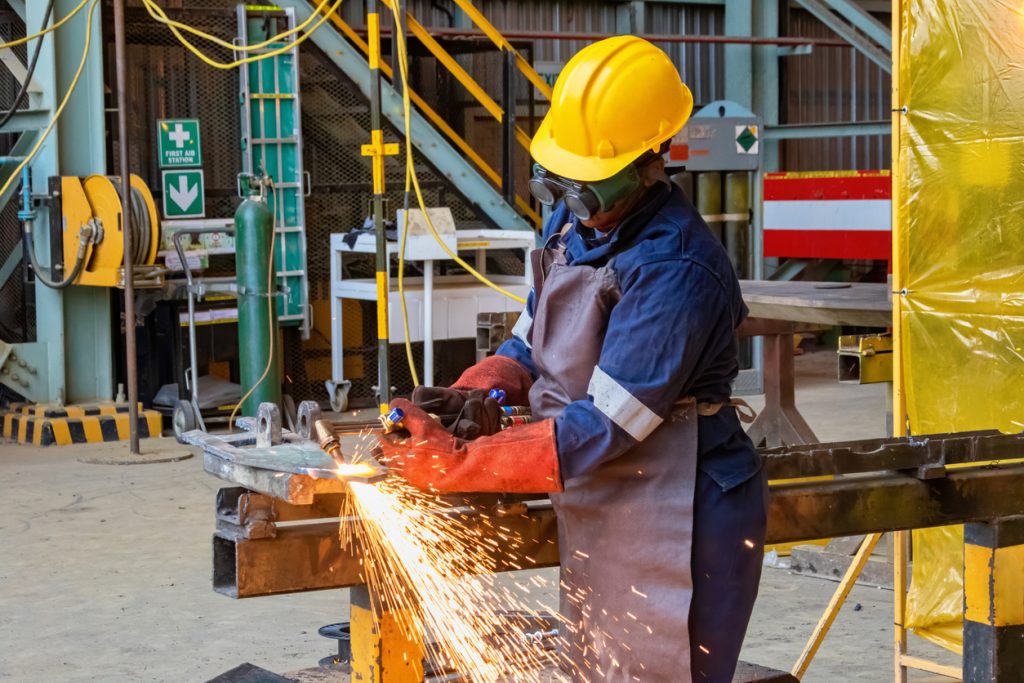
All of our cylinders are maintained and tested in-house and are never at any point owned by the user. To check the test date of a cylinder, please look at the coloured ring around the gas valve.
What is the maximum temperature at which gas cylinders should be stored?
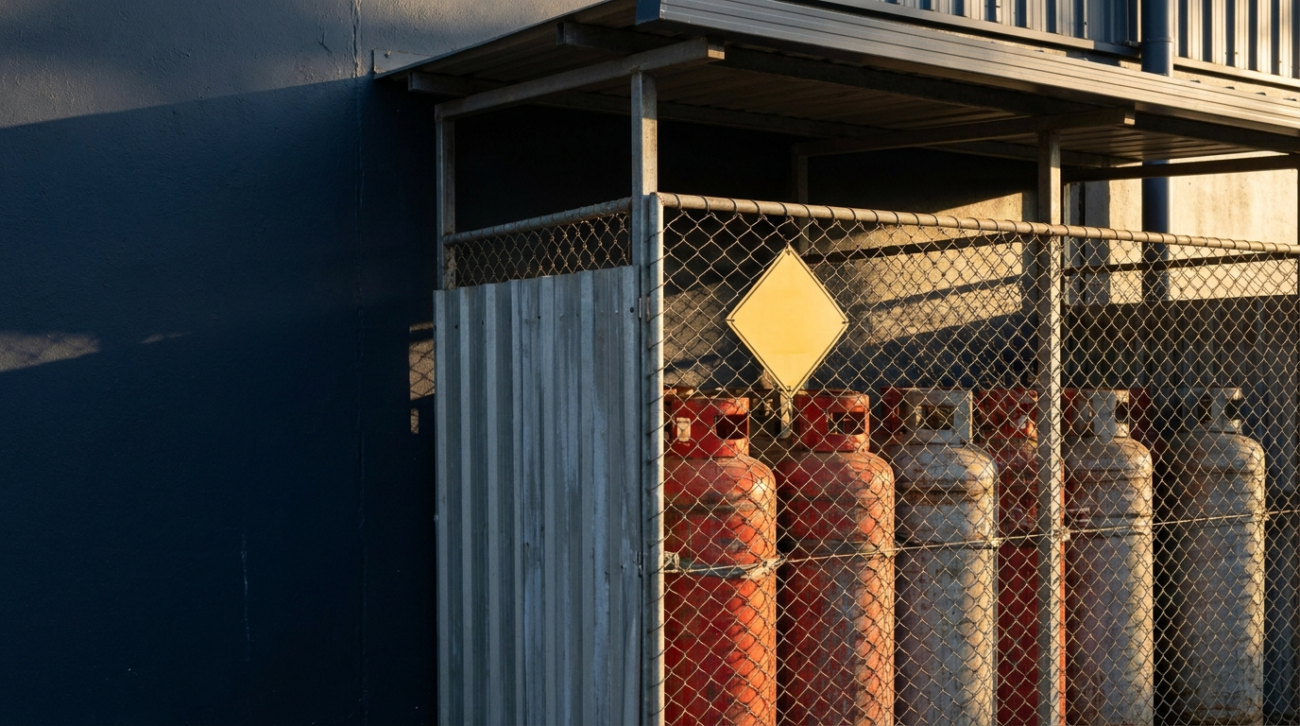
The storage of gas is just as important as using it safely. You should never store gas cylinders above 65°C, and it is recommended that the floor is level with the surrounding area.
Always store gas in well-ventilated areas in case of leaks, and chain or tie the cylinders in a fixed position to prevent rolling or heavy impact with other objects.
Which gas is highly flammable?
When mixed with air in the correct proportion, methane, hydrogen, butane, and ethylene are extremely flammable.
When using flammable gases, you should always take extra care and be aware of the properties within the gas. By planning safely and using the gas in a well ventilated safe area, you can significantly reduce fire risks.
Can a gas cylinder explode in the sun?
Gas bottles should not explode in the sun, although for safety reasons we would always recommend storing cylinders out of direct sunlight. You should avoid storing your gas bottles inside cars or near machinery and fires, where temperatures can get artificially high and pose a risk of explosion.
You should always store bottles upright and outdoors to prevent any risks of gas leaks and allow for optimum ventilation. When the temperature outside rises, so does the pressure inside the cylinder; modern-day gas bottles have been designed for a 20% expansion.
How do I connect beer gas?
Firstly, make sure your gas bottle is stored somewhere safe and secure, ideally cable tied or chained to the inside of the bar.
Once you have fixed your canister in place, screw in the regulator, fill the cooler up and hook up the recirculation line. Next, turn on the cooler, take the regulator, put in some gas line then attach the other end to your coupler (marked gas).
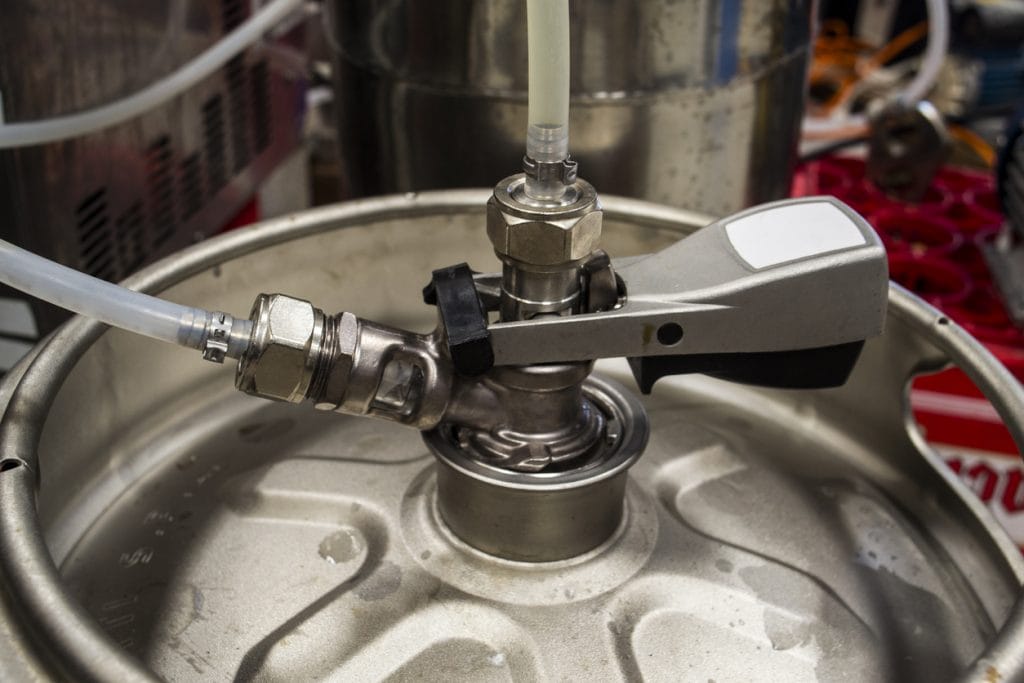
Fix your beer line to the top of the coupler and back into the first line of the cooler. Once you’ve done this, gently place the coupler on top of the keg.
Attach your beer faucet to the bar, then plug the tap into the cooler system. Take some beer line, fix it into the flow control and lag the line to keep it cool. Next, take your line, plug it through the outlet and connect the coupler to the keg, making sure it’s securely twisted to avoid spillage. Once everything is connected, turn on the gas.
If you’re interested in finding out more information on the top ‘how to’ questions we get asked, then head over to our blog “How To: Gas Edition”, which will give you more information on switching off a gas regulator, changing a Calor bottle and how to clean a gas BBQ.
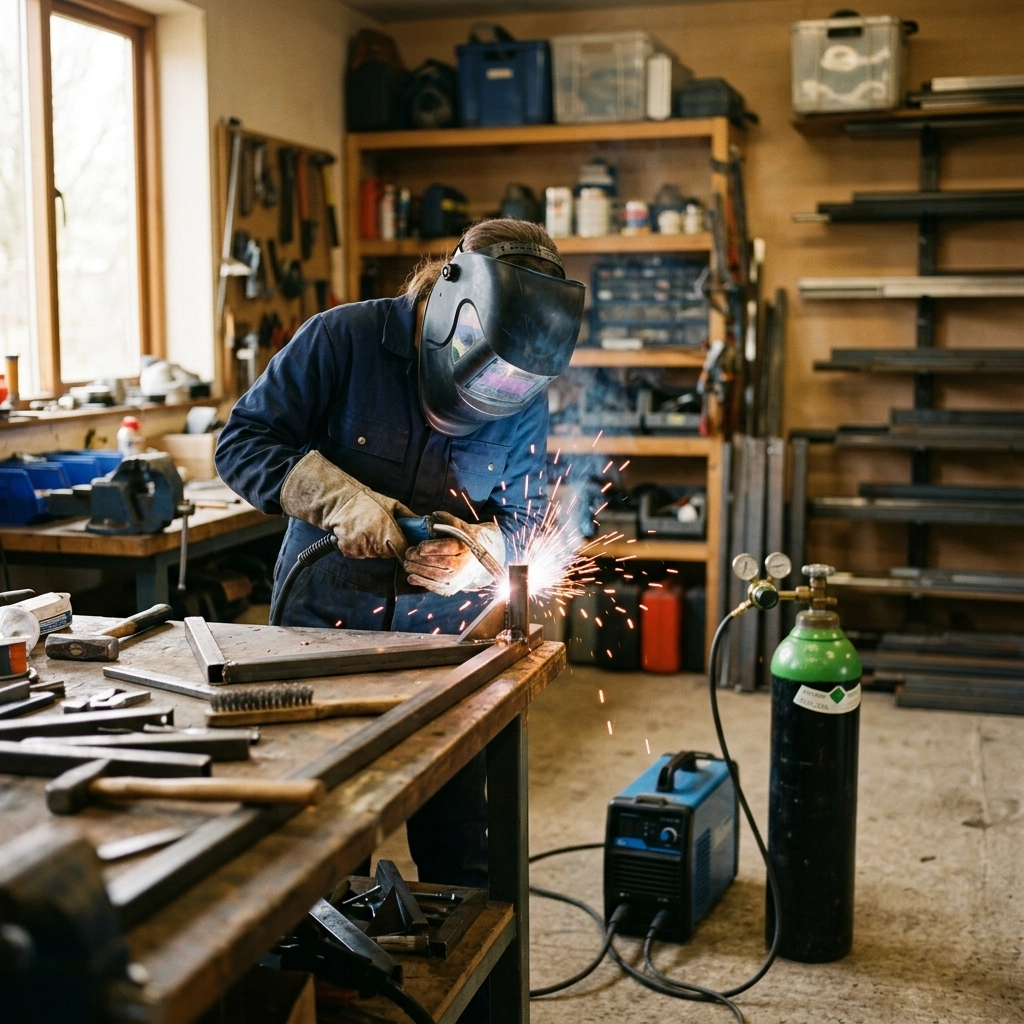
As specialist bottled gas suppliers, Bottle Gases can help answer your questions about any gas, be it nitrogen gas, oxy fuel gas, MIG or TIG welding gas or Calor. We’re always happy to give advice on our range of gas cylinders and answer any questions that you may have. Please, get in touch with our friendly team.
Are Gas Bottles Safe in the Sun? Hot-Weather Gas Safety Explained
Gas bottles are safe in the sun during a normal UK summer, but they must be kept below 50°C and never left in prolonged, direct heat. A propane or butane cylinder has a pressure-relief valve that vents before it can rupture — the real danger is a bottle left in a hot, sealed car. Store cylinders upright, shaded and ventilated.
Last updated: July 2026 — reviewed by the Bottle Gases team.
At what temperature does a gas bottle explode?
A sound, well-maintained LPG cylinder does not have a simple “explosion” temperature in everyday use. UK guidance (UKLPG Code of Practice 7) sets 50°C as the maximum safe temperature a bottle should reach. Every propane and butane cylinder is fitted with a pressure-relief valve that vents gas safely before internal pressure can build to a dangerous level. Genuine ruptures come from a bottle trapped in an enclosed, superheated space where it cannot vent or cool — not from a few hours of British sunshine.
Can Calor gas bottles explode in the sun?
In a typical UK summer, no. Direct sun rarely warms a cylinder anywhere near 50°C on its own, and the relief valve provides a further safeguard. The risk rises sharply only when a bottle is shut inside a sealed car, a glass conservatory or a closed shed, where trapped air can climb well above 50°C with nowhere to escape. Keep bottles outdoors, shaded and ventilated, and they stay comfortably within safe limits.
Safe storage temperatures at a glance
| Scenario | Safe? | Why |
|---|---|---|
| Shaded, ventilated outdoor spot | Yes | Air circulates freely and stays below 50°C |
| A few hours in direct summer sun | Usually | The surface warms but the valve vents before danger; move to shade if hot to touch |
| Sealed car boot on a hot day | No | Trapped air can exceed 50°C with no ventilation or escape route |
| Locked shed or conservatory | No | Enclosed space traps both heat and any leaked gas |
| Indoors, under the stairs | No | LPG is heavier than air, so any leak pools at floor level |
| Cellar or basement | No | Gas cannot disperse below ground; always store above ground, outdoors |
Can I leave a gas bottle in my car?
Avoid it wherever possible. A parked car in summer can climb far above the 50°C limit, and a boot offers no ventilation to let a warming cylinder cool. When you do need to transport a cylinder, keep it upright and secured, carry it for the shortest time possible with a window cracked for airflow, and take it straight out at the other end. Never leave a gas bottle sitting in a hot car for hours.
How should I store a gas bottle at home?
Store cylinders outdoors, upright, on firm level ground in a shaded, well-ventilated spot, away from drains, cellars, basements and ignition sources. Propane can stay outside all year — it keeps vaporising down to about −42°C — whereas butane stops vaporising near 0°C, so keep butane somewhere frost-free if you want reliable performance in winter. Turn the valve off when the bottle is not in use. If you are topping up your rent-free Calor and LPG gas bottles, the same shaded, ventilated storage rules apply.






One thought on “Frequently Asked Questions About Gas”
Comments are closed.