Blog
The Ultimate Guide to Nitrogen for Air Conditioning: Why OFN is Essential for Leak Testing

Have you ever spent hours installing a brand-new air conditioning system, only to find that the expensive refrigerant has vanished into thin air within a week? Or perhaps you’ve encountered a stubborn leak that just won't reveal itself, even with the best electronic sniffers? If you’ve been in the HVAC trade for any length of time, you know that pressure is your best friend and your worst enemy.
In the world of air conditioning and refrigeration, Nitrogen isn't just an "extra" tool; it is the backbone of a professional installation. Specifically, we’re talking about Oxygen-Free Nitrogen (OFN). But why is "Oxygen-Free" such a big deal, and why should you care about where your bottles come from? Whether you’re a seasoned engineer or a DIY enthusiast tackling a home workshop cooling project, understanding the role of nitrogen will save you time, money, and a whole lot of headaches.
What Exactly is OFN and Why Do You Need It?
Think of your air conditioning system like a high-performance car engine. You wouldn't pour muddy water into your fuel tank and expect it to run smoothly, right? In the same way, the internal "veins" of an AC system: the copper pipes and the compressor: need to stay incredibly clean.
OFN stands for Oxygen-Free Nitrogen. It is nitrogen that has been processed to remove almost all traces of oxygen and moisture. When we talk about nitrogen cylinders and their uses, HVAC work is right at the top of the list.
But why "Oxygen-Free"? If you were to use regular compressed air to test a system, you’d be pumping moisture and oxygen directly into the pipes. When oxygen meets the heat of brazing or the chemicals in the refrigerant oil, it creates oxidation (sludge and soot) and acid. This can lead to a "death sentence" for a compressor. OFN is inert, meaning it doesn't react with anything. It’s dry, clean, and safe.

The High-Pressure Secret: Finding the Invisible Leak
Are you tired of "guessing" if a joint is sound? This is where the true power of Nitrogen comes into play. Unlike refrigerant gas, which is expensive and environmentally damaging to "blow" into a system just for testing, Nitrogen is cost-effective and safe to vent (since the air we breathe is already 78% nitrogen).
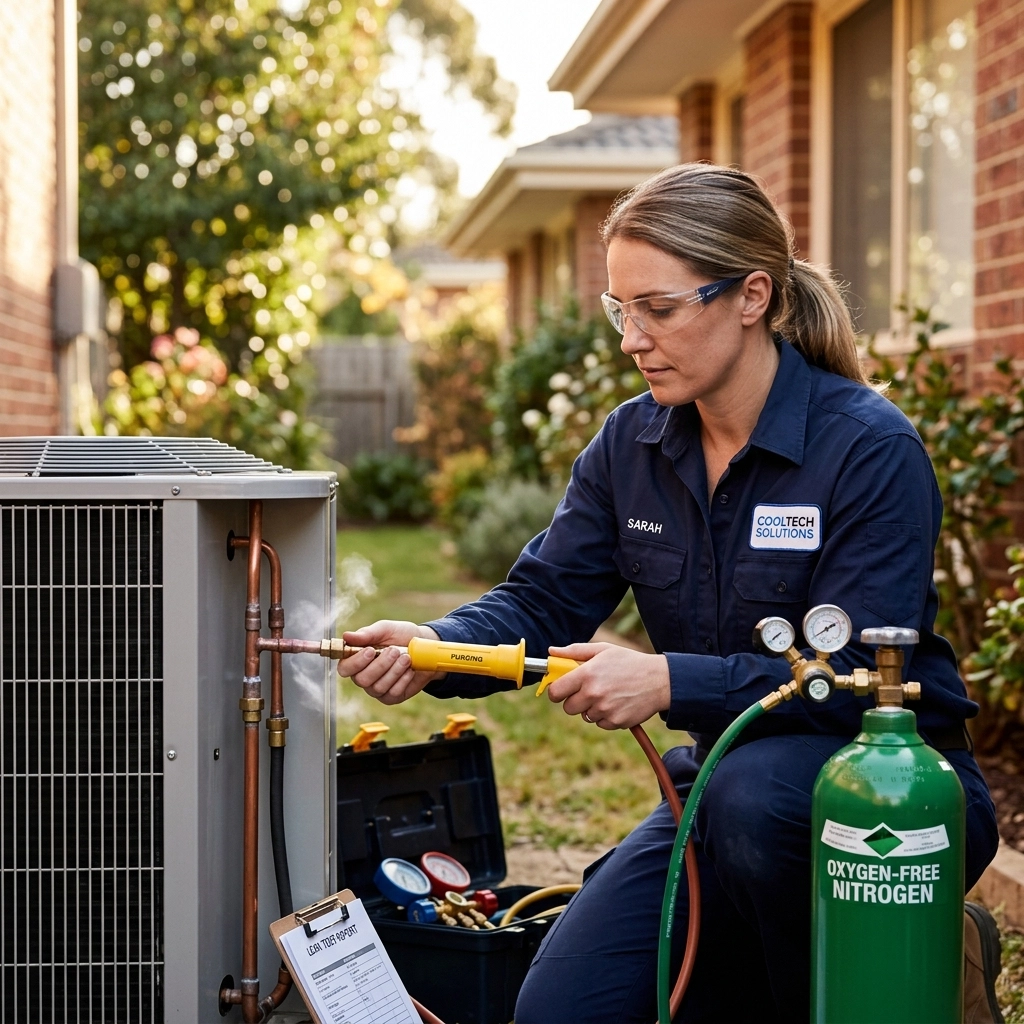
When you perform a pressure test, you are essentially "stress-testing" the copper joints and flares. Most residential and commercial systems need to be tested at pressures significantly higher than their normal operating pressure. By using a high-pressure nitrogen regulator, you can charge the system up to 40 bar (depending on the equipment specs) and leave it for a set period.
If that needle on your manifold gauge doesn't budge after 24 hours, you can sleep soundly knowing your system is airtight. If it drops, you’ve saved yourself from wasting 5kg of expensive R32 or R410A refrigerant.
Why "Oil-Free" is the Standard You Can't Ignore
You might hear some old-school techs mention "Oil-Free Nitrogen" interchangeably with OFN. In the UK market, keeping the system free of mineral or synthetic oils that don't belong there is crucial.
Modern AC systems use POE (Polyolester) oils, which are highly hygroscopic: meaning they suck up moisture like a sponge. If your nitrogen source contained even a trace of oil or moisture, it would contaminate the system's lubricant, leading to "acid burnout." At Bottle Gases, we ensure our nitrogen meets the highest industrial standards so that your 10L or 20L industrial gas cylinders provide nothing but pure, dry gas.
Nitrogen Purging: The Professional’s Calling Card
Imagine you’re a local pub owner, and your cellar cooling system has just failed. You call out an engineer, "Dave," who starts brazing new copper pipes together. If Dave doesn't use nitrogen while he’s welding, he’s leaving a ticking time bomb inside your pipes.
When copper is heated in the presence of oxygen (the air around us), a black layer of carbon (oxidation) forms inside the pipe. Once the system is turned on, the refrigerant washes this "soot" through the system, where it eventually clogs the expansion valve or the filter drier.
The solution? Nitrogen Purging. By passing a tiny, low-pressure trickle of OFN through the pipes while brazing, you displace all the oxygen. The result is a silver, clean joint on the inside. It’s the difference between a job that lasts twenty years and one that fails in two. If you're also doing MIG welding or TIG welding for brackets or frames, you already know how important gas purity is: HVAC is no different.

No More Rental Fees: A Breath of Fresh Air for Your Budget
Let’s talk about the elephant in the room: the cost of gas bottles. For years, the industry was dominated by a model where you’d pay a monthly rental fee for every bottle sitting in your van or workshop. If you’re a sole trader or a small HVAC firm, those "standing charges" can eat your profits alive, especially during the slower winter months.
At Bottle Gases, we do things differently. We offer a no recurring rental fee model. You buy the bottle once, and when it’s empty, you simply pay for the refill.
- No more monthly invoices just for the "privilege" of owning a bottle.
- Nationwide delivery across the UK, so you don't have to waste hours driving to a depot.
- Competitive pricing that makes it easier to keep a backup 2L or 10L bottle ready for that emergency Friday afternoon call-out.
Whether you need LPG or Calor gas for your torch or OFN for your pressure testing, our model is designed to put the power back in your hands. It’s like owning your car instead of leasing it: you have the freedom to use it whenever you need without the "tax" of a monthly fee.
Choosing the Right Size for the Job
Not every job requires a massive cylinder. If you're working on a small split-system in a residential bedroom, lugging a 20L bottle up three flights of stairs is nobody's idea of fun.
- 2 Litre Bottles (200 Bar): Perfect for small repairs and quick leak tests. They are lightweight and fit easily in a standard tool bag.
- 10 Litre Bottles: The "Goldilocks" size. Ideal for most commercial installs, providing enough volume for purging and a solid 40-bar pressure test.
- 20 Litre Bottles: For the big boys. If you're commission-testing a large VRF (Variable Refrigerant Flow) system in an office block, you'll want the capacity of a 20L cylinder to ensure you don't run out mid-test.
Remember, all our bottles are pressurised to 200 Bar, giving you more gas in a smaller footprint.

Safety First: Handling High Pressure
We can't talk about Nitrogen without mentioning safety. Remember, you are handling a gas stored at 200 Bar. If a valve is knocked off, that cylinder becomes a rocket.
- Always use a proper regulator: Never connect a nitrogen bottle directly to a system. Use a regulator specifically designed for high-pressure nitrogen.
- Secure your bottles: Use a trolley or wall bracket.
- Ventilation: Nitrogen is an asphyxiant. While it’s not toxic, if you leak a whole 20L bottle into a tiny, unventilated cupboard, it will displace the oxygen you need to breathe. Always ensure a bit of airflow.
For more on staying safe on the job, check out our welding gas safety guide, which covers many of the same handling principles.
Beyond the AC: The Versatility of Nitrogen
While leak testing is the star of the show, Nitrogen is a jack-of-all-trades. Did you know it's used in the food industry to keep your salad crisp? Our food-grade nitrogen is a staple for food packaging and even for pouring the perfect pint of stout when mixed in beer and cellar gas solutions.
If you’re a multi-trade professional, you might even find yourself using nitrogen for shock absorber recharging or even inflating tyres for high-performance track days. The possibilities are endless when you have a reliable, rent-free source of gas.
The Bottom Line: Don't Cut Corners
In the UK HVAC industry, your reputation is only as good as your last install. Using OFN for leak testing and purging isn't just a "best practice": it's often a legal requirement under F-Gas regulations to ensure systems aren't leaking harmful refrigerants into the atmosphere.
By choosing Bottle Gases, you’re not just getting a cylinder; you’re getting a partner that understands the UK trade. From competitive pricing to our hassle-free delivery, we’re here to make sure your pressure tests are successful and your business is profitable.
Ready to upgrade your kit? Don't let rental fees drain your business. Explore our range of nitrogen cylinders today and experience the freedom of rent-free gas. Whether it’s CO2 for a home bar or Nitrogen for a major AC contract, we’ve got you covered.
The pressure is on( make sure you're ready for it!)