
TIG Welding Gas
Showing all 4 resultsSorted by popularity
More about TIG Welding Gas
What Is TIG Welding Gas? Why Pure Argon Is Used
What is TIG welding gas?
TIG welding (formally GTAW, gas tungsten arc welding) relies on a shielding gas to protect the weld pool from the atmosphere while the tungsten electrode does its work. For almost every TIG job, that shielding gas is pure argon. Argon is an inert gas, meaning it doesn't react with the molten metal, the tungsten electrode, or the surrounding air. That inertness is exactly what TIG welding needs: a calm, stable arc and a weld pool that stays clean while it solidifies.
Every refill in our TIG welding gas range is 100% pure argon, pressurised to 200 bar. There's no guesswork over blend ratios or mix percentages — one gas, one job, done properly. If you're new to the process, our TIG gas 101 beginner's guide walks through how the gas, torch, and tungsten work together to produce a clean weld.
Why TIG Uses Argon, Not CO2
Argon vs CO2: why TIG and MIG part company
If you've welded with MIG before, you'll know CO2 and CO2/argon blends are common shielding gas choices there. TIG is different. TIG does not normally use CO2 at all — introducing CO2 into a TIG shield risks contaminating the weld pool and destabilising the arc, because CO2 is not inert in the way argon is. It can react with the molten metal and the tungsten tip, which is the opposite of what a precise, low-spatter process like TIG is trying to achieve.
That's why argon shielding gas is the default for TIG in nearly all applications, while MIG welders choose between pure argon, CO2, or various argon/CO2 mixes depending on the metal and the finish they want. If you're deciding between processes or gases for a MIG job, our guide on choosing the best MIG welding gas covers that comparison in more depth, and our MIG welding gas category stocks the blends for that side of the workshop. For TIG, keep it simple: pure argon, every time.
Which Metals Suit Argon TIG Gas
TIG gas for stainless steel, aluminium and beyond
Pure argon is the standard shielding gas across the metals TIG welders work with most. It's the go-to choice for TIG gas for stainless steel and aluminium — two materials where a clean, oxide-free weld matters for both strength and appearance. On aluminium, argon's inert shield helps manage the oxide layer that forms on the surface, supporting the cleaning action TIG is known for. On stainless steel, it protects the weld from oxidation so you're not left with discoloured, brittle joins.
Argon is also used for TIG welding mild steel, copper, and other common fabrication metals. Because it's a single, consistent gas rather than a blend, the same bottle covers most of the metals a general fabrication or repair shop will encounter, which keeps things straightforward if you're stocking gas for a mixed workload. One practical note: argon is heavier than air, so it settles rather than dispersing upward — worth bearing in mind for ventilation in enclosed or low workshop spaces.
Choosing Your Bottle Size and Regulator
2L, 10L or 20L — and getting the regulator right
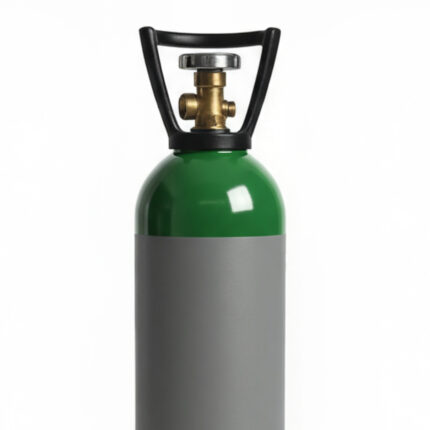
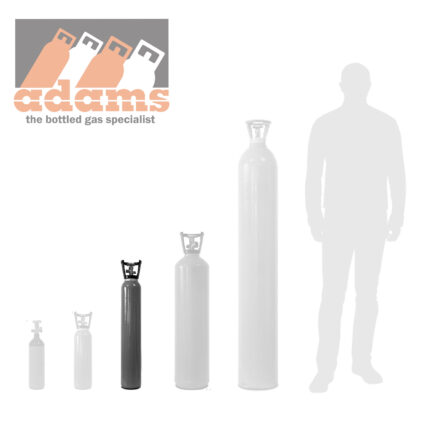
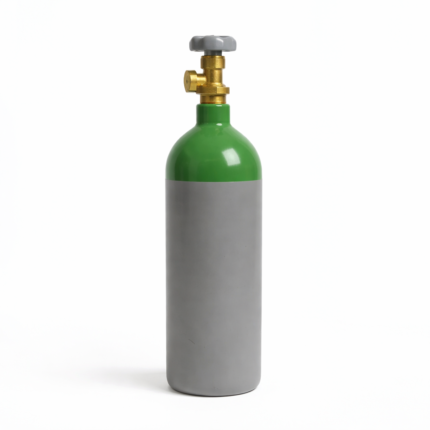
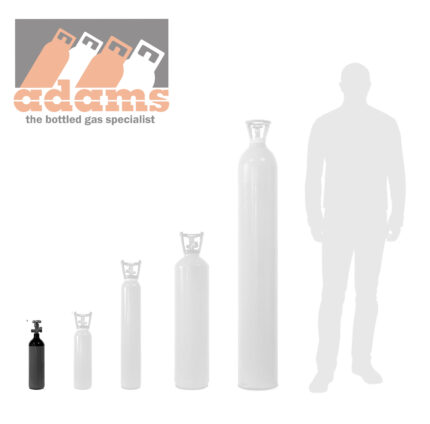
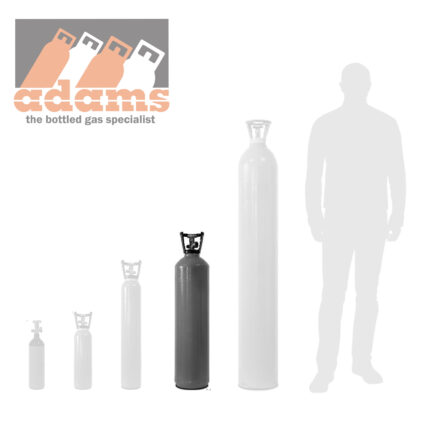
We stock pure argon refills in three sizes so you can match the bottle to the amount of welding you actually do. The 2L Pure Argon Gas Refill (£34.37) suits occasional, small-job TIG work or anyone who wants a compact, easy-to-store cylinder. The 10L refill (£85.70) is a solid middle ground for regular hobbyist or light trade use, while the 20L refill (£128.95) is built for workshops running through gas more frequently, giving you more welding time between changeovers.
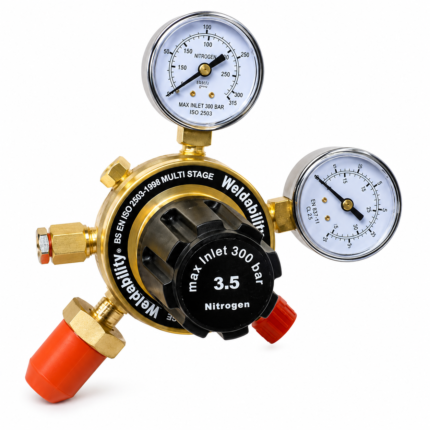
Whichever size you choose, you'll need a regulator to control the flow at the torch — TIG welding depends on a steady, correctly set gas flow to shield the weld properly. Our Argon Regulator, a single-stage twin-gauge unit (£44.54), shows both cylinder pressure and flow rate so you can dial in the right setting and keep an eye on how much argon you have left mid-job.
Buying Argon Refills Outright — No Rental, No Contracts
Straightforward gas buying from a welding gas supplier
Every argon refill we sell is yours outright — there's no cylinder rental agreement, no ongoing contract, and no ownership fees to keep track of. You buy the bottle, you use the gas, and when it's empty you bring it back for a refill or exchange. For welders and fabricators who just want gas on the shelf without paperwork attached, that's a simpler way to buy than the rental schemes some welding gas suppliers still run.
Ordering is the same as any other product on the site: pick your bottle size, add the regulator if you need one, and check out. If you're just getting started with the process, it's worth reading through our TIG gas 101 guide before you order, so you know what to expect from the gas, the torch, and the arc once you're set up. And if stick welding is more your setup for a particular job, our MMA welding beginner's guide explains that process, which doesn't need a shielding gas at all.
Online store of household appliances and electronics
Then the question arises: where’s the content? Not there yet? That’s not so bad, there’s dummy copy to the rescue. But worse, what if the fish doesn’t fit in the can, the foot’s to big for the boot? Or to small? To short sentences, to many headings, images too large for the proposed design, or too small, or they fit in but it looks iffy for reasons.
A client that’s unhappy for a reason is a problem, a client that’s unhappy though he or her can’t quite put a finger on it is worse. Chances are there wasn’t collaboration, communication, and checkpoints, there wasn’t a process agreed upon or specified with the granularity required. It’s content strategy gone awry right from the start. If that’s what you think how bout the other way around? How can you evaluate content without design? No typography, no colors, no layout, no styles, all those things that convey the important signals that go beyond the mere textual, hierarchies of information, weight, emphasis, oblique stresses, priorities, all those subtle cues that also have visual and emotional appeal to the reader.
