Cart 0
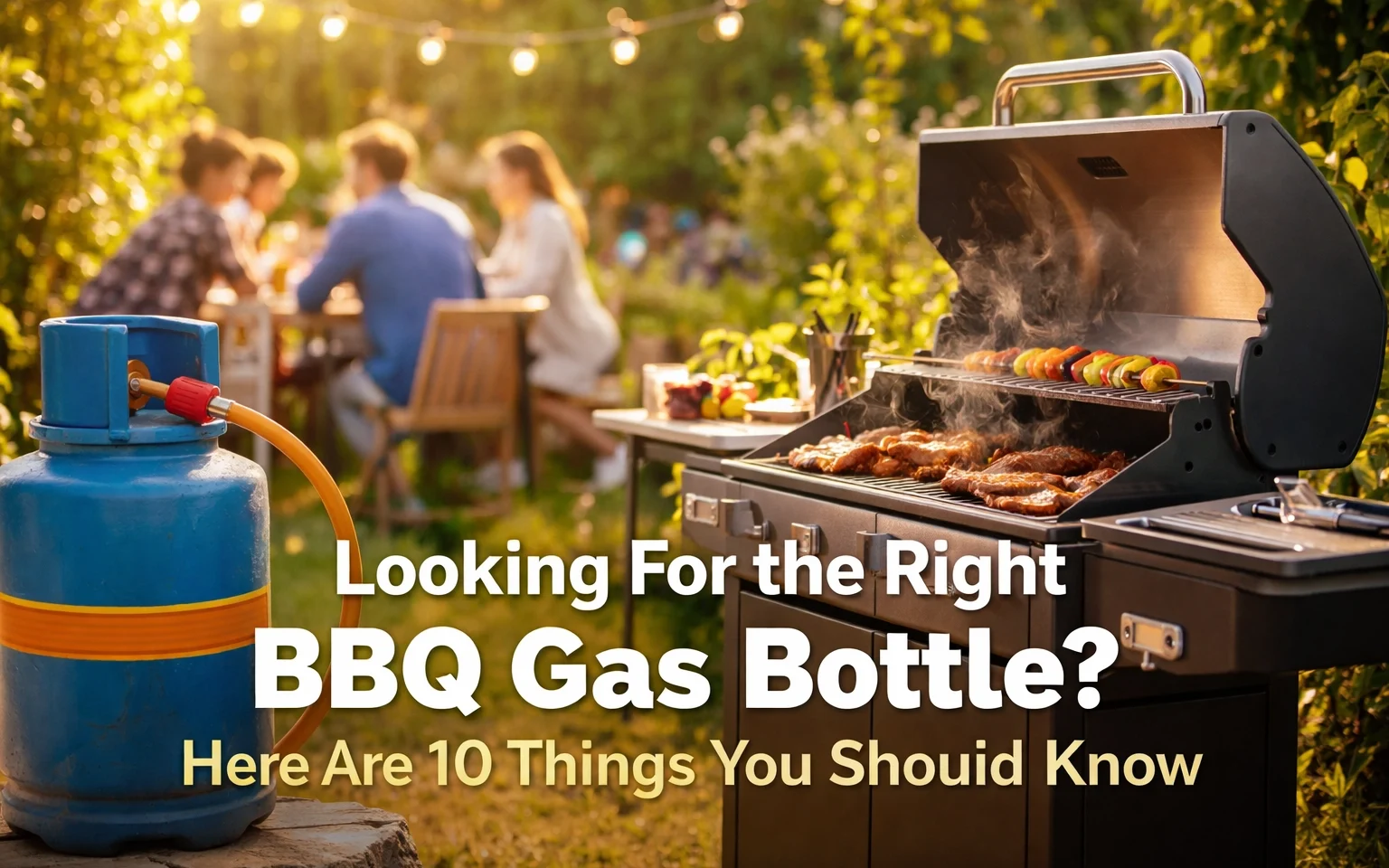
Looking For the Right BBQ Gas Bottle? Here Are 10 Things You Should Know
Is there anything more frustrating than firing up your barbecue for a long-awaited summer gathering, only to discover your gas has run out halfway through cooking the burgers? Or perhaps you've stood in front of a wall of different-sized cylinders, completely unsure which barbecue gas bottle actually fits your grill?
You're certainly not alone. Choosing the right gas for BBQ in the UK can feel surprisingly complicated when you're faced with different sizes, materials, connection types, and suppliers. But here's the good news: once you understand the basics, selecting the perfect bottle becomes remarkably straightforward.
Whether you're a weekend grilling enthusiast or someone who fires up the barbecue at every opportunity, this guide will walk you through everything you need to know about finding the right BBQ gas bottle for your needs.
1. Know Your Sizes: UK Patio Gas Bottle Options (in kg)
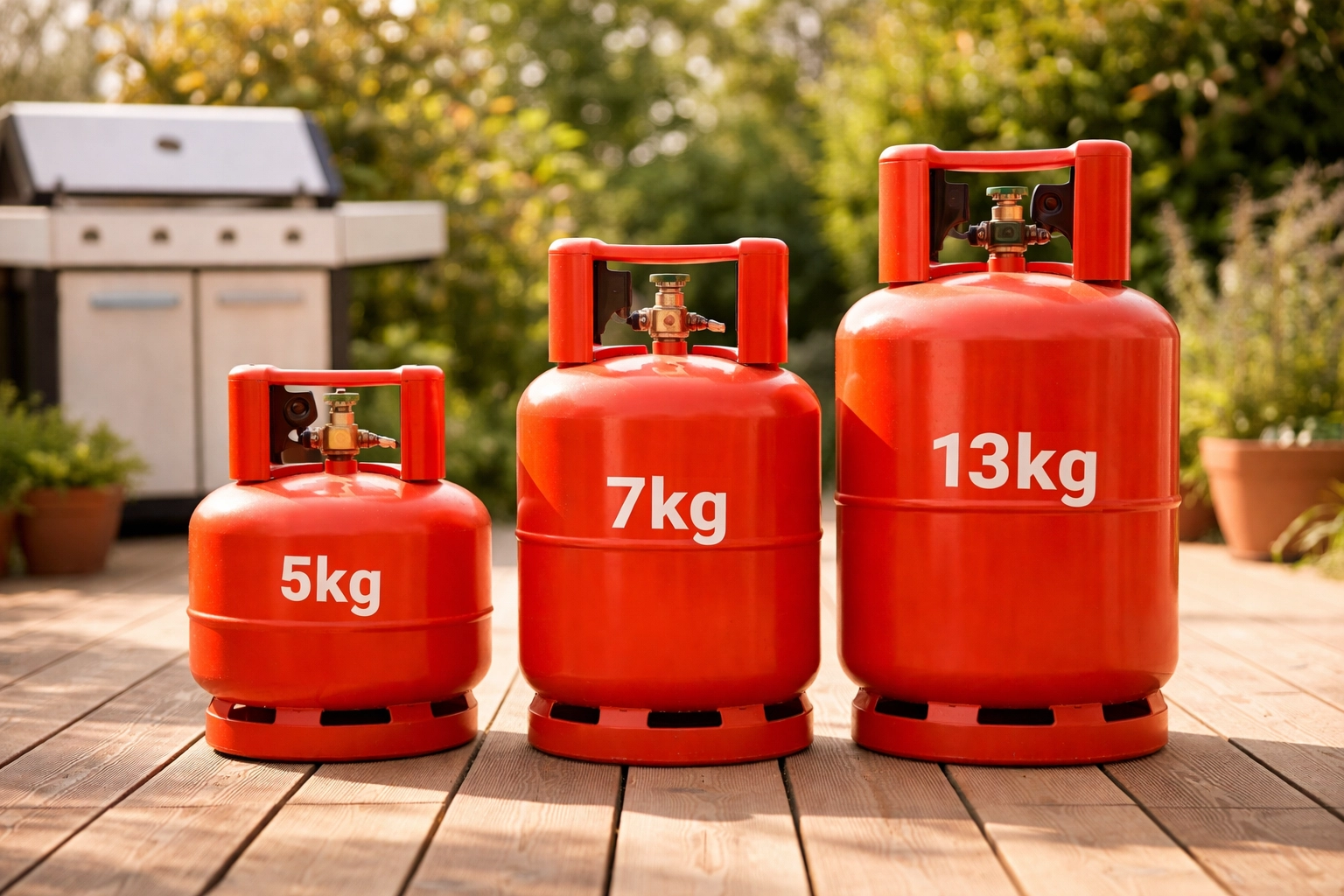
In the UK, BBQ gas is usually supplied as LPG in familiar, “Calor-style” cylinders (the same general type of bottle many people recognise for patio heaters and barbecues). The most common sizes you’ll come across for BBQs are 5kg, 6kg, 11kg, and 13kg (all measured in kg).
The 6kg Patio Gas bottle (propane LPG) is a go-to for many homes. It’s compact enough to suit lots of BBQ cabinets (under the grill) and typically gives you several cookouts before you need a refill.
If you’re grilling most weekends (or you’re the “we’ll just do one more round” host), moving up to an 11kg or 13kg Patio Gas bottle is a lifesaver. More gas on hand means fewer “why did it run out now?” moments halfway through cooking.
And if you’ve got a smaller, portable BBQ (or you only grill when the sun’s actually out), a 5kg propane LPG bottle can be the right balance of size and convenience.
If you want to browse options, Bottle Gases stocks LPG bottles online including Patio Gas (propane) refills such as a 13kg Patio Gas bottle and butane cylinders (useful for some setups). Start here: https://www.bottlegases.co.uk/ — or jump straight to our BBQ & Patio Gas Bottles range.
2. Choose the Right LPG: Propane for the Patio, Butane for Milder Conditions
When people say “BBQ gas” in the UK, they’re usually talking about LPG: most commonly propane (often sold as Patio Gas) or butane.
For outdoor barbecues and patio heaters, propane (Patio Gas) is generally the safest bet because it stays usable in cold weather and holds its pressure far better when temperatures drop. Propane can work down to around -42°C, so it won’t let you down the moment a British summer evening turns chilly.
Butane can be fine in warmer conditions, but it struggles at 0°C and below, which is why it’s often seen more in sheltered/indoor-type uses rather than year-round outdoor BBQ duty.
Bottle Gases supplies both LPG options online, including Patio Gas / propane and butane bottles, so you can match the gas to how (and when) you actually cook:
- Propane Gas
- Butane Gas
- Example butane cylinder size: 7kg Butane Gas Bottle https://bottlegases.co.uk/product/7kg-butane-gas-bottle/
3. Match Your Regulator to a Patio Gas (Calor-Style) Bottle
Before you order a bottle, take 30 seconds to check your BBQ’s regulator. In the UK, many modern barbecues and patio heaters use a 27mm clip-on regulator that fits Patio Gas (propane) “Calor-style” bottles.
That said, not every BBQ is the same (especially older models or imported grills), so it’s worth checking your manual or the label on your current regulator before you buy.
If you need a replacement, Bottle Gases stocks a Patio Gas 27mm clip-on propane regulator here: https://bottlegases.co.uk/product/patio-gas-27mm-clip-on-propane-regulator/ (and you can browse our full range of Patio Gas Regulators if you’re unsure which one you need).
4. Measure Your Storage Space First
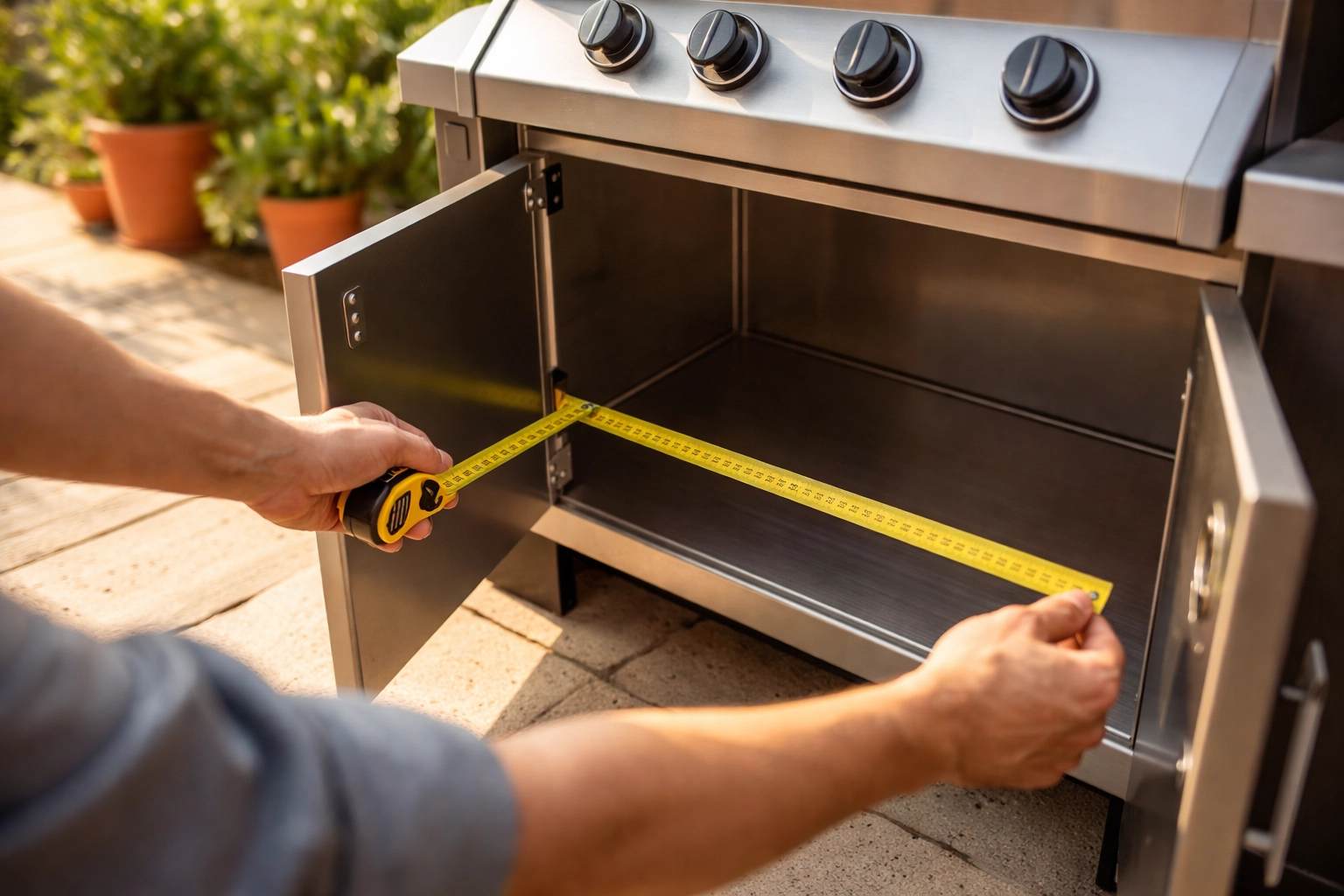
Here's a practical tip that many people overlook: measure your available storage space before buying a bottle.
If your barbecue has a built-in cabinet designed to house a gas cylinder, you'll need to ensure your chosen bottle actually fits. A standard 6kg patio gas bottle typically measures around 340mm in diameter and 405mm in height: perfect for most integrated storage compartments.
Larger 11kg cylinders, measuring approximately 310mm in diameter and 560mm in height, may not fit inside enclosed cabinets but work brilliantly positioned beside freestanding grills.
Taking two minutes to measure your space can save you the frustration of returning an incompatible bottle.
5. Consider Composite Cylinders for Easier Handling
Traditional steel gas bottles are robust and economical, but they come with one significant drawback: weight. A full steel cylinder can be surprisingly heavy to manoeuvre, particularly for those who need to transport their bottle regularly.
Composite (plastic) cylinders offer a lighter alternative. These modern bottles weigh considerably less than their steel counterparts while maintaining the same safety standards. Even better, many feature translucent sides that allow you to see exactly how much gas remains inside: no more guesswork.
The trade-off? Composite cylinders typically cost more initially, though many users find the convenience worth the investment.
6. Learn How to Check Your Gas Level
Running out of gas mid-cook remains one of the most common barbecue frustrations. Fortunately, several methods exist to check your remaining fuel:
The hot water method: Pour warm (not boiling) water down the side of your cylinder. Run your hand along the surface: the point where the metal turns noticeably cooler indicates the current gas level.
Weighing your bottle: If you know your cylinder's empty weight (usually stamped on the collar), simply weigh it and subtract. The difference tells you how much gas remains.
Gas level indicators: Various aftermarket gauges attach between your regulator and bottle, providing an at-a-glance reading of remaining fuel.
For those using composite cylinders with translucent walls, simply looking at the bottle gives you an immediate visual indication.
7. Understand the Rent vs Buy Decision
When purchasing a barbecue gas bottle in the UK, you'll typically encounter two options: renting or buying outright.
Renting (often called a cylinder exchange scheme) involves paying a one-time deposit for the bottle itself, then only paying for gas refills going forward. This approach works well if you want flexibility to switch suppliers or don't want the responsibility of cylinder ownership.
Buying your cylinder outright means you own it permanently and can refill it wherever you choose. This option often proves more economical long-term for regular grillers.
Both approaches have merit: your choice depends on how frequently you barbecue and your personal preference for flexibility versus ownership.
8. Prioritise Safety with Proper Placement
Safety should never be an afterthought when working with gas. Here are the essential guidelines for your barbecue gas bottle:
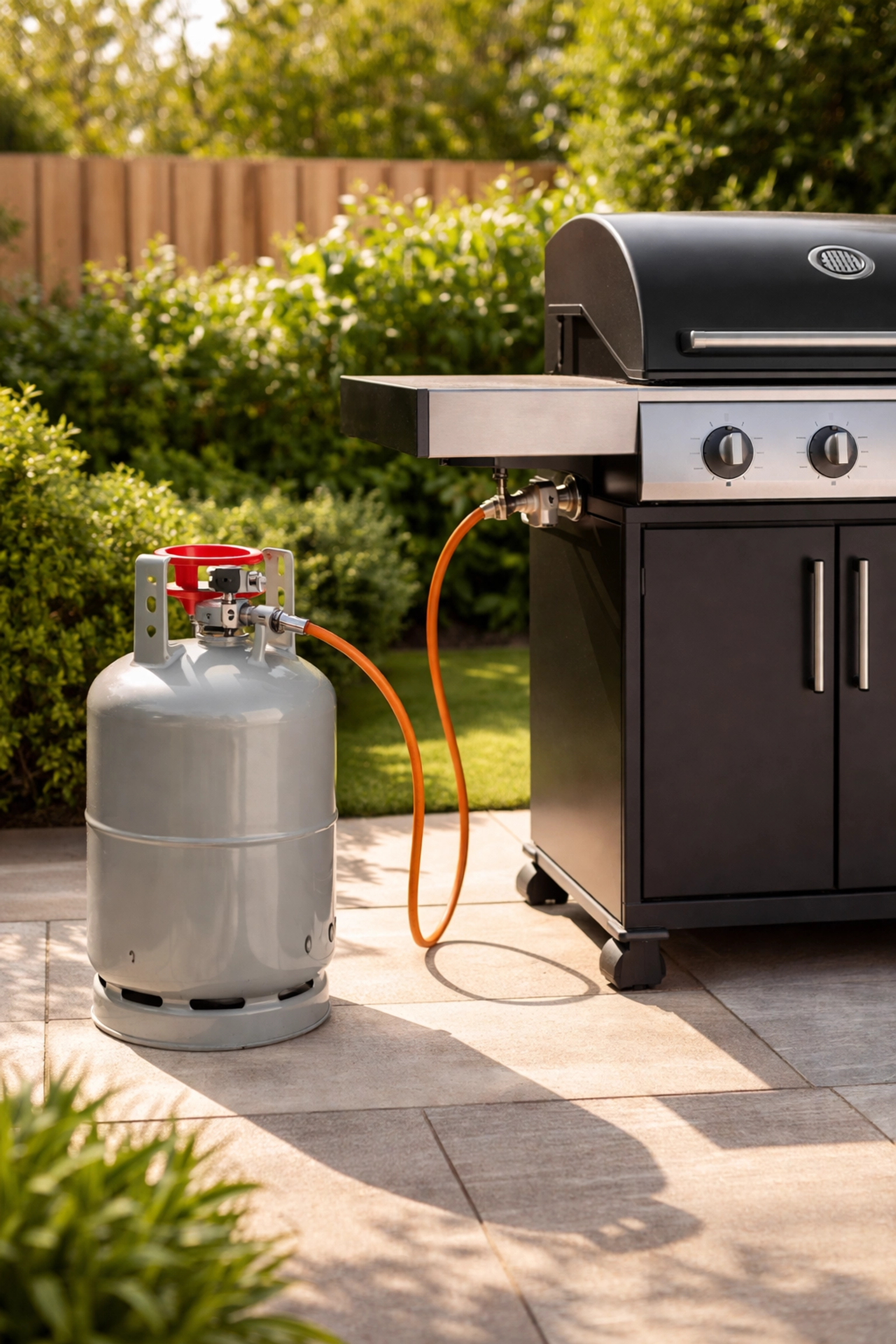
Position your cylinder correctly. During use, place your gas bottle beside the grill rather than inside an enclosed cabinet: even if your barbecue's base appears designed to house one. Adequate ventilation around the cylinder is essential.
Store cylinders upright in a well-ventilated outdoor area, away from direct sunlight and heat sources. Never store gas bottles indoors, in garages attached to your home, or in cellars.
Check connections regularly for wear or damage, and ensure all fittings are secure before lighting your barbecue.
Turn off the gas at the bottle (not just the grill controls) when you've finished cooking.
9. Calculate How Long Your Bottle Will Last
Understanding your bottle's lifespan helps you plan ahead and avoid unexpected shortages. While exact duration depends on your grill's output and cooking frequency, here are some general guidelines:
A 6kg patio gas bottle typically provides between 8-12 hours of cooking time on a standard three-burner barbecue.
A 13kg bottle effectively doubles this, offering roughly 16-24 hours of grilling: ideal if you entertain frequently or prefer longer intervals between refills.
For a deeper look at cylinder longevity, our guide on how long a 47kg gas bottle lasts provides useful calculations that apply across different bottle sizes.
10. Choose a Reliable Supplier You Can Trust
Finally, where you purchase your barbecue gas bottle matters more than you might think. A reputable supplier ensures:
- Quality-checked cylinders that meet UK safety standards
- Competitive pricing without hidden fees
- Convenient collection or delivery options
- Expert advice when you need guidance
At Bottle Gases, we stock a comprehensive range of UK LPG options for barbecues and patio heaters, including Patio Gas (propane) in familiar Calor-style bottles, plus butane cylinders depending on your setup. Whether you need a compact bottle for occasional grilling or a bigger Patio Gas cylinder for frequent entertaining, our team can help you get the right fit.
For more information about propane and butane options, visit our guide on propane and butane gas for your heating and cooking needs.
Ready to Fire Up Your Barbecue?
Choosing the right barbecue gas bottle doesn't need to be complicated. By understanding your size requirements, checking regulator compatibility, and prioritising safety, you'll be well-equipped to make an informed decision.
Remember: measure your storage space, opt for propane for year-round reliability, and always buy from a trusted supplier. With the right gas for BBQ in the UK, you can focus on what really matters: creating delicious food and memorable moments with family and friends.
Browse our full range of BBQ & Patio Gas Bottles today, or get in touch with our team for personalised advice on finding the perfect cylinder for your setup.