Cart 0
Argon vs CO2: Which MIG Gas Bottle Is Better for Your Workshop?
Argon vs CO2
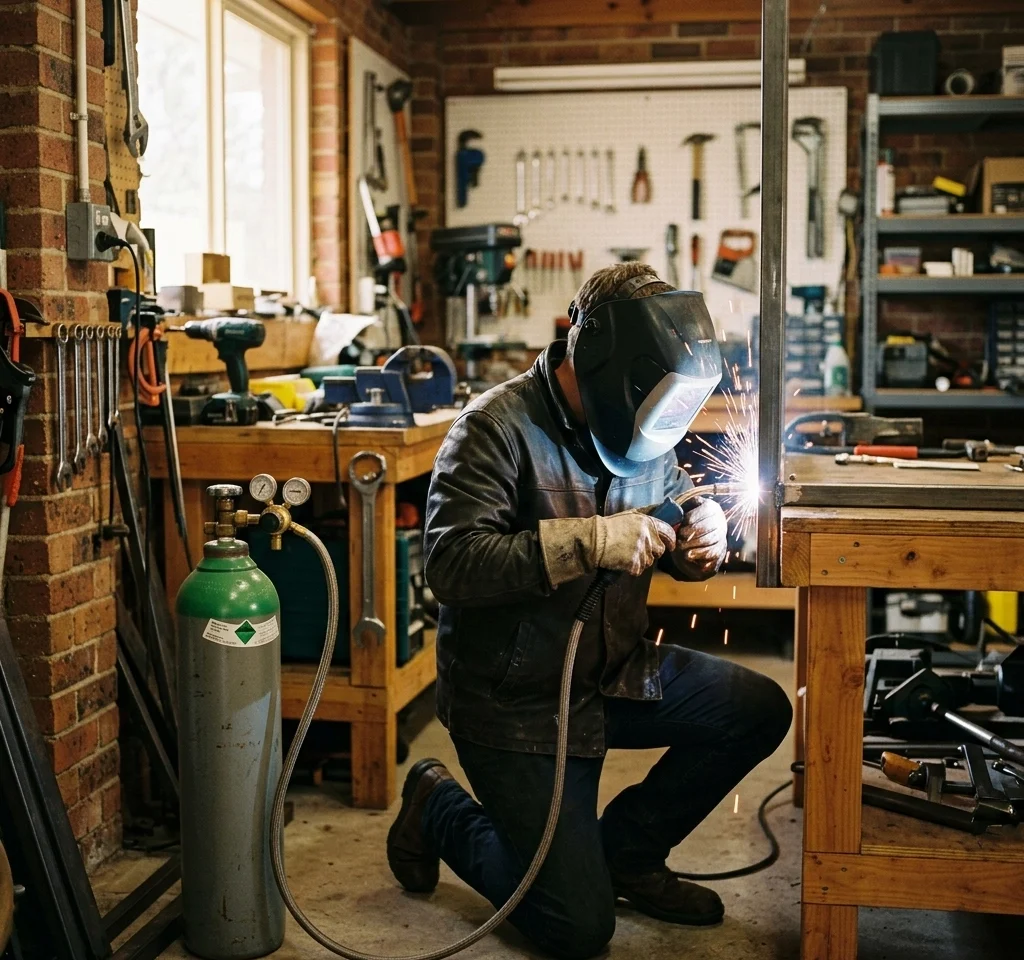
Are you tired of spending more time with an angle grinder cleaning up messy spatter than you actually spent welding the joint? Does your welding machine sound more like an angry hornet’s nest than the smooth, satisfying “frying bacon” sizzle you see in the pros’ videos? If you’ve ever looked at a messy, porous weld and wondered if it’s your technique or your equipment, the answer might be sitting right there in your gas bottle.
Choosing between Argon and CO2 for your MIG welding setup is one of the first big decisions you’ll make when setting up a workshop. It’s a classic trade-off: do you go for the budget-friendly, “get-it-done” approach of pure CO2, or do you invest in an Argon mix for that professional, clean finish?
At Bottle Gases, we’ve seen thousands of DIYers and professional fabricators grapple with this choice. Whether you’re restoring a classic Mini in your garage or running a busy commercial fabrication shop, picking the right gas is about more than just the price tag: it’s about the quality of your work and the time you spend doing it.
The Great Gas Debate: Why Does the Gas Even Matter?
Before we dive into the “this vs that,” let’s take a second to talk about why we need gas at all. In MIG (Metal Inert Gas) welding, the gas acts as a shield. It pushes the oxygen and nitrogen from the air away from the molten weld pool. Without it, your weld would look like a piece of Aero chocolate: full of holes (porosity) and incredibly weak.
Think of your gas like the oil in your car’s engine. You wouldn’t run your car without it, but the type you choose determines how smoothly the engine runs and how long it lasts. In the welding world, CO2 is like the basic mineral oil: it does the job, but it’s a bit rough around the edges. Argon mixes are your high-performance synthetics: smoother, cleaner, and much easier on the system.
Pure CO2: The Budget-Friendly Workhorse
Pure Carbon Dioxide (CO2) is the old-school choice. For a long time, it was the only game in town for hobbyists because it was cheap and easy to find. In fact, many people still start their journey with CO2 bottles because the upfront cost is lower.
The Upside: Penetration and Price
The biggest “pro” for CO2 is its ability to penetrate deeply into thick steel. Because CO2 isn’t an “inert” gas (it’s actually “reactive”), it adds a bit of extra heat to the arc. If you’re welding heavy structural steel or thick farm equipment, that extra “dig” can be a lifesaver. Plus, it is undeniably cheaper per litre than Argon.
The Downside: The “Spatter Factor”
However, pure CO2 comes with a catch. The arc is much more “violent.” This leads to a lot of spatter: those little balls of molten metal that fly everywhere and stick to your workpiece. If you use pure CO2, you need to factor in the time you’ll spend with a chisel or a grinder cleaning up the mess. It also produces a slightly “colder” weld bead that can look a bit humped up rather than smooth and flat.
Argon Mixes: The Professional Choice
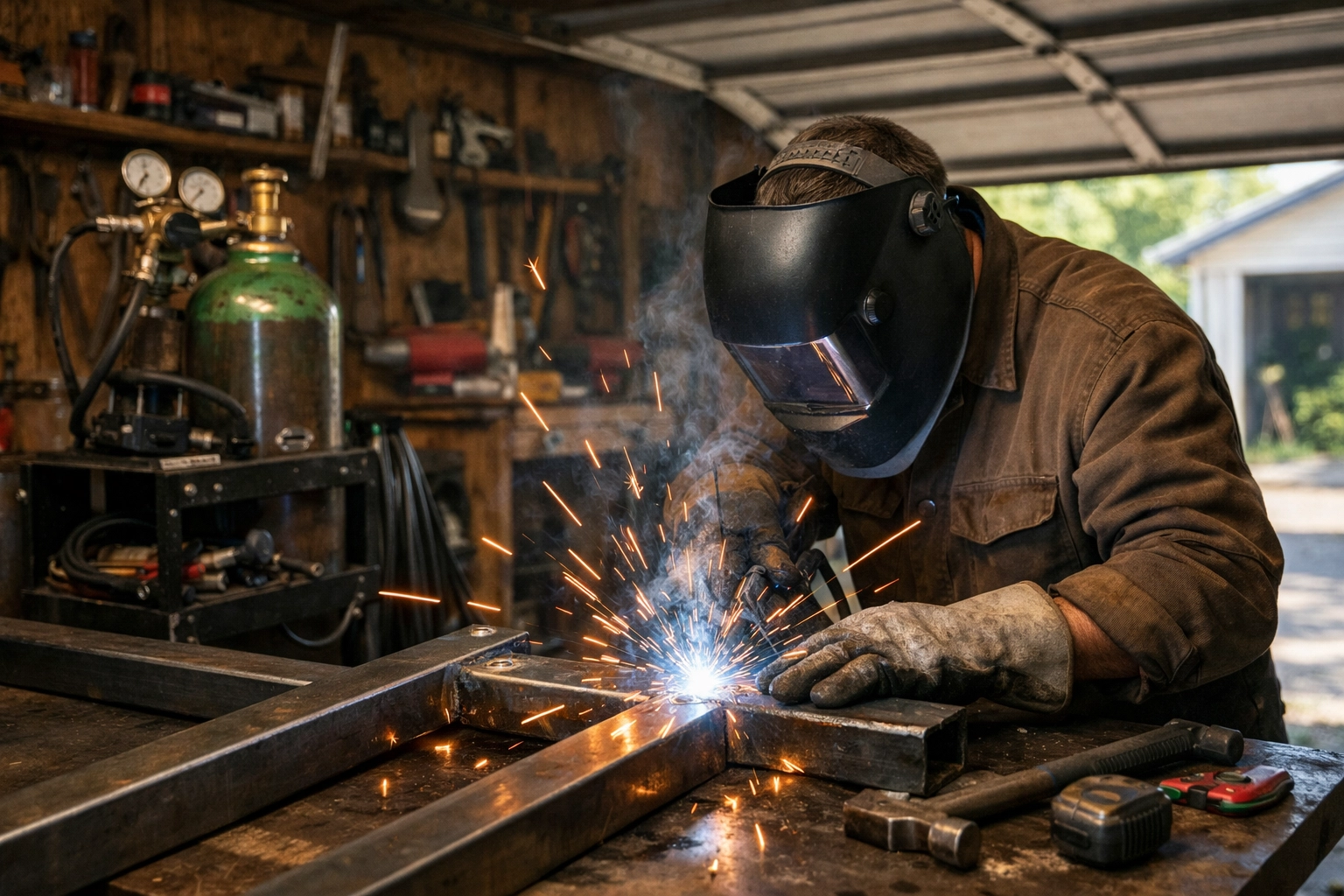
If you walk into any high-end fabrication shop in the UK, you’ll likely see MIG welding gas bottles filled with a mixture of Argon and CO2. Usually, this is around 95% Argon and 5% CO2 for thin sheet metal, or 88% Argon and 12% CO2 for general-purpose fabrication.
Why Argon Changes the Game
Argon is an inert gas, meaning it doesn’t react with the weld. By mixing a large amount of Argon with a small amount of CO2, you get the best of both worlds. The Argon stabilizes the arc, making it incredibly smooth and easy to control, while the small percentage of CO2 provides the necessary penetration and “wetting” action to make the weld flow beautifully.
The benefits are clear:
- Minimal Spatter: You spend less time grinding and more time building.
- Better Bead Appearance: Your welds look like they were done by a pro, with a flatter, smoother profile.
- Ease of Use: It’s much easier for a beginner to get a good result with an Argon mix.
For anyone working on automotive bodywork or furniture, an Argon/CO2 mix is almost essential. You can learn more about how these mixes work in our quick start guide to choosing the right mix.
Can I Use 100% Pure Argon for Steel?
This is a common question we get from people who also do TIG welding. If you have a bottle of pure Argon for your TIG welding gas setup, can you just plug it into your MIG welder?
The short answer is: No.
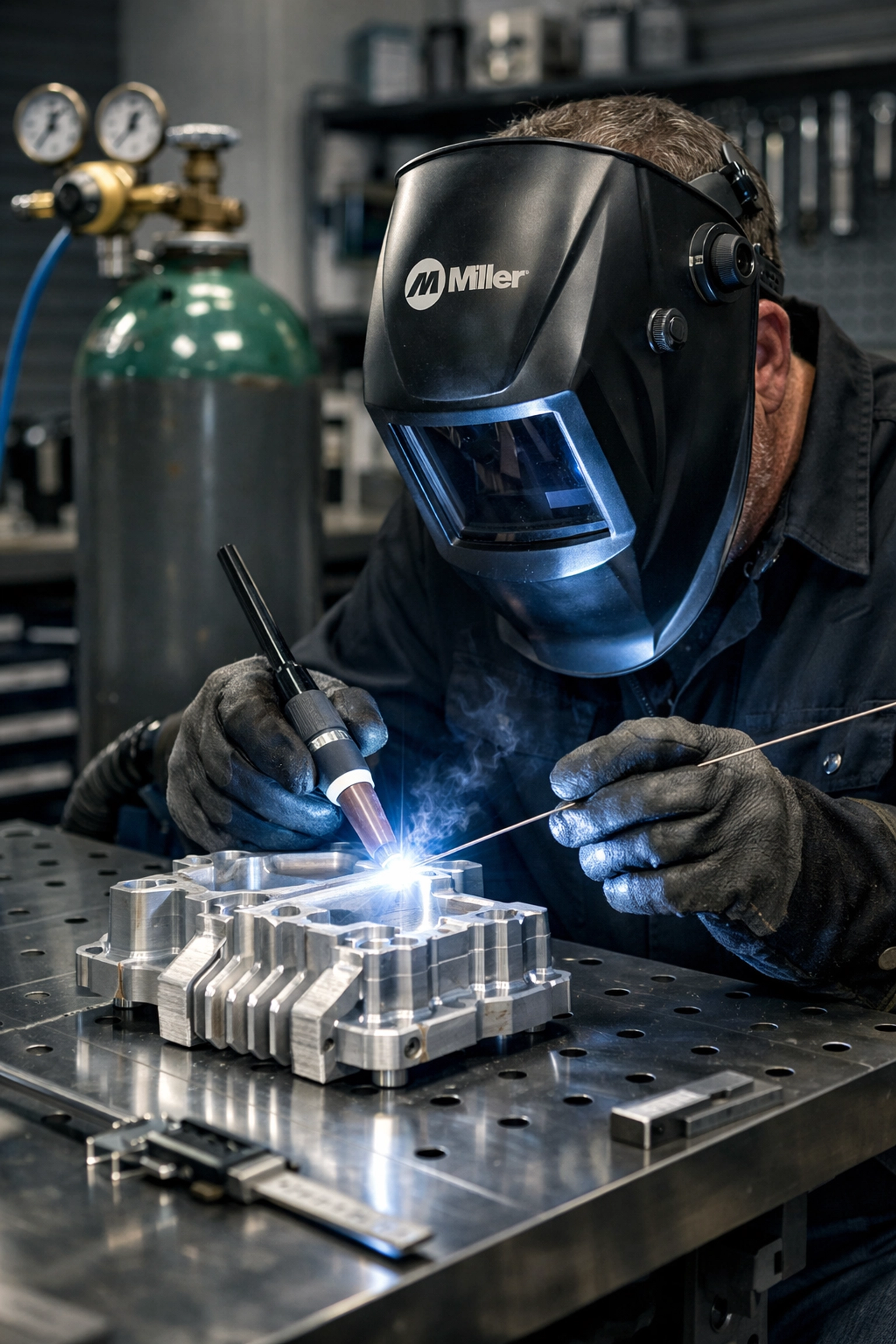
While pure Argon is perfect for TIG welding or MIG welding aluminium, it performs terribly on steel. Without the “active” component of CO2 or Oxygen to help with the heat transfer, the arc becomes unstable. You’ll end up with a weld that sits on top of the metal like a caterpillar, with almost zero penetration into the joint. It might look okay on the surface, but it will be weak and prone to failure. If you’re confused about which gas goes where, checking out the 20 types of gas cylinders can help clear things up.
The “Bottle Gases” Difference: No Rental Fees
One of the biggest frustrations for workshop owners in the UK is the “Rental Trap.” Many large gas suppliers will charge you a monthly or yearly rental fee just for the privilege of having their bottle sit in your workshop. If you’re a hobbyist or a small business, those fees can end up costing more than the gas itself!
At Bottle Gases, we do things differently. We offer a no recurring rental fee model. You pay for the gas and a one-time deposit on the bottle. When you run out, you just pay for the refill. It’s like owning your car instead of leasing it: you have total control over your costs. This makes high-quality Argon mixes much more accessible for small workshops.
Whether you need a 10L bottle for a quick project or a 20L or 34L cylinder for a major build, we provide competitive pricing and nationwide delivery across the UK. You can see how the different sizes compare in our guide on MIG gas bottle sizes explained.
Scenario: Which One Should You Choose?
Let’s look at three typical workshop scenarios to help you decide.
1. The Classic Car Restorer (Dave)
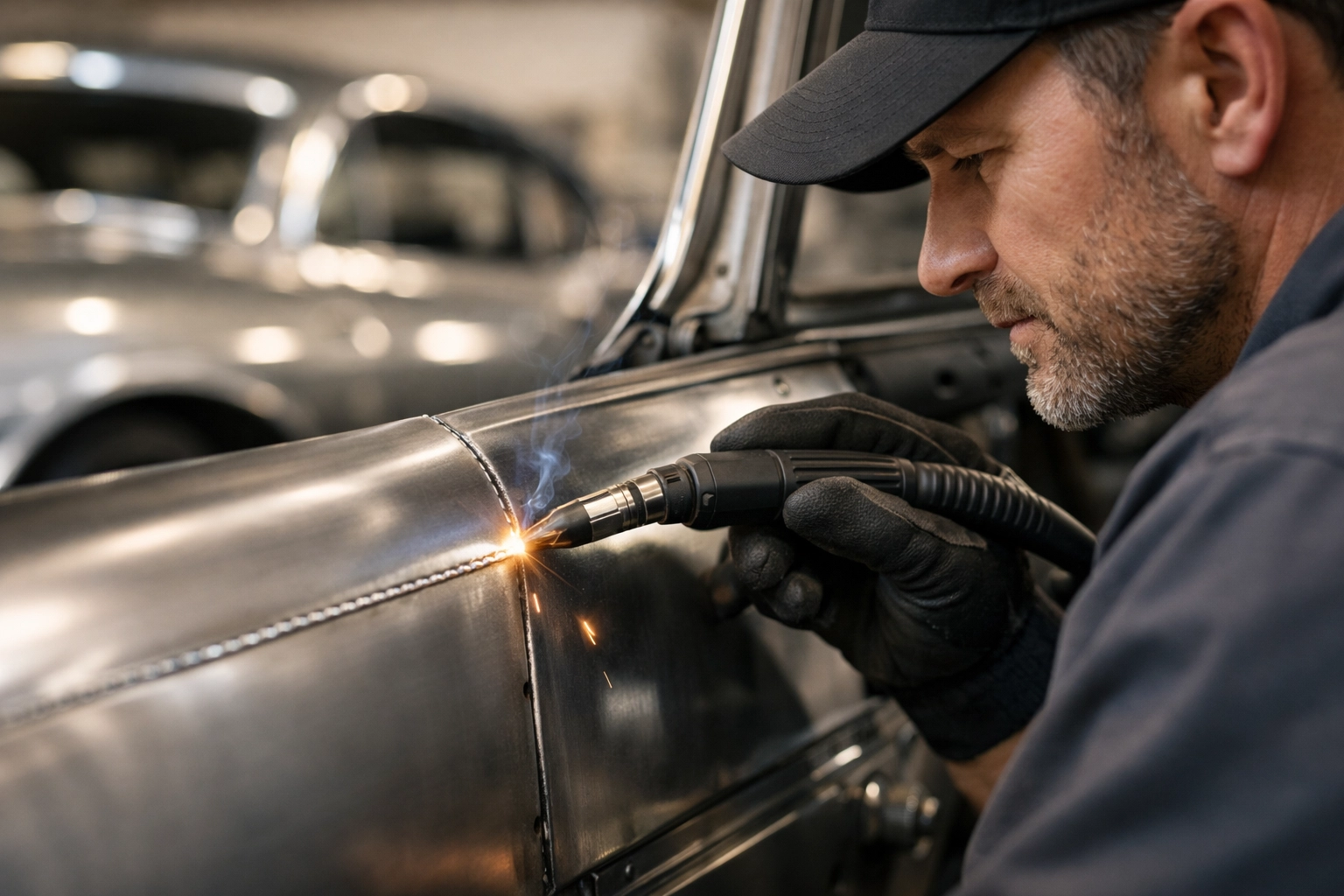
Dave is welding thin 1.0mm sheet metal on an old Land Rover. He needs precision and wants to avoid blowing holes in the metal. He also hates grinding because it thins the surrounding steel.
- The Verdict: 5% Argon Mix. The stable arc and low spatter are worth every penny for delicate bodywork.
2. The Budget-Conscious DIYer (Sarah)
Sarah is building a heavy-duty garden gate out of 5mm thick box section. She isn’t worried about a bit of spatter because she plans to paint the gate with thick Hammerite anyway. She wants to keep costs as low as possible.
- The Verdict: Pure CO2. It will give her the penetration she needs for the thick steel at the lowest possible price point.
3. The General Fabrication Shop (Steve)
Steve’s shop does a bit of everything: repairing trailers, making brackets, and occasional artistic work. He needs a gas that is versatile and produces high-quality results every time.
- The Verdict: 12% Argon Mix. This is the “Goldilocks” gas: perfect for everything from 2mm up to 10mm steel.
Refillable vs Disposable: A Quick Note
If you’re just starting out, you might be tempted by the small disposable canisters you find at local DIY stores. While they seem cheap, they actually contain very little gas (often measured in grams or tiny litres) and have a very high cost per minute of welding.
Switching to a refillable industrial gas supplier like us is almost always the smarter financial move. For more on this, read our comparison on gas bottle refills vs disposable.
Safety First in the Workshop
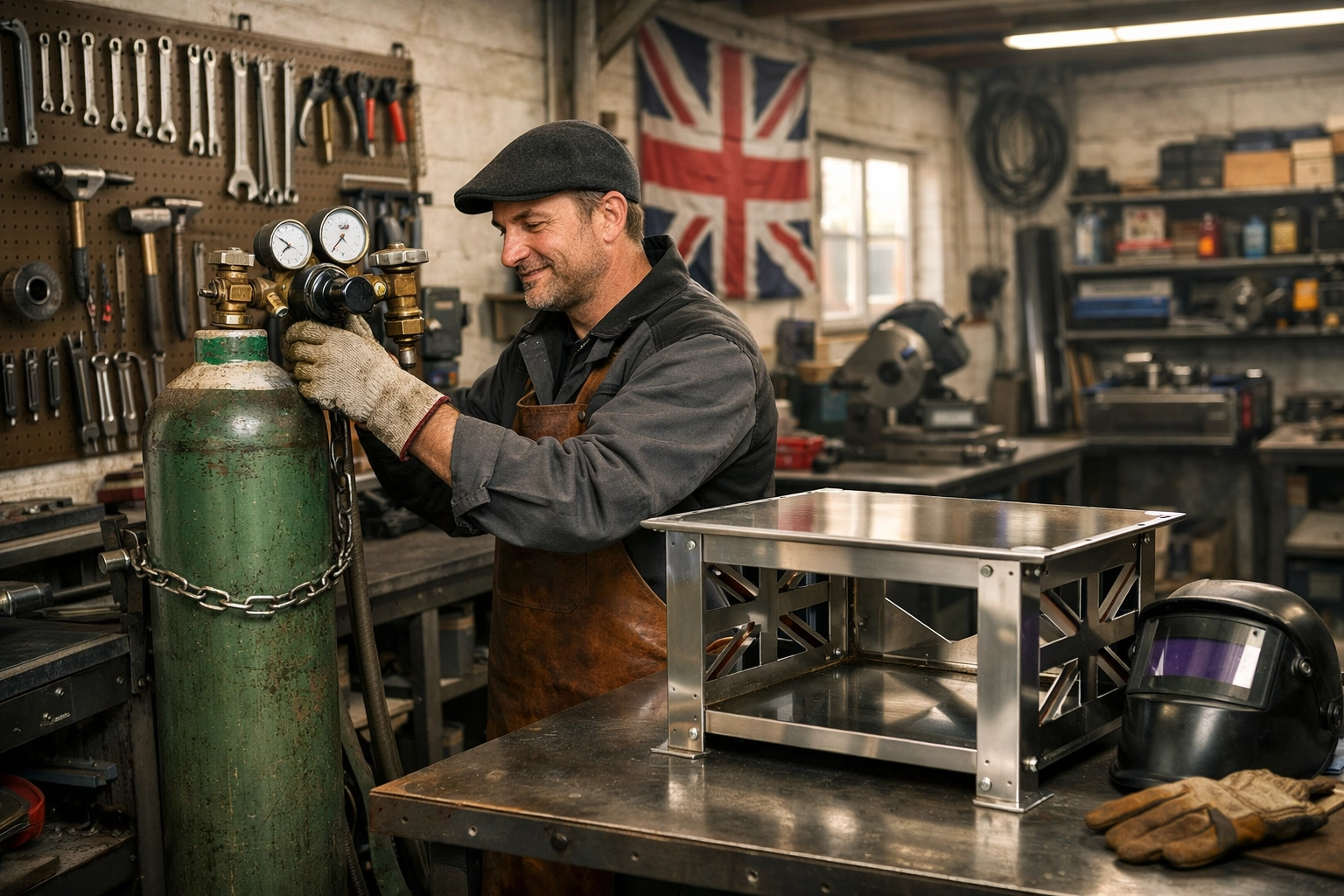
Whatever gas you choose, safety is paramount. High-pressure cylinders (often filled to 200 bar) need to be handled with respect. Always ensure your bottles are secured upright with a chain or trolley, and never move them with the regulator attached unless they are on a dedicated welding cart. If you’re new to the workshop environment, our welding gas safety guide is a must-read before you crack that valve.
Final Thoughts: Making the Cut
At the end of the day, your workshop is your sanctuary. Whether you’re working for profit or for passion, using the right tools makes the experience better.
While pure CO2 will always have a place for heavy, budget-focused welding, the majority of modern workshops find that an Argon mix is the superior choice. It saves you time, improves your weld quality, and: when bought from a supplier with no rental fees: is incredibly cost-effective.
Don’t let the wrong gas hold your projects back. Take a look at our full range of MIG welding gas bottles today and experience the difference a quality shield can make. With our competitive pricing and nationwide UK delivery, getting professional-grade gas to your door has never been easier.
Ready to upgrade your workshop? Explore our gas bottle options and let’s get welding!