Blog
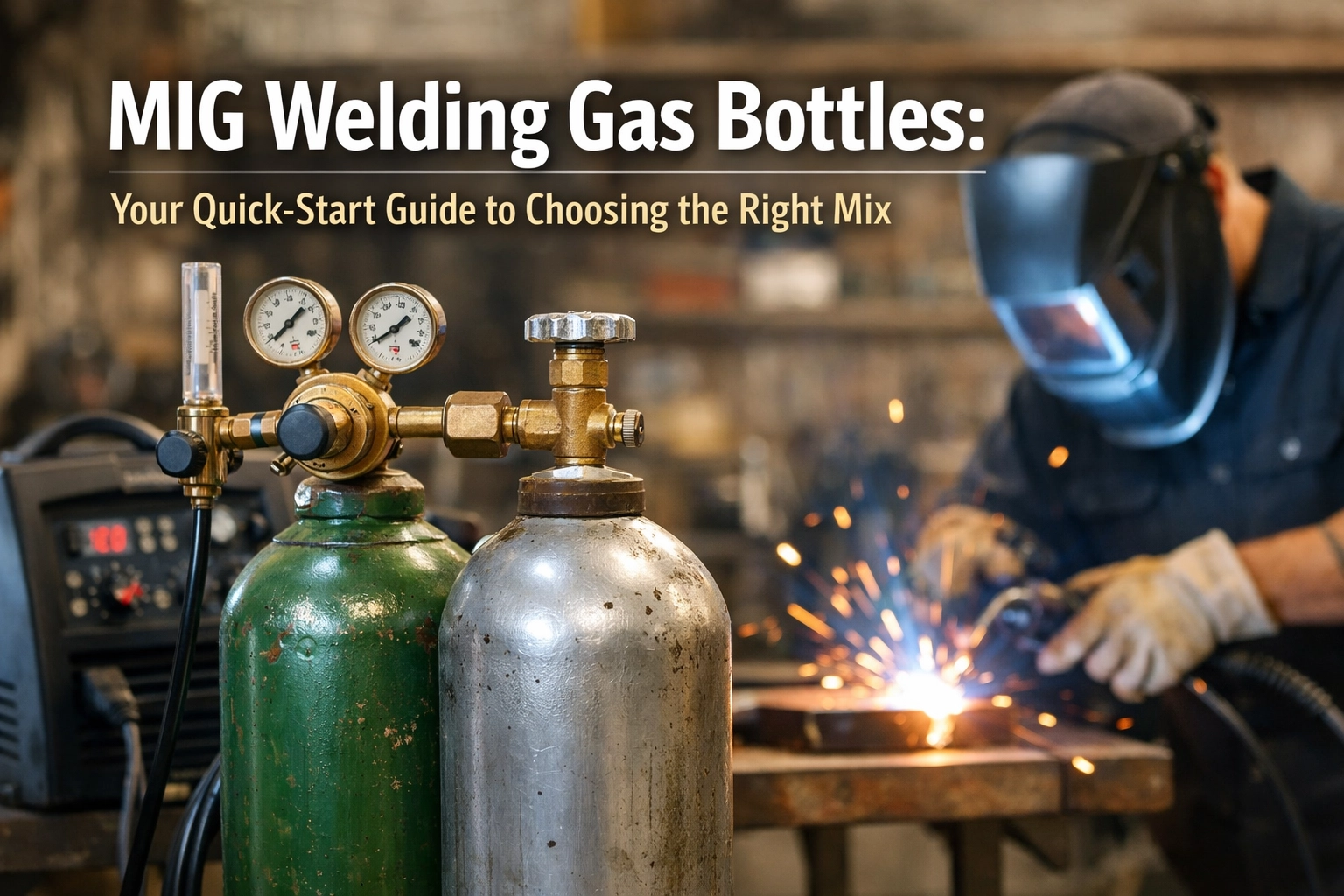
MIG Welding Gas Bottles: Your Quick-Start Guide to Choosing the Right Mix

Ever stood in front of a wall of gas cylinders wondering which one won’t ruin your weld? You’re not alone. Choosing the right MIG welding gas feels like decoding a secret language when you’re starting out, and even experienced welders sometimes question whether they’re using the best mix for the job.
Here’s the thing: the gas flowing through your torch matters just as much as your wire feed speed or voltage settings. Get it wrong, and you’ll battle spatter, porosity, and welds that look like they belong in a scrapyard. Get it right, and suddenly everything clicks into place.
Let’s cut through the confusion and get you welding with confidence.
Why Your Gas Choice Actually Matters
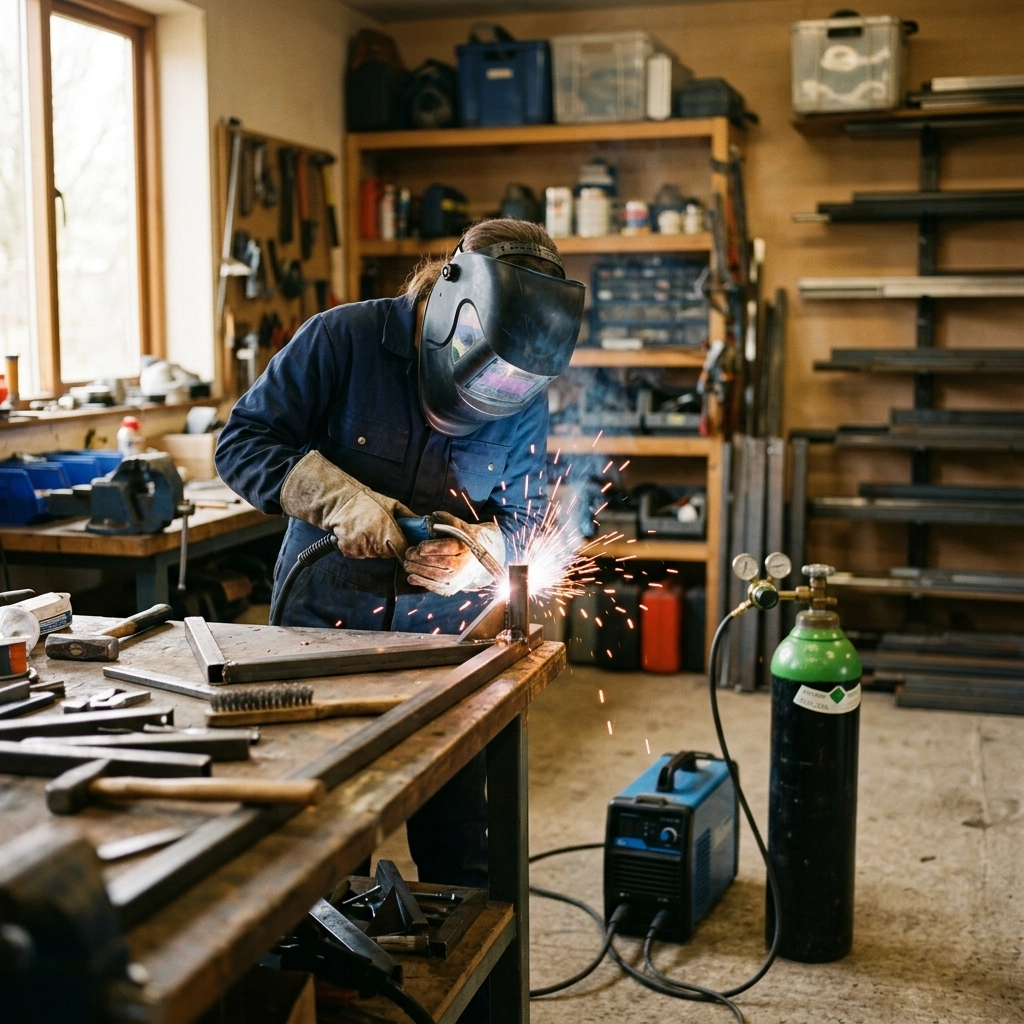
Think of shielding gas as an invisible bodyguard for your weld pool. When you strike an arc, you’re creating a puddle of molten metal that’s incredibly reactive. Oxygen and nitrogen from the surrounding air are desperate to contaminate it, leading to weak, porous welds that’ll fail when you need them most.
Your shielding gas creates a protective bubble around the weld, pushing away those contaminants and giving you clean, strong joints. But different gases behave differently, some add heat, others improve arc stability, and the right combination depends entirely on what you’re welding.
The Core Players: What’s In Your Gas Bottle
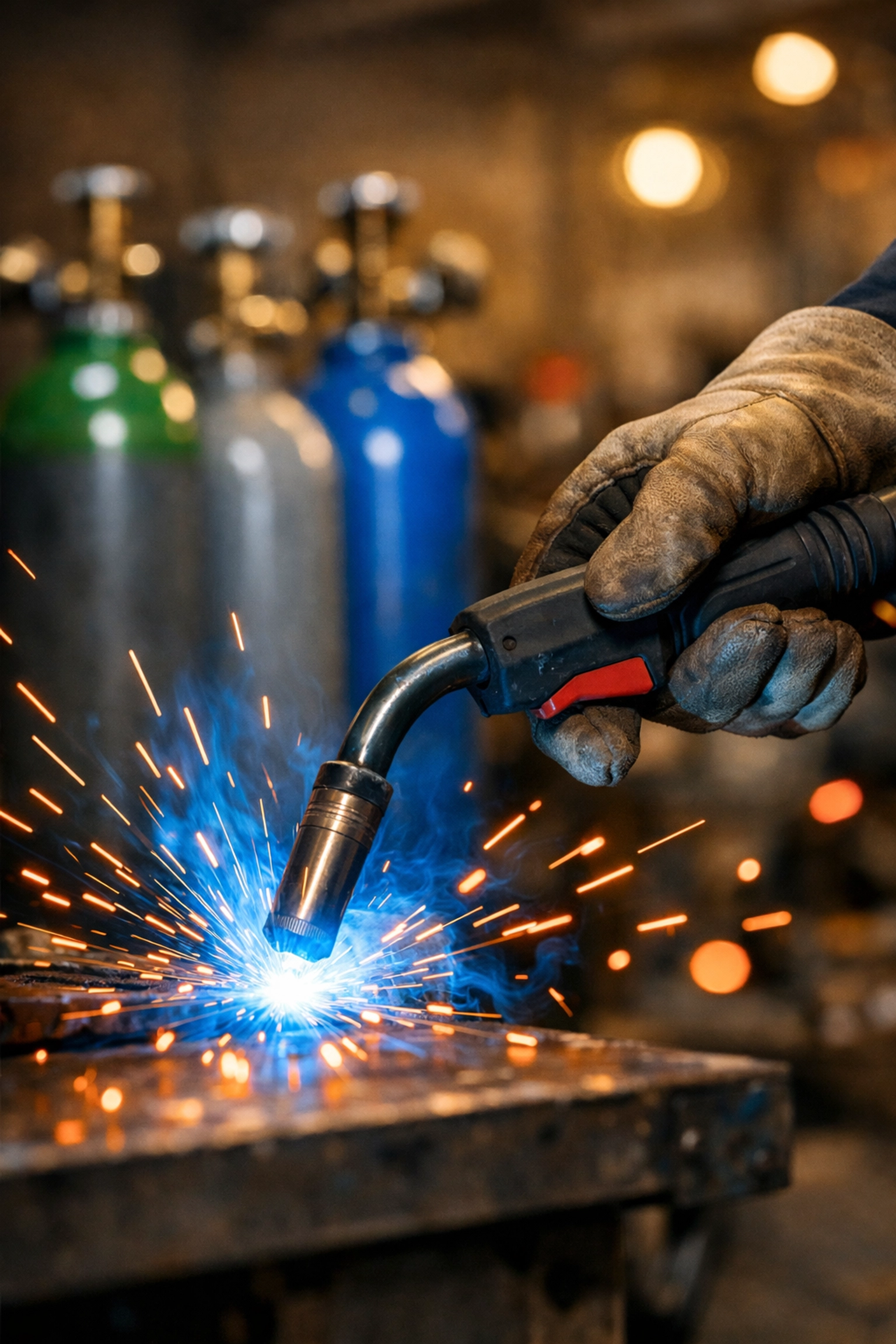
There are four main gases you’ll encounter in MIG welding: argon, carbon dioxide (CO2), oxygen, and helium. Each brings something different to the party.
Argon is the steady, reliable friend. It’s inert (doesn’t react with the metal), provides excellent arc stability, and minimizes spatter. It’s particularly brilliant for thinner materials where you need precise control.
Carbon dioxide is the workhorse. It’s the only gas you can use pure for MIG welding steel, it’s affordable, and it adds heat for deeper penetration. The trade-off? More spatter and a less stable arc compared to argon-based mixtures.
Oxygen and helium are the supporting cast, you’ll rarely use them on their own, but in small amounts, they transform how the primary gases perform.
Matching Gas to Metal: Your Cheat Sheet
Welding Carbon Steel
If you’re working with mild steel, fabricating gates, repairing machinery, building furniture, you’ve got three solid options.
The 80% Argon / 20% CO2 mix is the gold standard. It gives you the best of both worlds: argon’s smooth arc and minimal spatter, with enough CO2 to add heat and penetration. You’ll weld faster with less cleanup time, and the puddle control is spot-on. This is what most professional fabricators reach for first.
For thinner steel up to about 2mm thick, consider 95% Argon / 5% CO2. The extra argon gives you even finer control, reducing the risk of burning through thin material. It’s particularly useful for automotive bodywork or sheet metal fabrication.
Pure CO2 is the budget-friendly option that still gets the job done. Yes, you’ll deal with more spatter and smoke, but for heavy structural work or when you’re doing a lot of grinding anyway, it’s perfectly acceptable. The cost savings can be significant, especially for high-volume work.
Stainless Steel Projects
Stainless steel is a different beast. The standard mix here is Pure Argon.
An increasingly popular alternative is 98% Argon / 2% CO2. It’s often more readily available and cost-effective than helium-based mixtures while delivering excellent results. If you’re welding stainless regularly, it’s worth experimenting with both to see which you prefer.
Aluminum Welding
For aluminum up to about 10mm thick, pure argon is your go-to. Aluminum is already challenging enough to weld: you need that stable, clean arc that only pure argon provides. It minimizes spatter and gives you the control needed for this tricky metal.
When you’re tackling thicker aluminum sections, you might need to step up to argon-helium mixtures or even pure helium. These provide higher heat input to properly penetrate thick material and reduce porosity. Just be aware that helium significantly increases your gas costs: but sometimes it’s the only way to do the job properly.
Pure Gases vs. Mixtures: Understanding the Trade-Offs
Here’s a quick truth: pure gases are simpler but limited. Argon alone is brilliant for non-ferrous metals and thin materials. CO2 alone works for steel but creates more mess.
Mixtures give you flexibility. By blending gases in specific ratios, you can fine-tune your welding performance: adjusting heat input, arc stability, penetration depth, and spatter levels to match your exact needs.
Think of it like cooking. You could use just salt or just pepper, but the right combination of seasonings transforms the dish. Same principle applies to welding gases.
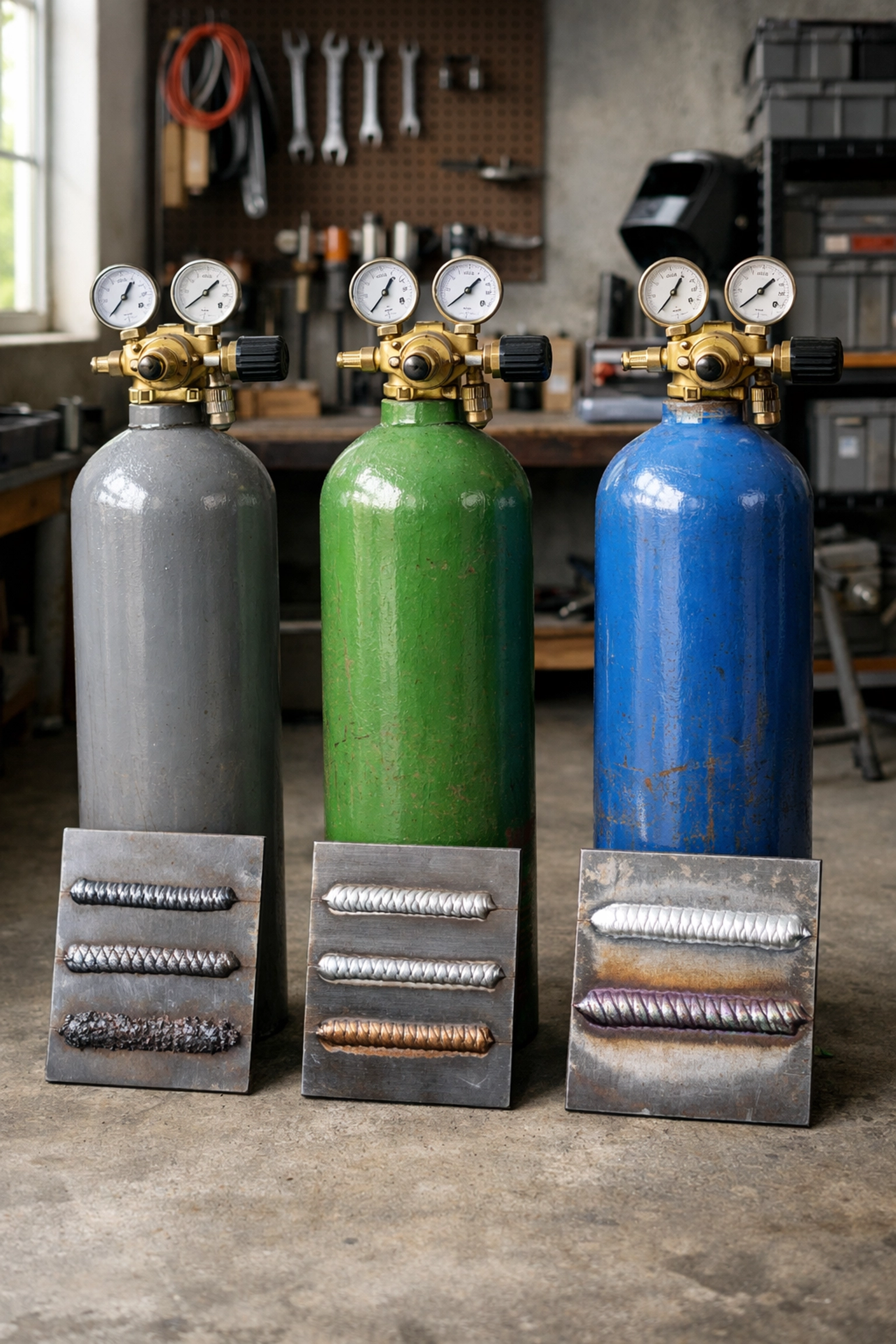
Choosing Based on Your Actual Work
Let’s get practical. What are you actually welding?
If you’re a general fabricator working mainly with mild steel in various thicknesses, stock 80/20 Argon-CO2. It’ll handle 90% of what comes through your workshop door. Keep some pure CO2 as a backup for heavy work where spatter doesn’t matter.
Automotive or bodywork specialists should prioritize the 95/5 Argon-CO2 mix for thin panels, with some pure argon on hand if you occasionally tackle aluminum panels or trim.
Stainless fabricators need that Pure Argon or Argon-CO2 stainless mix. There’s no real substitute if you want quality results.
Multi-metal workshops juggling different materials? You’ll need a small inventory: the 80/20 for steel, pure argon for aluminum, and the stainless mix for that work. It sounds like a lot, but having the right gas for each job actually saves money by reducing rework and wasted materials.
Why Buying Outright Makes Sense
Here’s something worth considering: those traditional gas rental schemes with monthly fees? They’re designed for large industrial operations that use massive volumes. For most workshops and independent welders, you’re literally paying for gas you’re not using.
At Bottle Gases, we’ve stripped away the rental complexity. You buy your gas cylinder outright: no recurring fees, no contracts, no surprises. Use it at your own pace. Need a refill? We deliver nationwide, often at prices that undercut the big rental schemes even before you factor in those avoided monthly charges.
It’s particularly brilliant for side-gig welders, mobile fabricators, or anyone who doesn’t weld constantly. Your gas is there when you need it, not on someone else’s timetable.
Getting Started: Your Action Plan
If you’re buying your first MIG welding gas or switching suppliers, here’s your straightforward approach:
Step 1: Identify your primary material. What do you weld most often? That determines your main gas supply.
Step 2: Choose your cylinder size. A 2-litre bottle is perfect for occasional use and easy to handle. Need more capacity? We stock larger sizes for busy workshops.
Step 3: Order with confidence. Our MIG welding gas options are clearly labeled and described. If you’re uncertain, our team actually understands welding: we’re not just shifting boxes.
Step 4: Store it properly. Keep cylinders upright, secured, and away from heat sources. Basic safety that protects your investment.
The Bottom Line
Choosing MIG welding gas doesn’t need to be complicated. Match the gas to your metal, understand what each component does, and buy smart by avoiding unnecessary rental fees.
Whether you’re welding up a trailer repair on Saturday morning or running a full-time fabrication business, having the right gas in your cylinder transforms your results. Clean welds, less rework, and confidence that your joins will hold: that’s what proper gas selection delivers.
Ready to stock up? Browse our welding gas range and get nationwide delivery without the rental hassle. Your next perfect weld starts with the right gas in your bottle.