Blog

MIG Gas Bottle Sizes Explained: Which One Saves You the Most Money?

Ever stood in front of a row of MIG gas bottles and wondered which one actually makes financial sense? You're not alone. Most welders either overspend on bottles that are too small or get locked into rental contracts that quietly drain their wallet month after month.
Here's the truth: the "cheapest" bottle upfront is rarely the most economical option over time. And if you're renting? You're essentially paying a monthly subscription for gas you already used.
Let's break down exactly which MIG gas bottle size saves you the most money: and why owning your cylinder outright changes the entire equation.
Understanding MIG Gas Bottle Sizes: It's All About Litres and Bar
UK MIG welding gas bottles are measured in two key numbers: water capacity (in litres) and pressure (in bar). A 10L bottle at 200 bar doesn't just hold 10 litres of gas: it holds approximately 2,000 litres of usable shielding gas once decompressed to atmospheric pressure.
Here's what you'll typically find on the market:
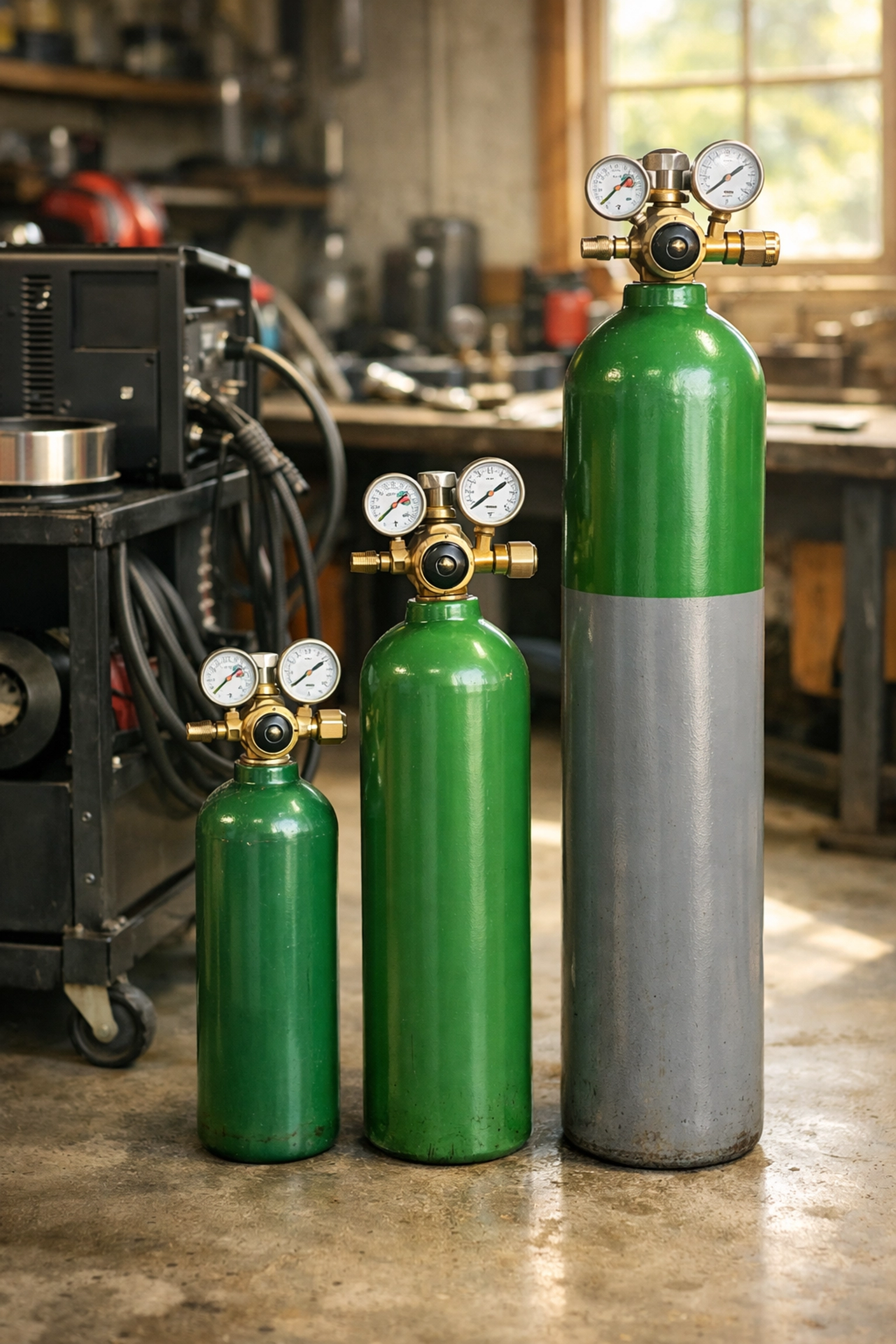
2L Cylinder – Around 400 litres of gas at working pressure
5L Cylinder – Roughly 1,000 litres of usable gas
10L Cylinder – Approximately 2,000 litres of gas
20L Cylinder – Close to 4,000 litres of gas
Think of it like buying milk. You could grab a pint every other day, or buy a 4-pint bottle once a week. Same product, very different cost per unit: and a lot less hassle.
The Real Cost Per Litre: Why Bigger Bottles Win
Let's talk numbers. When you purchase and refill your own bottle, the cost per litre drops significantly as you scale up. Here's the rough breakdown based on typical UK pricing:
- 2L bottle refill: Higher per-litre cost, best for very occasional jobs
- 5L bottle refill: Moderate per-litre cost, decent for hobby welders
- 10L bottle refill: Better value per litre, suits regular use
- 20L bottle refill: Best per-litre cost, ideal for professional or heavy-duty work
The difference? You might pay 30-40% more per litre on a 2L bottle compared to a 20L cylinder. If you're welding every week, that adds up fast.
But here's where ownership really pays off: once you've purchased your cylinder, you're only paying for refills: not monthly rental fees, not "bottle hire," not annual contracts. Just the gas itself.
Calculating Your Actual Usage: The 15-20 Litres Per Minute Rule
Before you choose a bottle size, you need to know how much gas you actually burn through. Most MIG welders run at a flow rate between 10 and 20 litres per minute, depending on wire diameter and material thickness.
Let's say you're welding mild steel at a typical 15 litres per minute flow rate. Here's what you get:
- 2L bottle (400L total): About 27 minutes of welding time
- 5L bottle (1,000L total): Roughly 65 minutes of welding
- 10L bottle (2,000L total): Around 2 hours 15 minutes of arc time
- 20L bottle (4,000L total): Close to 4 hours 30 minutes of actual welding
Notice the pattern? Every time you double the bottle size, you double your welding time: but the cost doesn't double. That's where the savings live.
If you're working on a fabrication job that takes three hours of welding, a 2L bottle won't even get you halfway. You'll either stop mid-job or end up panic-buying another bottle at full retail price.
The Weekend Warrior: 5L or 10L Bottles
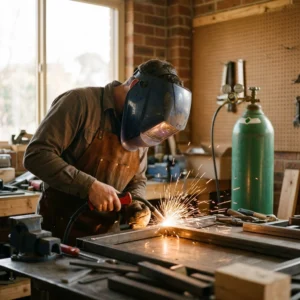
You weld a couple of hours on Saturday mornings. Maybe you're building a garden gate, repairing a trailer, or working on a classic car restoration. You don't need industrial capacity, but you also don't want to run out halfway through tack-welding a chassis.
For this usage pattern, a 10L bottle hits the sweet spot. You'll get multiple weekend sessions out of a single refill, the initial purchase cost is manageable, and you're not lugging around a 20L cylinder that weighs 30kg when full.
A 5L bottle works if you're truly occasional: welding a few times a year: but most "weekend warriors" quickly realise they're refilling too often. Every trip to refill is time you're not welding.
And if you're buying from someone who charges per refill visit rather than per litre? Those 5L refills get expensive fast.
The Professional Fabricator: 20L Bottles Every Time
If welding is how you make a living, this isn't even a debate. A 20L MIG gas bottle is the only size that makes financial sense.
You're welding multiple hours a day. You can't afford to run out mid-job or waste time on constant refill runs. The 20L bottle gives you roughly 4.5 hours of continuous arc time, which translates to a full day's work once you factor in setup, positioning, and grinding time.
The cost per litre is the lowest you'll find, and because you own the cylinder outright, you're not paying rental fees on top of your gas costs. Over a year, that difference between renting and owning can easily cover the cost of another bottle.
Professional welders often keep two 20L bottles on rotation: one in use, one ready as backup. It's a simple system that eliminates downtime completely.
The Rental Trap: Why "Bottle Hire" Costs More Than You Think
Let's address the elephant in the workshop: rental contracts. Some suppliers push monthly or annual "bottle hire" agreements, claiming it's more convenient or cost-effective for small users.
It's not.
Here's what actually happens: you pay an upfront rental deposit, then a monthly or annual fee to keep the bottle, then you still pay for the gas refills on top of that. If you stop welding for a few months? You're still paying rental. Want to switch gas types? You might need a different bottle: and another rental agreement.
Over two years, those rental fees can exceed the cost of simply purchasing your own cylinder outright. And you're locked in.
When you purchase your MIG gas bottle from the start, you pay once, refill as needed, and there's no ongoing drain on your cash flow. You can switch between 5% CO2 argon mix and other shielding gases without needing supplier approval or new contracts.
Ownership isn't just cheaper: it's freedom.
Size vs Portability: The Practical Trade-Off
Now, before you rush out and buy the biggest bottle you can find, let's talk about the reality of shifting gas cylinders around.
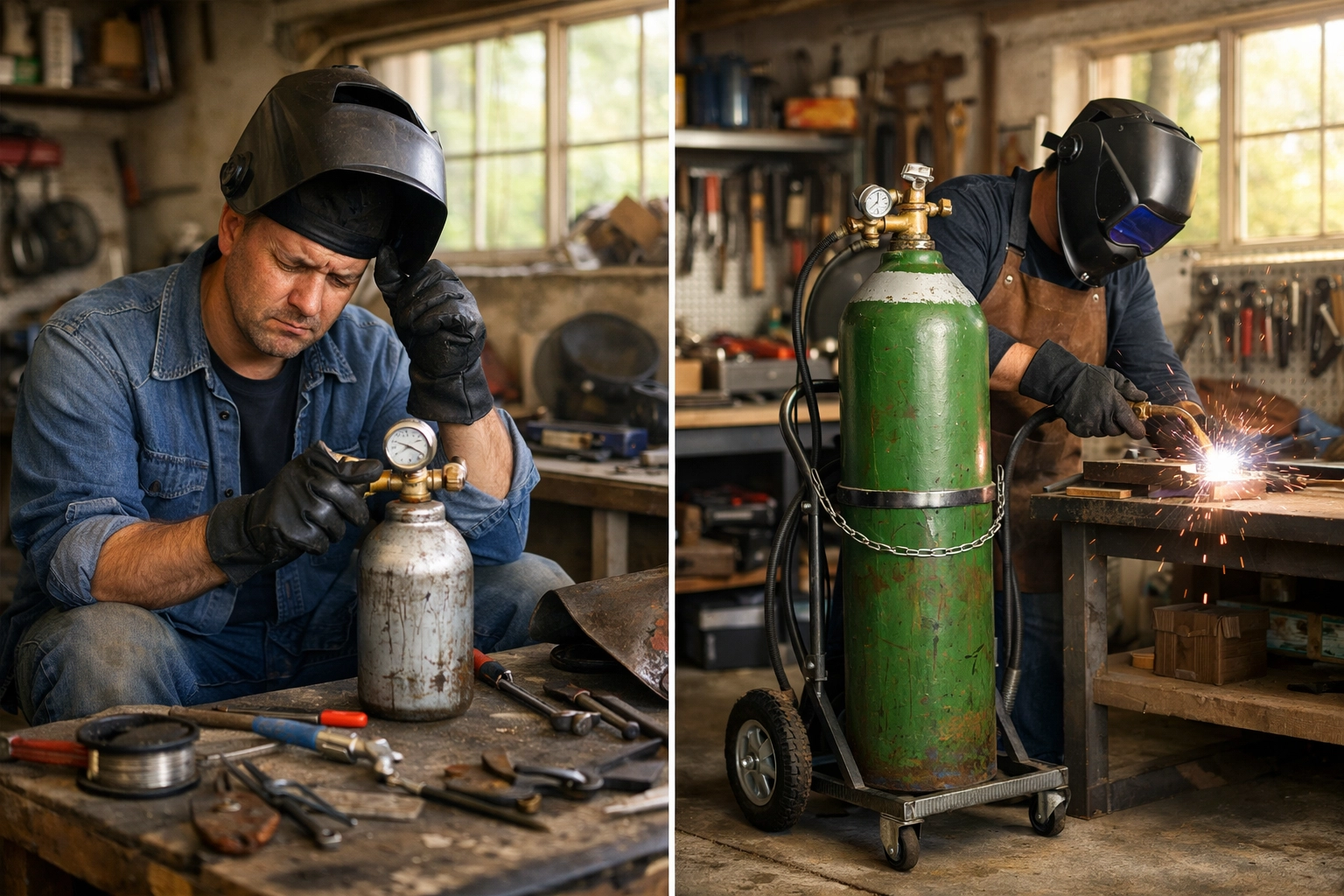
A 2L bottle is genuinely portable: you can carry it with one hand. A 5L bottle is still manageable for most people. A 10L bottle? You'll want a trolley or cylinder cart. A 20L bottle fully charged is heavy enough that safe handling becomes a real consideration.
If you're a mobile welder working across multiple sites, lugging a 20L bottle in and out of a van every day gets old fast. A 10L cylinder might be the better compromise, even if the per-litre cost is slightly higher.
Similarly, if you're working in tight spaces: under a vehicle, inside a confined workshop: a smaller bottle might be easier to position and less likely to get knocked over.
The most economical bottle is the one you'll actually use safely and conveniently. There's no point saving £10 on gas if you throw your back out wrestling a cylinder you can't handle.
Making the Right Choice: Your Welding Reality
So which size actually saves you the most money? It depends entirely on your welding reality:
Choose a 2L bottle if you weld less than once a month and portability matters more than cost per litre. It's the "pay as you go" option.
Choose a 5L bottle if you're a casual hobbyist welding a few times a month. It's a decent middle ground, but you'll outgrow it if your welding picks up.
Choose a 10L bottle if you're welding regularly: weekly or more: and want the best balance between cost efficiency and practical handling.
Choose a 20L bottle if you're a professional or serious enthusiast welding multiple hours a week. The cost per litre is unbeatable, and you'll spend less time refilling.
And whatever size you choose? Buy it outright. Skip the rental contracts. Own your gas supply, refill when you need to, and keep the savings in your pocket where they belong.
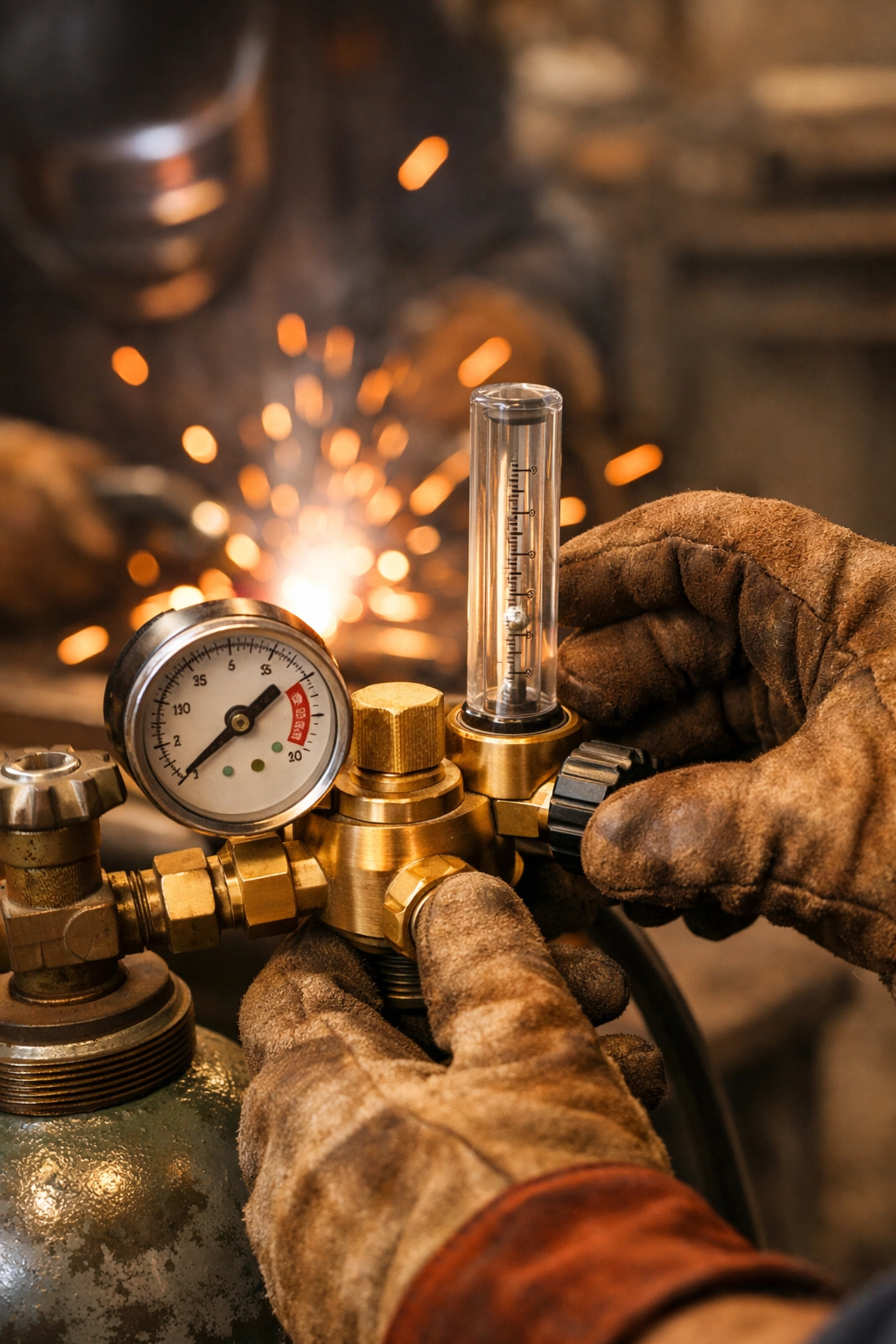
You'll also want a proper shielding gas regulator to control flow accurately: burning through gas at 25 litres per minute when 15 would do is just throwing money into the air.
The Bottom Line: Ownership Beats Rental Every Time
The bottle size that saves you the most money isn't necessarily the biggest or the smallest: it's the one that matches your actual usage and that you own outright.
Rental fees are a slow leak that never stops. Buying too small means you're constantly refilling and paying more per litre. Buying too big means you're paying upfront for capacity you won't use for months.
But once you've nailed the right size for your work, ownership changes the game. No monthly fees, no contracts, no surprises. Just you, your welder, and the gas you need: when you need it.
That's how you save money on MIG gas bottles. Not by chasing the cheapest upfront price, but by thinking long-term and cutting out the middleman who profits from your ongoing dependency.