Cart 0
Nitrogen for Air Conditioning Explained in Under 3 Minutes
Ever wondered why HVAC engineers always seem to have a nitrogen cylinder on hand? Or perhaps you've heard technicians mention "purging with nitrogen" and thought it sounded like something from a science fiction film?
Here's the thing, nitrogen for air conditioning isn't complicated at all. In fact, once you understand why this simple, abundant gas is so essential to AC work, you'll never look at your cooling system the same way again.
Whether you're an HVAC professional looking to brush up on best practices, a trainee getting to grips with the trade, or simply a curious homeowner who wants to understand what's happening during your next service call, this guide breaks down everything you need to know about nitrogen and air conditioners in plain English.
What Exactly Is Nitrogen and Why Does It Matter?
Let's start with the basics. Nitrogen makes up roughly 78% of the air you're breathing right now. It's colourless, odourless, and completely inert, meaning it doesn't react with other substances or cause combustion.
This chemical stability is precisely what makes nitrogen invaluable for air conditioning work. Unlike regular air, pure nitrogen contains no moisture and no oxygen. Why does that matter? Because moisture and oxygen are the sworn enemies of refrigeration systems.
When moisture enters an AC system, it can freeze in the expansion device, corrode internal components, and create acids that eat away at the compressor. Oxygen, meanwhile, causes oxidation, essentially rust forming inside your copper pipework. Neither scenario ends well for your system's lifespan or your wallet.
The Five Essential Uses of Nitrogen in Air Conditioning
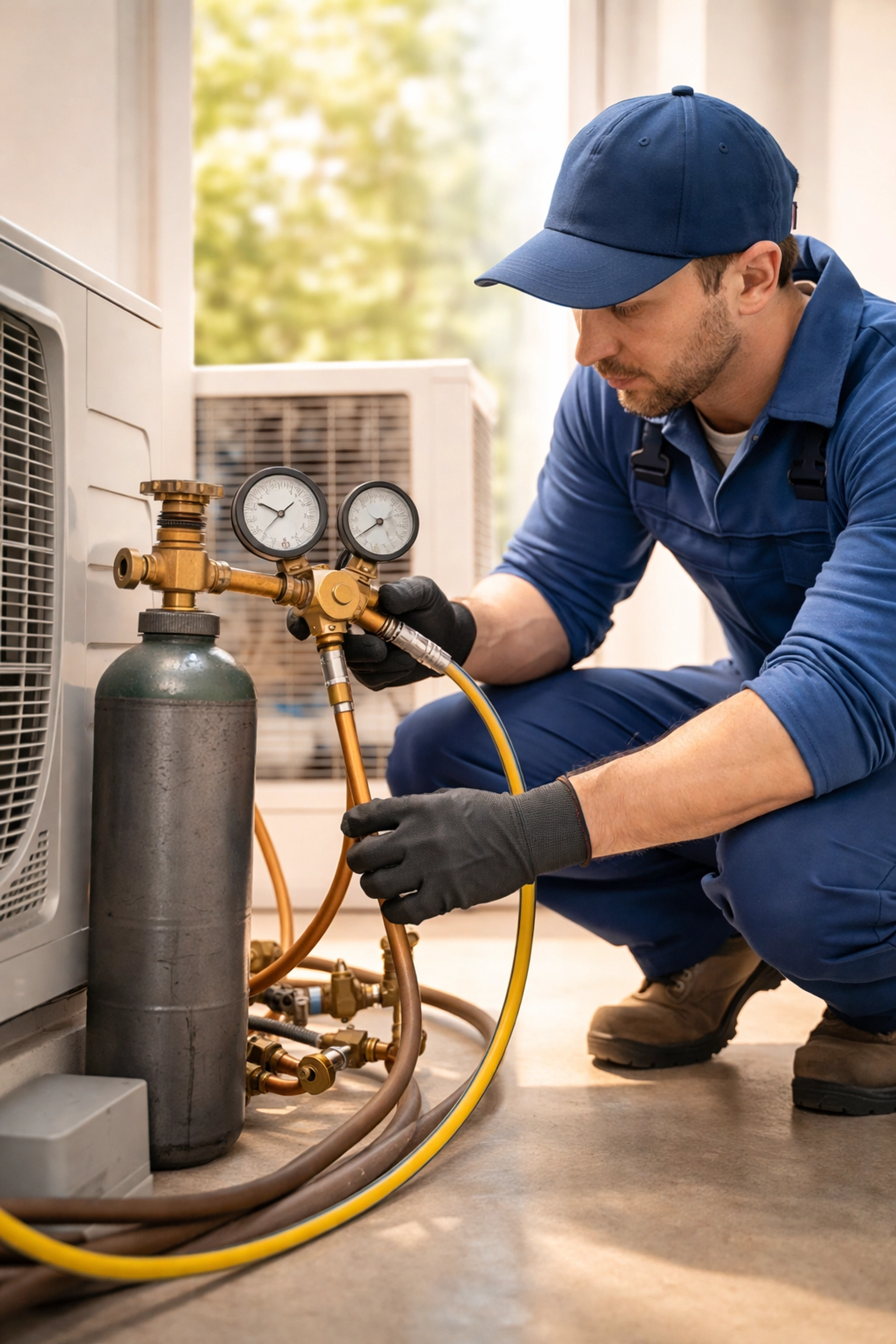
Now that you understand why nitrogen is the go-to gas for UK HVAC work, let's explore exactly how engineers use it. These five applications form the backbone of professional air conditioning and refrigeration installation and maintenance.
1. Leak Testing Before Charging
Before any refrigerant goes into a system, you need absolute certainty there are no leaks. This is where nitrogen shines.
By pressurising the system with dry nitrogen, typically to around 28–41 bar depending on the equipment and manufacturer guidance, engineers can safely identify weak points or suspect joints. You’ll apply a bubble solution to connections and watch for the telltale fizz of escaping gas.
This step isn't just good practice; it's essential for preventing refrigerant waste and ensuring safe operation. Finding a leak before charging saves time, money, and prevents harmful refrigerants from escaping into the atmosphere.
2. Purging Before Brazing
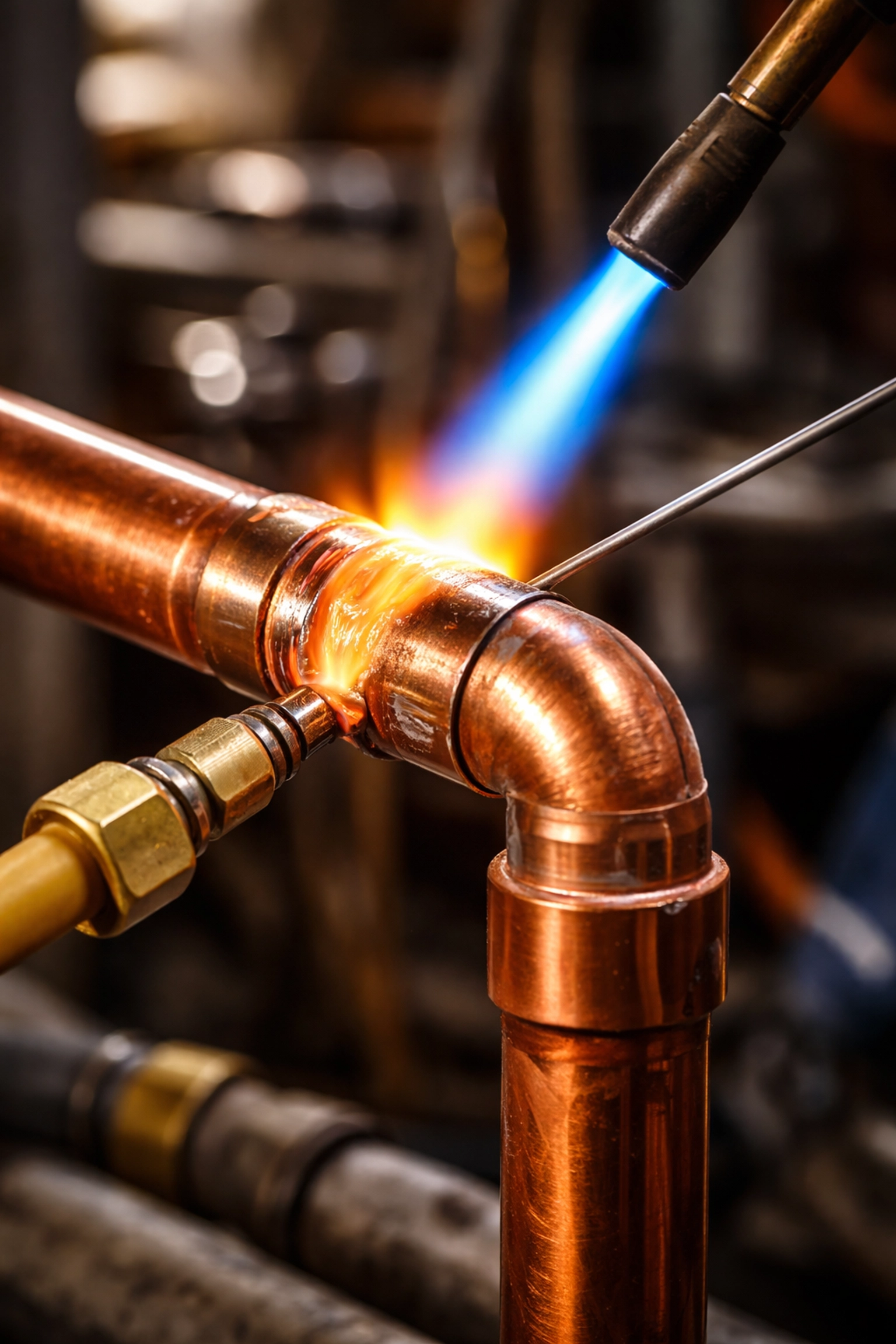
Here's where things get interesting. When copper pipes are brazed (welded) together during installation, the intense heat, often exceeding 700°C, would normally cause the inside of the copper to oxidise rapidly.
Picture this: tiny black flakes of copper oxide forming inside your pipework, then circulating through the system once it's running. These particles can clog filters, damage valves, and ultimately destroy the compressor. Not ideal, to say the least.
By purging the lines with nitrogen before brazing begins, technicians displace all the oxygen from inside the tubing. No oxygen means no oxidation, simple as that.
3. Flowing During Brazing
Purging alone isn't enough. While the actual brazing takes place, nitrogen continues to flow through the pipework at a lower, controlled pressure. This constant flow maintains the oxygen-free environment throughout the entire brazing process.
Think of it like keeping a protective blanket of inert gas around the joint while it's being formed. The result? Clean, strong connections with no internal contamination.
4. Pressurisation and Standing Tests
Once installation is complete, the system undergoes a pressurisation test. Nitrogen fills the entire system to a specific pressure, which is then monitored over an extended period, often 24 hours or more.
Any pressure drop indicates a leak that needs addressing. This standing test catches even the smallest imperfections that might not show up during initial leak detection.
5. Triple Evacuation
The final stage before charging with refrigerant involves what's known as triple evacuation. The system is evacuated using a vacuum pump, then pressurised with nitrogen, and this process repeats three times.
Each cycle removes more moisture and non-condensable gases from the system. By the third evacuation, the internal environment is virtually pristine, exactly what you need for optimal refrigerant performance and system longevity.
Why Nitrogen Beats the Alternatives
You might be wondering: couldn't you just use compressed air for these tasks? Technically, yes: but it would be a significant mistake.
Regular compressed air contains moisture from atmospheric humidity and, crucially, oxygen. Using it for brazing purges or pressurisation introduces the very contaminants you're trying to avoid.
Nitrogen, by contrast, offers several distinct advantages:
- Completely dry: No moisture means no internal corrosion or ice formation
- Chemically inert: Won't react with refrigerants, oils, or system components
- Cost-effective: Readily available and reasonably priced for industrial use
- Safe to handle: Non-toxic and non-flammable when used correctly
- Environmentally friendly: Unlike refrigerants, nitrogen has no global warming potential
Practical Considerations for HVAC Professionals
If you're working in the UK HVAC trade, having reliable access to nitrogen is non-negotiable. Here are some practical tips for getting the most from your nitrogen supply.
Choose a Bottle Size That Fits Your Day-to-Day Jobs
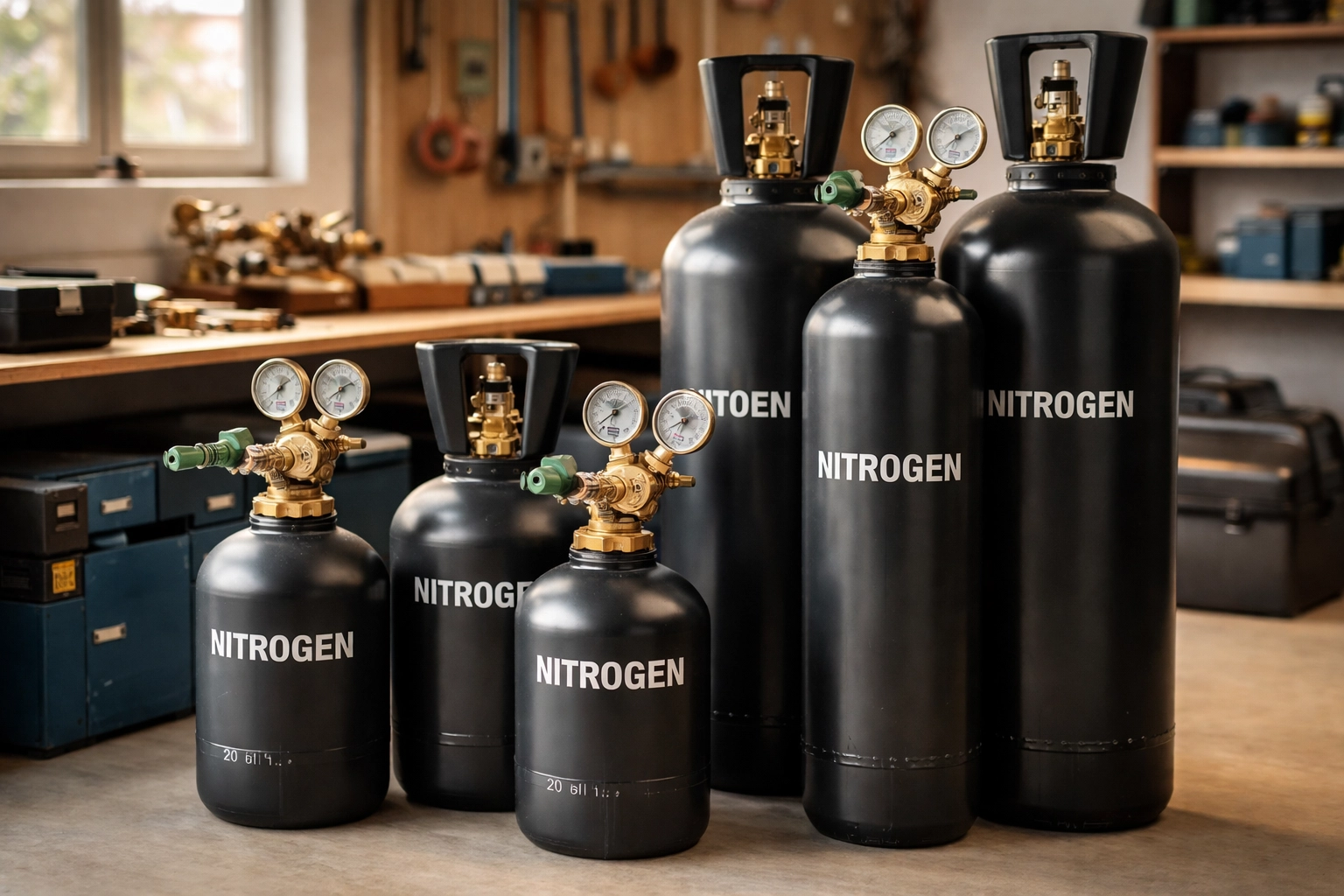
Nitrogen comes in different water capacities (litres), from portable 10-litre bottles that are easier to carry onto site, right up to larger 50-litre cylinders that suit regular installation work and workshops. Think about your typical workload: a domestic split install usually uses far less nitrogen than a big commercial heat pump or VRF/VRV system with long pipe runs.
For many engineers, a 20-litre or 50-litre option hits the sweet spot between portability and having enough gas to get through multiple pressure tests and purges without it feeling like a constant refill treadmill.
Use the Right High-Pressure Regulator (bar, Not Guesswork)
You’ll need a proper nitrogen regulator rated for high-pressure cylinders so you can accurately control both pressure (bar) for tightness testing and flow for purging while brazing. Look for:
- A pressure range suitable for HVAC testing work (for example 0–60 bar, depending on your requirements)
- Clear, easy-to-read gauges in bar
- Stable control at low flow rates for purging
Good kit doesn’t just feel nicer to use; it helps you work more accurately and consistently, job after job.
Storage and Safety
While nitrogen is safe under normal conditions, cylinders should always be stored upright, secured against falling, and kept away from heat sources. Remember that nitrogen displaces oxygen, so ensure adequate ventilation when working in confined spaces.
Where to Source Quality Nitrogen
Finding a reliable UK nitrogen supplier shouldn’t be a headache. At Bottle Gases, we supply nitrogen gas bottles and high-pressure cylinders suitable for HVAC pressure testing, purging during brazing, and commissioning work—whether you’re doing a one-off domestic install or managing ongoing commercial maintenance.
Our nitrogen products are available with flexible delivery options across the UK, so you’re not stuck waiting around when a job’s on the line. Whether you need a single 10-litre bottle, a 20-litre, or a 50-litre high-pressure cylinder, we’ve got options to match the way you work.
Browse our full range in the shop, or get in touch to discuss your specific requirements.
The Bottom Line
Nitrogen for air conditioning might seem like a small detail in the grand scheme of HVAC work, but it's genuinely fundamental to system reliability and longevity. From preventing oxidation during brazing to ensuring leak-free installations, this humble gas does the heavy lifting that keeps air conditioning systems running smoothly for years.
For HVAC professionals, using nitrogen correctly isn't optional: it's the mark of quality workmanship. For homeowners, understanding why your technician uses nitrogen helps you appreciate the care that goes into proper installation and maintenance.
Next time you see that distinctive black cylinder on an HVAC van, you'll know exactly why it's there. And if you're in the trade and need a reliable nitrogen supply, you know where to find us.