Cart 0
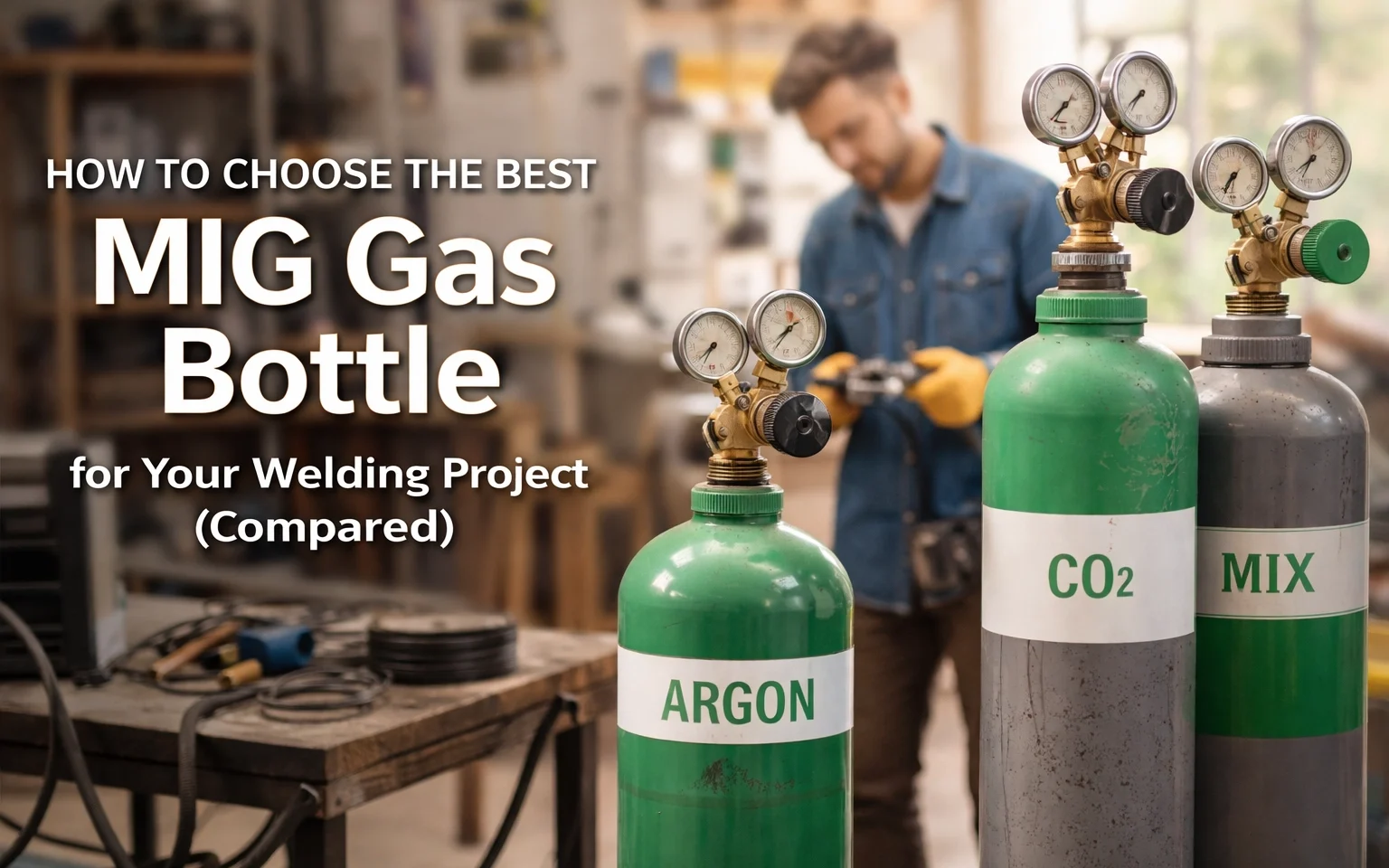
How to Choose the Best MIG Gas Bottle for Your Welding Project (Compared)
Ever stood in front of a wall of gas bottles, scratching your head and wondering which one is actually right for your welding project? You’re certainly not alone. Whether you’re a seasoned fabricator or someone who’s just invested in their first MIG welder, choosing the correct MIG gas bottle can feel surprisingly overwhelming.
The truth is, selecting the right shielding gas and bottle size can make or break your weld quality. Get it wrong, and you’ll end up with spatter-covered workpieces, porous welds, and a lot of frustration. Get it right, and your beads will lay down smooth, clean, and strong every single time.
In this guide, we’ll walk you through everything you need to know about choosing the best MIG gas bottle for your specific needs, from gas compositions and bottle sizes to the age-old debate of disposable versus refillable cylinders.
Why Does Your MIG Gas Selection Actually Matter?
Before diving into the specifics, let’s address why this decision is so important. Your shielding gas doesn’t just sit there looking pretty, it actively protects your molten weld pool from atmospheric contamination. Oxygen, nitrogen, and moisture in the air can cause porosity, brittleness, and weak joints if they come into contact with your weld.
Different gas mixtures also affect:
- Arc stability – How smooth and consistent your welding arc behaves
- Penetration depth – How deeply the weld fuses into the base metal
- Spatter levels – The amount of cleanup you’ll need afterwards
- Weld bead appearance – The final aesthetic quality of your work
So yes, that MIG gas bottle you choose is doing some serious heavy lifting behind the scenes.
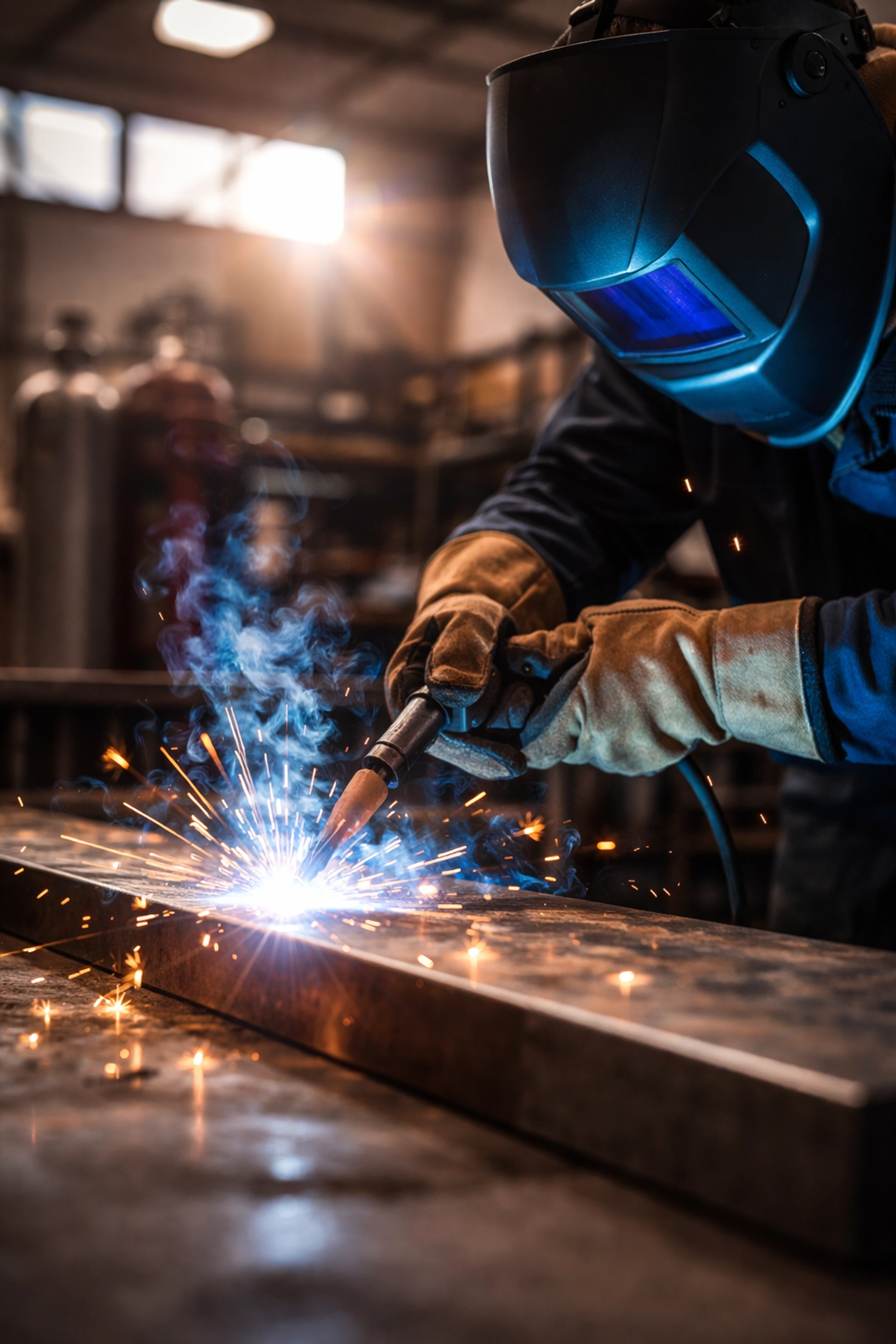
Understanding MIG Gas Types: Which Mixture Do You Need?
Not all shielding gases are created equal, and the material you’re welding largely dictates which gas you should reach for. Here’s a breakdown of the most common options available in the UK market.
For Mild Steel: The Workhorse Options
If you’re welding mild steel (the bread-and-butter job for a lot of UK garages, farms, and small fab shops), you’ll typically be choosing between an argon/CO2 mix and straight CO2.
Argon/CO2 mixes (common UK choices: 5% or 20% CO2 in Argon)
On Bottle Gases, you’ll see popular MIG mixes like Argon + 5% CO2 and Argon + 20% CO2. As a rule of thumb:
- 5% CO2 in Argon is a great “clean and controlled” option—smoother arc and less spatter, ideal when you care about bead appearance.
- 20% CO2 in Argon is a bit more “punchy”—good penetration and a robust arc that many people like for general mild steel fabrication.
100% CO2
If budget is your main driver, straight CO2 is still widely used in the UK. It offers strong penetration and is cost-effective, but it usually comes with a harsher arc and more spatter (so a bit more cleanup). For functional work where looks aren’t the top priority, it’s a solid choice.
For Stainless Steel: Precision Blends
Stainless steel requires a different approach. The most common mixture is:
- 98% Argon / 2% CO2 – Excellent for general stainless steel fabrication
These higher-argon blends protect the chromium content in stainless steel, preventing oxidation and maintaining corrosion resistance in your finished welds.
For Aluminium: Keep It Pure
Aluminium MIG welding typically requires 100% Argon or sometimes an Argon/Helium blend for thicker sections. The helium addition increases heat input, which helps when working with aluminium’s high thermal conductivity.
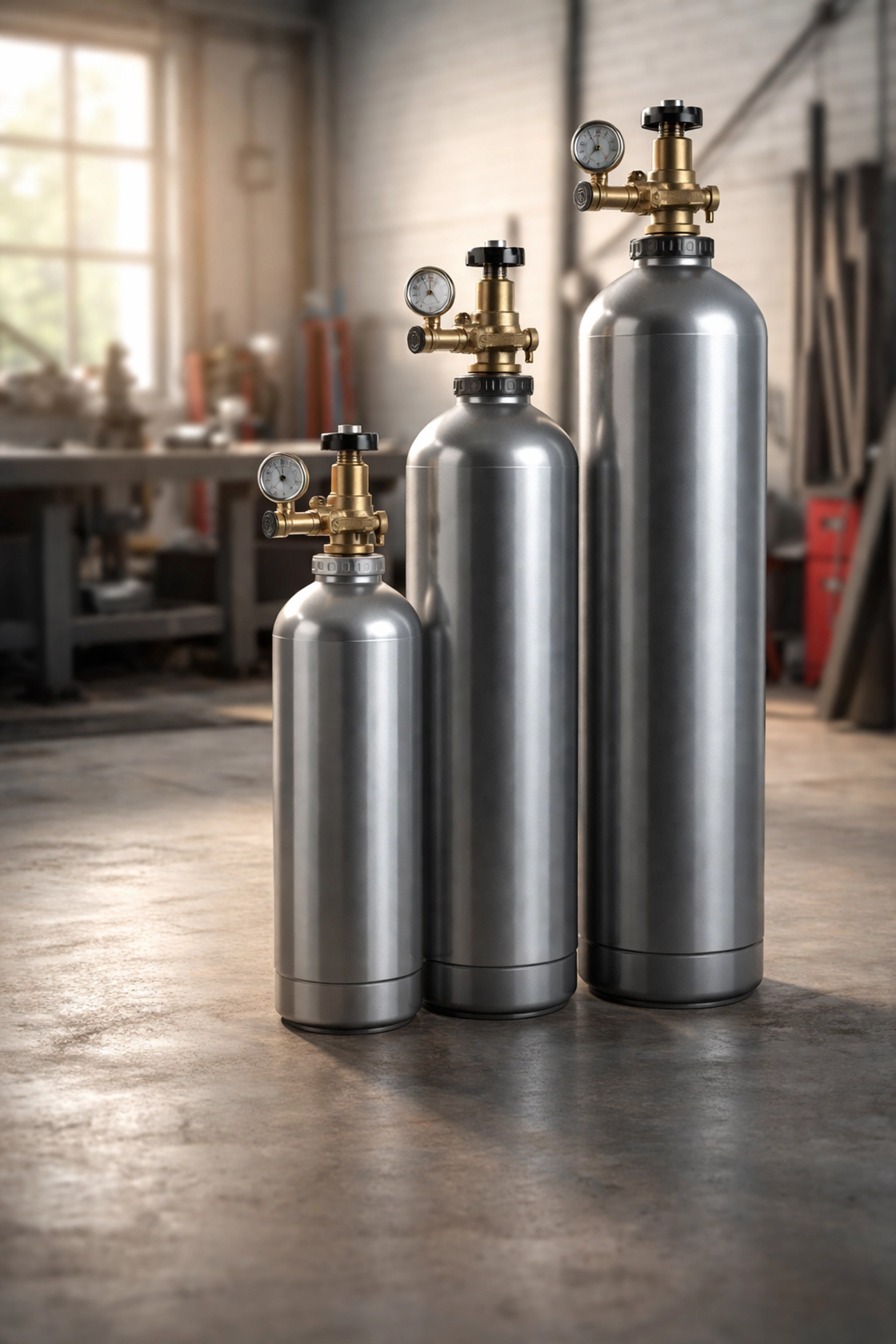
Choosing the Right MIG Gas Bottle Size
Now that you know which gas you need, let’s talk about how much of it to buy. In the UK, gas bottles are typically measured by their water capacity in litres. Here are the common sizes you’ll encounter:
Small Cylinders (10 Litres)
Best for: Occasional hobby welders, mobile work, limited workshop space
These compact cylinders stand around 80cm tall and weigh approximately 18-21kg when full. They’re easy to transport and fit neatly into smaller workshops or garages. However, you’ll find yourself refilling more frequently if you weld regularly.
Medium Cylinders (20 Litres)
Best for: Regular hobby welders, small fabrication businesses
Standing roughly 95-100cm tall and weighing around 35-40kg full, these offer a good balance between portability and longevity. For most home workshop users who weld several times a month, this is often the sweet spot.
Large Cylinders (50 Litres)
Best for: Frequent users, professional workshops, fabrication shops
At approximately 150-160cm tall and weighing 75-80kg or more when full, these aren’t designed for portability. However, they offer the best value per litre of gas and minimise interruptions for refills. If you have the space and weld frequently, the economics make sense.
Pro tip: Larger cylinders are proportionally cheaper to fill. If you have adequate space in your workshop, sizing up will save you money in the long run.
Disposable vs Refillable: Which Route Should You Take?
This is one of the most common questions we hear, and the answer depends entirely on how often you weld.
Disposable MIG Gas Bottles
Advantages:
- No deposit or rental fees
- Grab-and-go convenience
- Ideal for one-off projects or very occasional use
- No commitment to a particular supplier
Disadvantages:
- Significantly higher cost per litre of gas
- Creates more waste
- Smaller capacities mean frequent replacements
A typical disposable bottle might cost £17–20 and provide around 110 litres of gas. For occasional DIY projects, that’s perfectly acceptable.
Refillable MIG Gas Bottles
Advantages:
- Much better value over time
- Larger capacity options available
- More environmentally friendly
- Professional-grade quality
Disadvantages:
- Initial deposit required (typically £55–80)
- Need to arrange exchanges or refills
For context, a refillable 10-litre cylinder might require an initial outlay of around £110 (including deposit), but subsequent refills cost only £50-60: with your deposit rolling over each time. If you weld even semi-regularly, the maths quickly favours refillable options.
Matching Your MIG Gas Bottle to Your Project Type
Let’s put this into practical terms with some real-world scenarios:
The Weekend Warrior
You’re building a custom trailer in your garage, welding for a few hours each weekend. A 20-litre refillable cylinder with 75/25 Argon/CO2 gives you the quality you want without constant trips for refills.
The Maintenance Engineer
You’re repairing agricultural equipment across multiple sites. A portable 9-litre cylinder that fits in your van, combined with a second cylinder back at base, keeps you mobile and prepared.
The Fabrication Shop Owner
You’re running a small metalwork business with several welders on the go. 50-litre cylinders on a regular exchange programme keep your costs down and productivity up.
Regulators: Don’t Forget This Critical Component
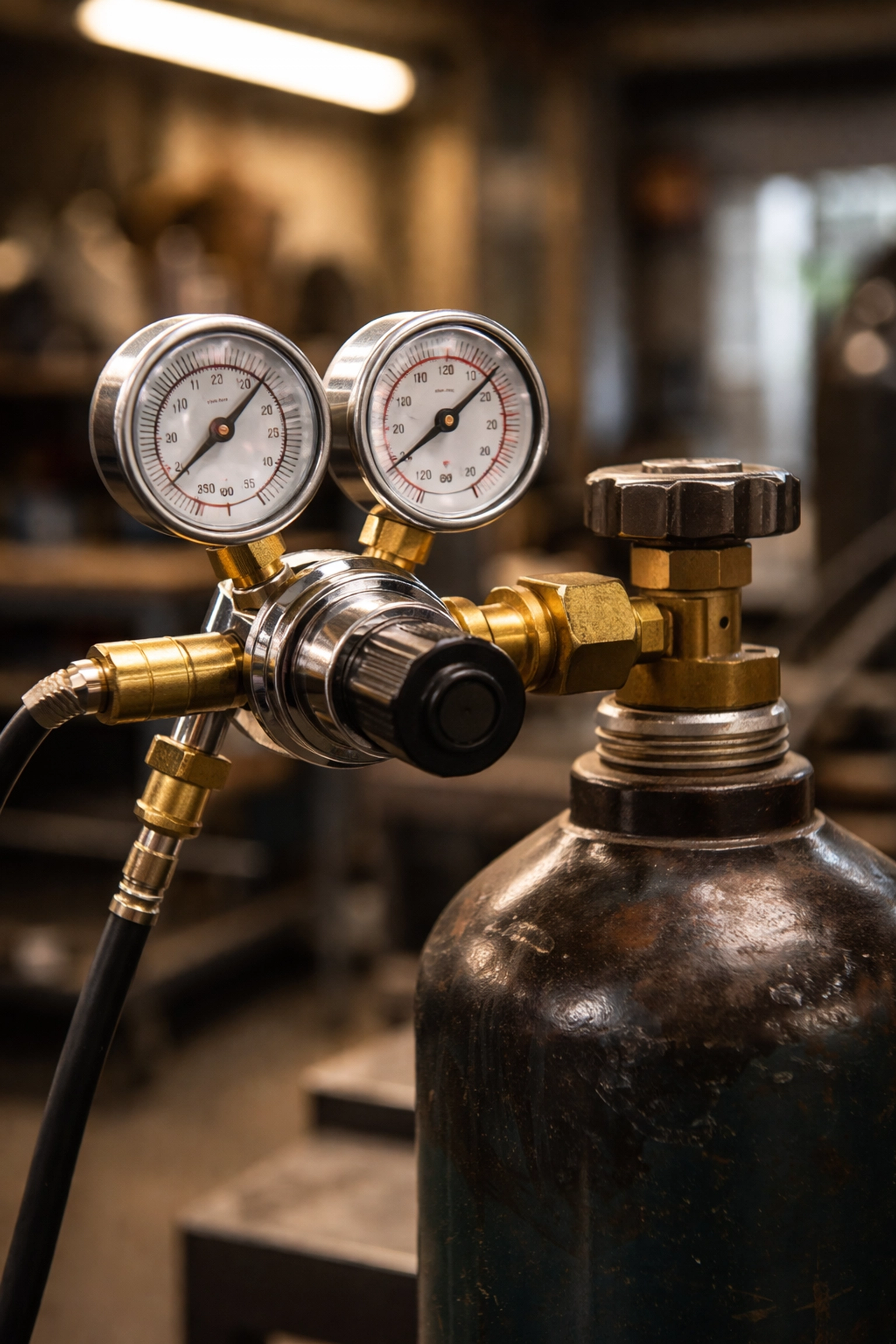
One important note: CO2 and Argon/CO2 mixed gases require different regulators. Pure CO2 turns from liquid to gas as it leaves the cylinder, which can cause freezing at the regulator. Make sure you have the correct regulator for your chosen gas type: using the wrong one can affect gas flow and potentially damage equipment.
Most regulators designed for argon mixtures work perfectly well with the common 80/20 and 98/2 blends used in MIG welding.
Making Your Final Decision
Choosing the best MIG gas bottle comes down to three key questions:
- What material are you welding? This determines your gas composition.
- How often do you weld? This influences whether disposable or refillable makes sense.
- How much space do you have? This guides your cylinder size choice.
For most UK-based welders working primarily with mild steel, a refillable cylinder with 80/20 Argon/CO2 mix offers the ideal combination of weld quality, versatility, and value. Start with a 20-litre cylinder if you’re unsure, and you can always upgrade to a larger size once you’ve established your usage patterns.
Ready to Get Welding?
At Bottle Gases, we stock a comprehensive range of MIG welding gases and cylinder sizes to suit every application: from hobby welders to professional fabrication workshops. Our team can help you select the perfect MIG gas bottle for your specific requirements, ensuring you get brilliant welds from your very first strike.
Browse our welding gas range today, or get in touch if you’d like personalised advice on choosing the right gas for your next project.