Cart 0
Argon Mix vs Pure CO2: Which Is Better for Your MIG Welding Project?
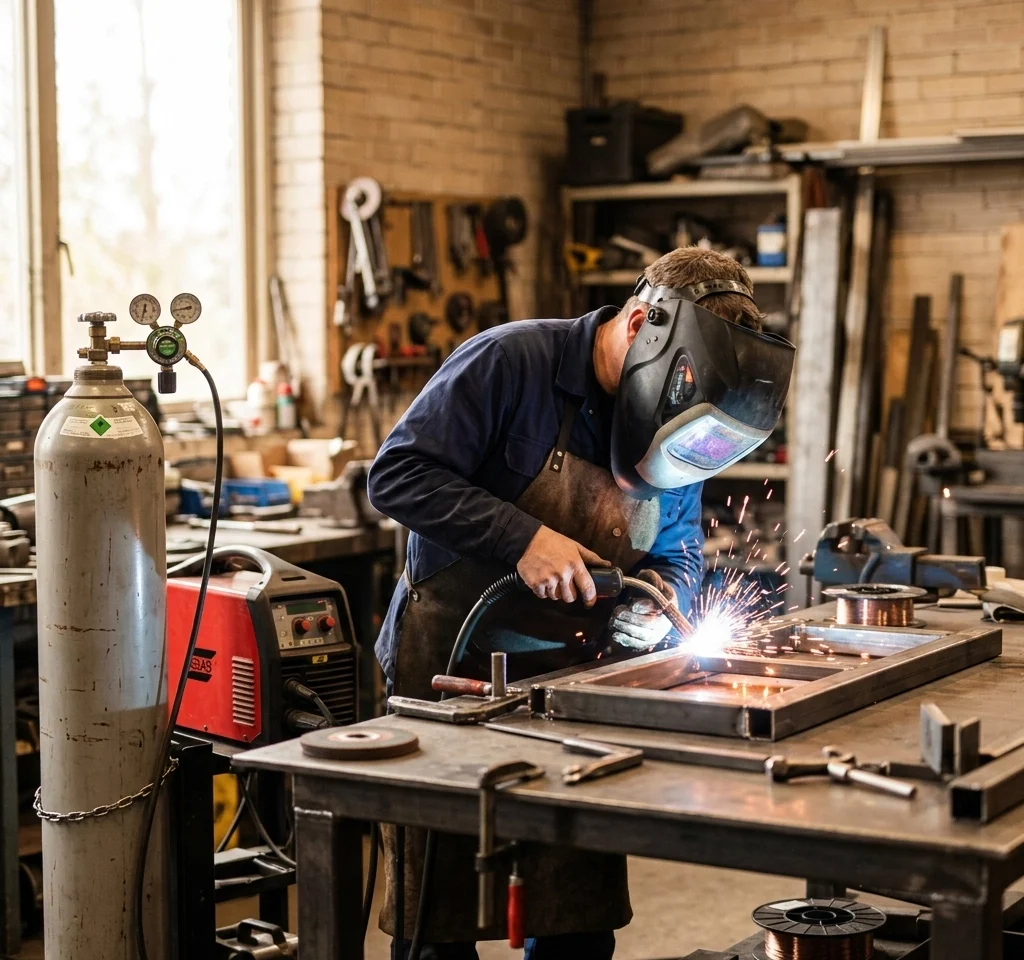
Have you ever stood in your workshop, welder in hand, staring at a stack of steel and wondering if you’re actually using the right gas for the job? Or perhaps you’ve seen the price difference between a bottle of pure CO2 and an Argon mix and thought, "Does it really make that much of a difference?"
Choosing the right shielding gas for your MIG welding project can feel a bit like picking the right oil for your car. Use the wrong one, and things might still "run," but you’ll definitely notice the struggle. In the world of welding, that struggle usually looks like excessive spatter, ugly beads, or, worst of all, a weld that just doesn't hold.
At Bottle Gases, we see a lot of DIY enthusiasts and professional fabricators facing this exact dilemma. Whether you are patching up a classic car in your garage or working on heavy-duty agricultural repairs, the gas you choose is the unsung hero of your weld.
Let’s break down the "Argon Mix vs. Pure CO2" debate so you can spend less time scratching your head and more time laying down perfect beads.
Why Do We Even Need Shielding Gas?
Before we dive into the comparison, let’s quickly touch on why we need these gases in the first place. When you’re MIG (Metal Inert Gas) welding, the electric arc creates a molten pool of metal. If left unprotected, the oxygen and nitrogen in the air would react with that molten metal, causing porosity (tiny holes that look like a sponge) and making the weld brittle.
Shielding gas acts like an invisible umbrella, protecting your weld pool from the atmosphere. But just like umbrellas, some are small and portable, while others are heavy-duty and built for a storm.
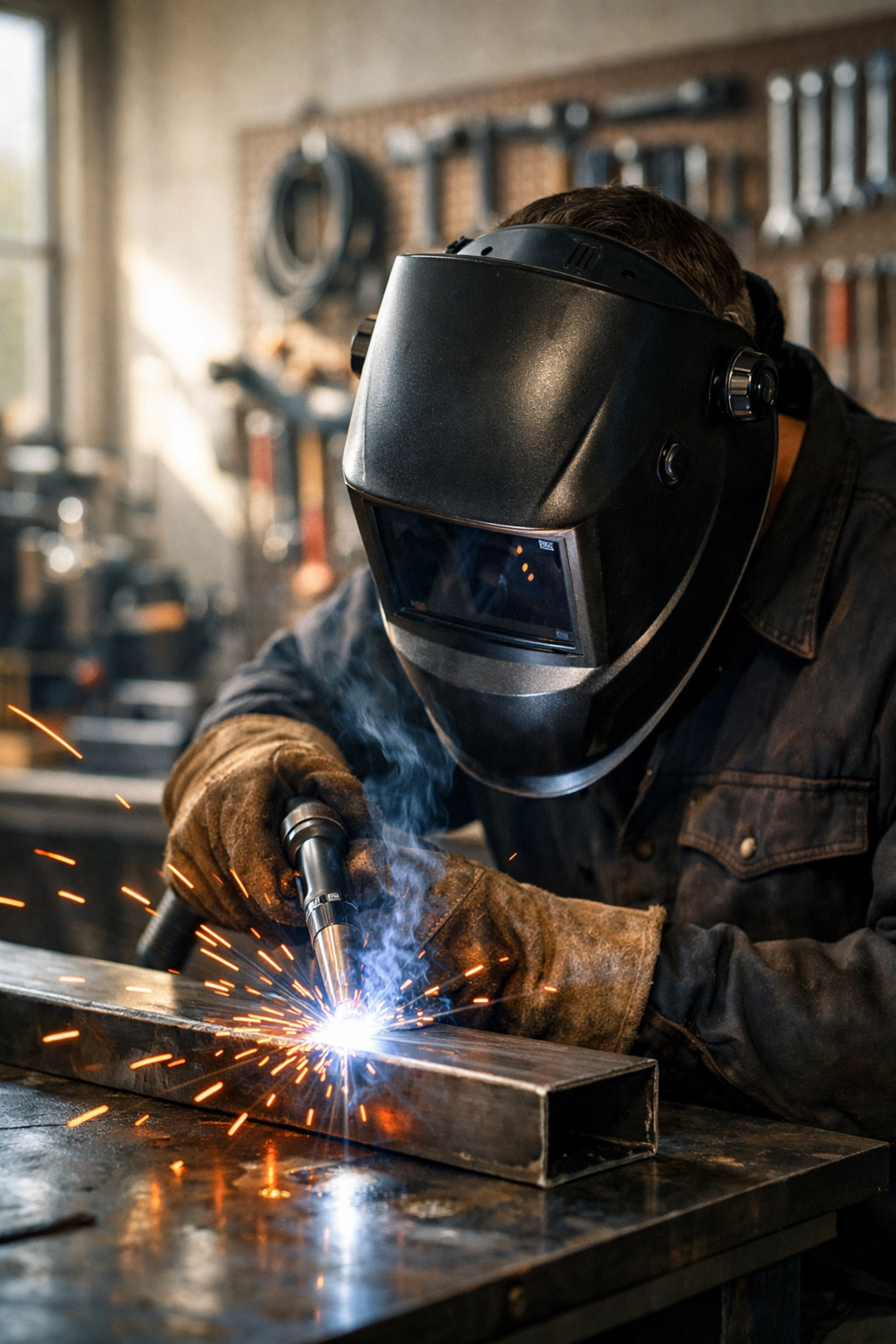
The "Gold Standard": Argon/CO2 Mix (75/25 or 95/5)
If you walk into a professional fabrication shop in the UK, chances are they are using an Argon/CO2 mix. Usually, this is a blend of 75% Argon and 25% CO2 (often called "75/25" or "C25"), though 95/5 mixes are also common for thinner materials.
Why You’ll Love It:
- Smoother Arc: Argon is an inert gas that helps stabilise the arc. This means the wire melts more consistently, giving you a much smoother experience.
- Less Spatter: Nobody likes spending an hour with a grinder cleaning up little balls of metal (spatter) from around their weld. An Argon mix significantly reduces this mess.
- Aesthetics: If your weld is going to be visible, say, on a bike frame or furniture, you want it to look good. Argon mixes produce a flatter, more attractive bead.
- Thin Metal Hero: If you’re working on thin sheet metal (around 0.8mm to 2mm), Argon mix is your best friend. It provides a cooler arc, which reduces the risk of "blowing through" the metal.
The Trade-off:
The main downside is the cost. Argon is more expensive to produce and bottle than CO2. However, when you factor in the time saved on cleaning up spatter, many find that the MIG welding gas bottles containing an Argon mix actually offer better value in the long run.
The "Budget Beast": Pure CO2
Pure CO2 is the traditional choice and remains incredibly popular for a few very specific reasons. If you’re on a tight budget or working on heavy-duty structural projects, this might be your go-to.
Why You’ll Love It:
- Deep Penetration: CO2 isn't just a shield; it actually adds heat to the weld. This allows for much deeper penetration into thick steel. If you’re welding a 10mm thick tractor hitch, pure CO2 will help ensure that weld goes all the way through.
- Lowest Cost: Pure CO2 bottles are generally the most affordable option on the market. If you are doing a high volume of welding where "pretty" doesn't matter, it's hard to beat the price.
- Availability: CO2 is used in everything from carbonating drinks to fire extinguishers, making it widely available.
The Trade-off:
The arc is much "harsher" and louder. You’ll deal with a lot more spatter, and the weld beads tend to be more "humped" and rough looking. It’s also much harder to use on very thin metal because the extra heat can easily cause burn-through.
Head-to-Head: Which One Wins?
Let’s look at a few real-world scenarios to see which gas takes the crown.
Scenario A: The Classic Car Restoration
Imagine you’re Dave, a hobbyist working on a 1970s Mini. You’re welding thin floor pans and body panels.
- The Winner: Argon/CO2 Mix.
- Why? You need the low-heat, stable arc to avoid destroying the thin panels. Plus, you want a clean finish that requires minimal grinding before painting.
Scenario B: The Farm Gate Repair
Now imagine you’re Sarah, a farmer needing to fix a heavy steel gate that’s seen better days. It’s thick, rusty, and nobody cares what it looks like as long as it stays shut.
- The Winner: Pure CO2.
- Why? You need the heat to bite into that thick steel, and you aren't worried about a bit of spatter. It’s the most cost-effective way to get a strong, deep weld.
Scenario C: General Workshop Fabrication
You’re building a workbench or some shelving out of 3mm or 5mm box section steel.
- The Winner: Argon/CO2 Mix.
- Why? While CO2 would work, the 75/25 mix makes the job so much more pleasant. The cleaner welds mean your project looks professional with half the effort.
The Bottle Gases Difference: No Rental Fees!
One of the biggest headaches welders face in the UK is the "recurring rental fee." You pick up a bottle, and suddenly you’re paying a monthly or yearly "rent" on the cylinder, even if it’s just sitting in your shed. It feels like paying for a car every month but only driving it once a year.
At Bottle Gases, we do things differently. As a leading industrial gas supplier, we offer a "deposit" system. You pay for the gas and a one-off deposit for the bottle. When you’re done, you bring it back and get your deposit back. No monthly bills, no "forgotten" rental charges, just straightforward gas supply.
Whether you need a small 10L bottle for a weekend project or a larger 20kg cylinder for a busy workshop, we offer:
- Competitive Pricing: We keep our costs low so you can keep your project on budget.
- Nationwide Delivery: We deliver right to your door across the UK. Check our delivery information for more details.
- No Recurring Rental: Own your time, don't rent it.

Don't Forget Your Equipment
Regardless of the gas you choose, you need the right gear to get it from the bottle to the torch. A pure CO2 bottle requires a different gas regulator than an Argon mix bottle (unless you use an adapter).
Pure CO2 comes out of the bottle as a liquid and turns into a gas, which can actually freeze a standard regulator if you're doing long runs. If you’re making the switch between the two, always double-check that your regulator is compatible with the gas type and the bottle valve.
Summary Checklist: Argon Mix vs. Pure CO2
| Feature | Argon Mix (75/25) | Pure CO2 |
|---|---|---|
| Weld Appearance | Smooth, clean, flat | Rough, humped, lots of spatter |
| Penetration | Moderate | Deep / Heavy |
| Ease of Use | High (Stable arc) | Moderate (Harsher arc) |
| Best For… | Thin metal, car bodies, DIY | Thick steel, structural, budget |
| Cost | Higher | Lower |
Making the Final Call
Choosing between Argon Mix and Pure CO2 really comes down to your specific project and your priorities. If you are a beginner, go for the Argon Mix. The stability of the arc will help you learn faster and produce results you can be proud of. If you’re a seasoned pro on a budget doing heavy structural work, Pure CO2 is a reliable workhorse.
Ready to get started? Explore our full range of MIG welding gas and find the perfect match for your welder. Not sure which size you need? Feel free to contact us or browse our shop to see our current stock.
Whatever you choose, remember that the best weld is the one that’s done safely and with the right tools for the job. Happy welding!