Blog
MMA Welding Meaning: A Beginner’s Guide to Mastering Stick Welding

Ever watched a skilled welder at work and wondered how they make it look so effortless? Perhaps you've been eyeing up a welding project in your workshop, or maybe you're considering a career change into the trades. Whatever brought you here, understanding MMA welding meaning is your first step towards joining one of the most versatile and rewarding skills in metalworking.
If you've heard terms like "stick welding" or "SMAW" thrown around and felt a bit lost, you're not alone. These terms all refer to the same process: and by the end of this guide, you'll understand exactly what MMA welding is, how it works, and why it remains a favourite among professionals and hobbyists alike across the UK.
What Does MMA Welding Actually Mean?
Let's cut straight to it: MMA welding stands for Manual Metal Arc welding. It's one of the oldest and most widely used welding techniques in the world, and for good reason. You might also hear it called stick welding (because of the rod-shaped electrode) or SMAW (Shielded Metal Arc Welding) in more technical circles.
Think of MMA welding as the Swiss Army knife of the welding world. It's straightforward, portable, and works in almost any condition: from a well-equipped workshop in Birmingham to a windswept construction site in the Scottish Highlands.
The beauty of understanding MMA welding meaning lies in its simplicity. Unlike MIG or TIG welding, which often rely on separate shielding gas bottles (like Argon mixes or CO₂), MMA welding uses a flux-coated electrode that creates its own protective shield. This self-contained nature makes it incredibly practical for a wide range of applications: especially if you’re working on-site, in a draughty unit, or just don’t fancy managing extra gas equipment for a quick repair.
How Does MMA Welding Work?
Understanding the mechanics behind MMA welding helps demystify the process and sets you up for success. Here's what happens when you strike that arc:
The Arc Creation
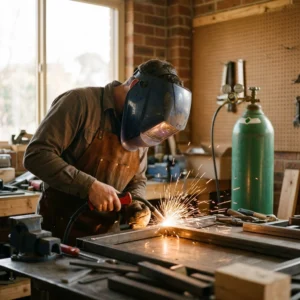
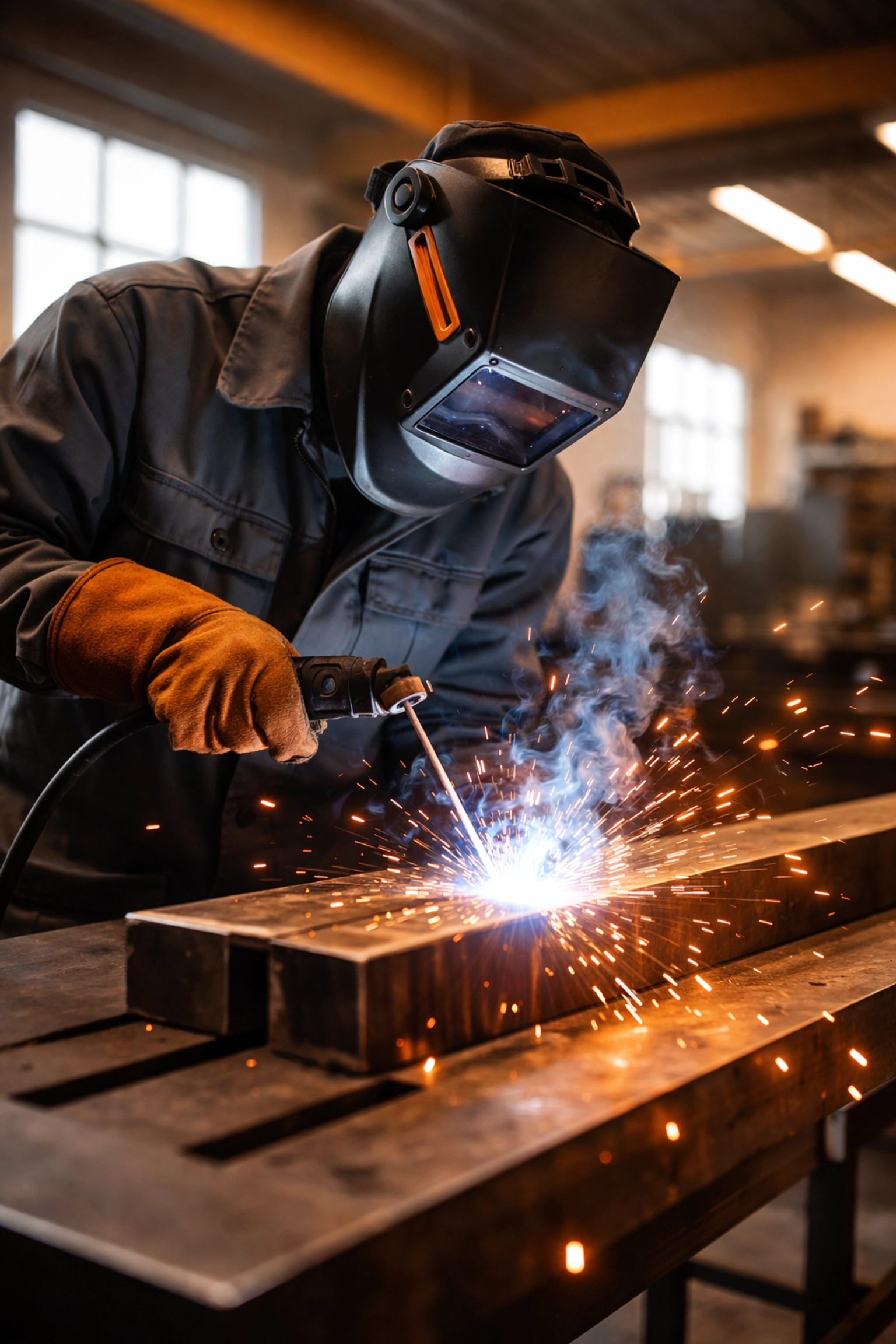
When you tap or strike the flux-coated electrode against your workpiece, you create an electrical circuit. This generates an arc: essentially a controlled lightning bolt: that reaches temperatures of approximately 1,200°C. That's hot enough to melt both the electrode and the base metal, allowing them to fuse together.
The Shielding Process
Here's where MMA welding gets clever. As the electrode heats up, the flux coating melts and releases shielding gases. These gases form a protective bubble around the weld pool, preventing oxygen and other atmospheric contaminants from weakening your weld. No external gas bottles required: the protection is built right into the electrode.
The Weld Formation
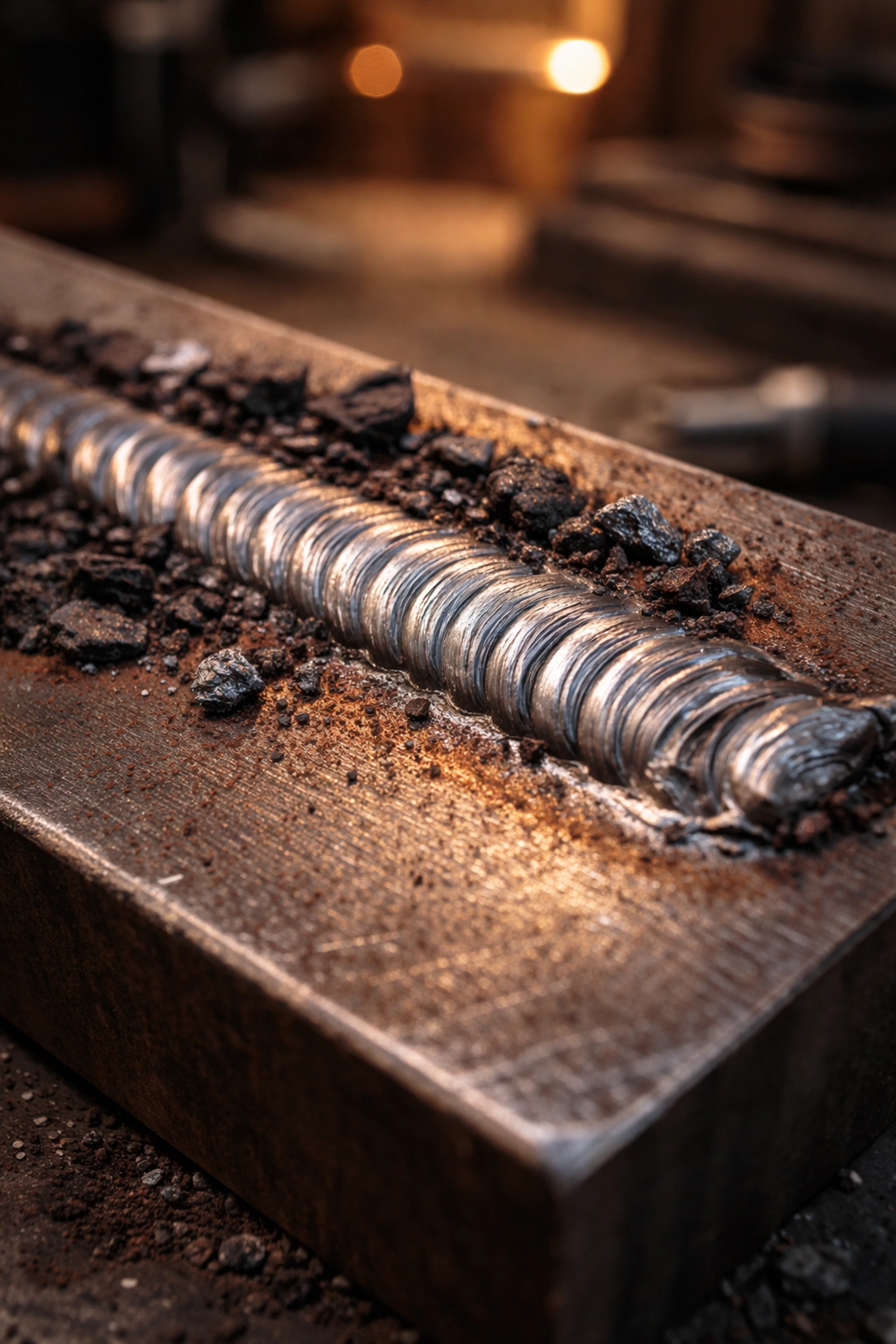
As you move the electrode along your workpiece, it gradually melts away, depositing material into the joint. This creates what's called a weld bead. Once everything cools down, you'll notice a layer of slag: solidified flux: sitting on top of your weld. Chipping this away reveals the finished joint underneath.
Why Beginners Love MMA Welding
If you're just starting your welding journey, MMA welding offers several compelling advantages that make it an excellent entry point.
Minimal Equipment Investment
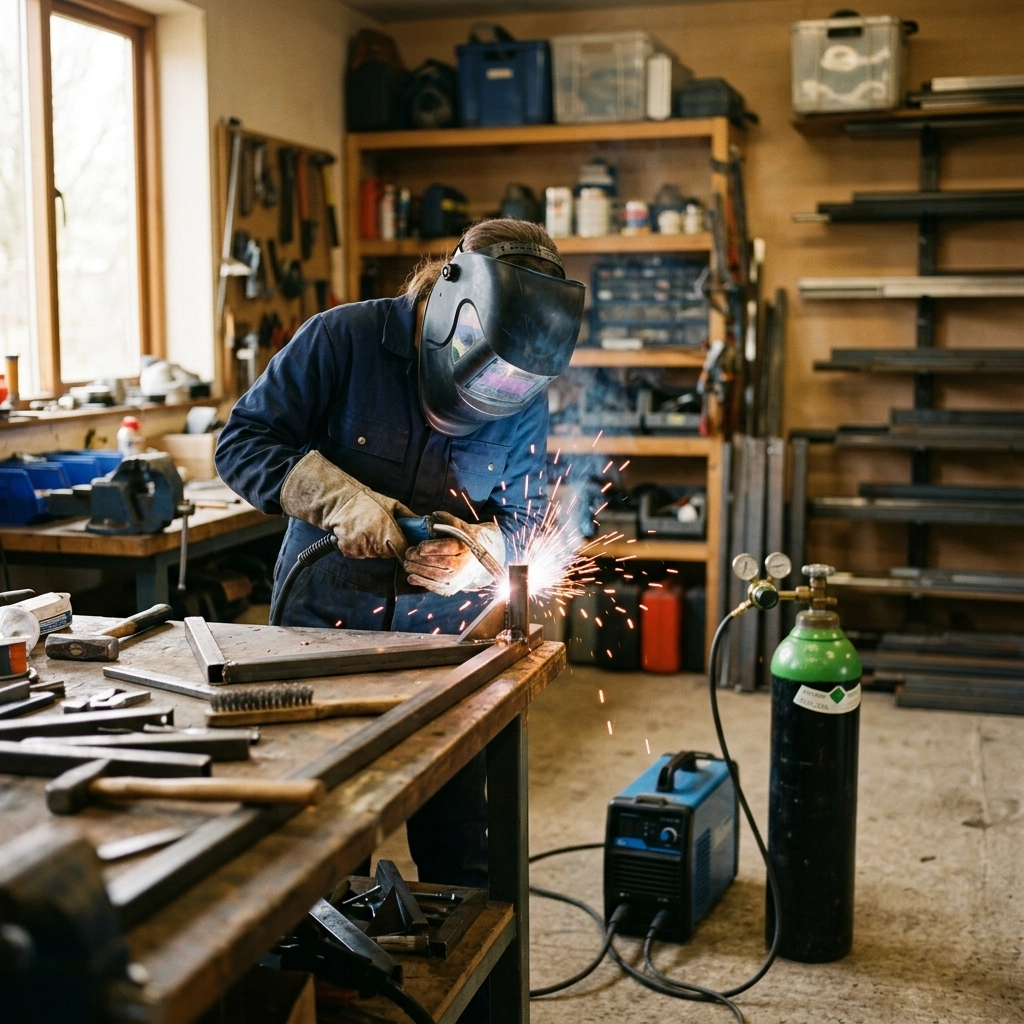
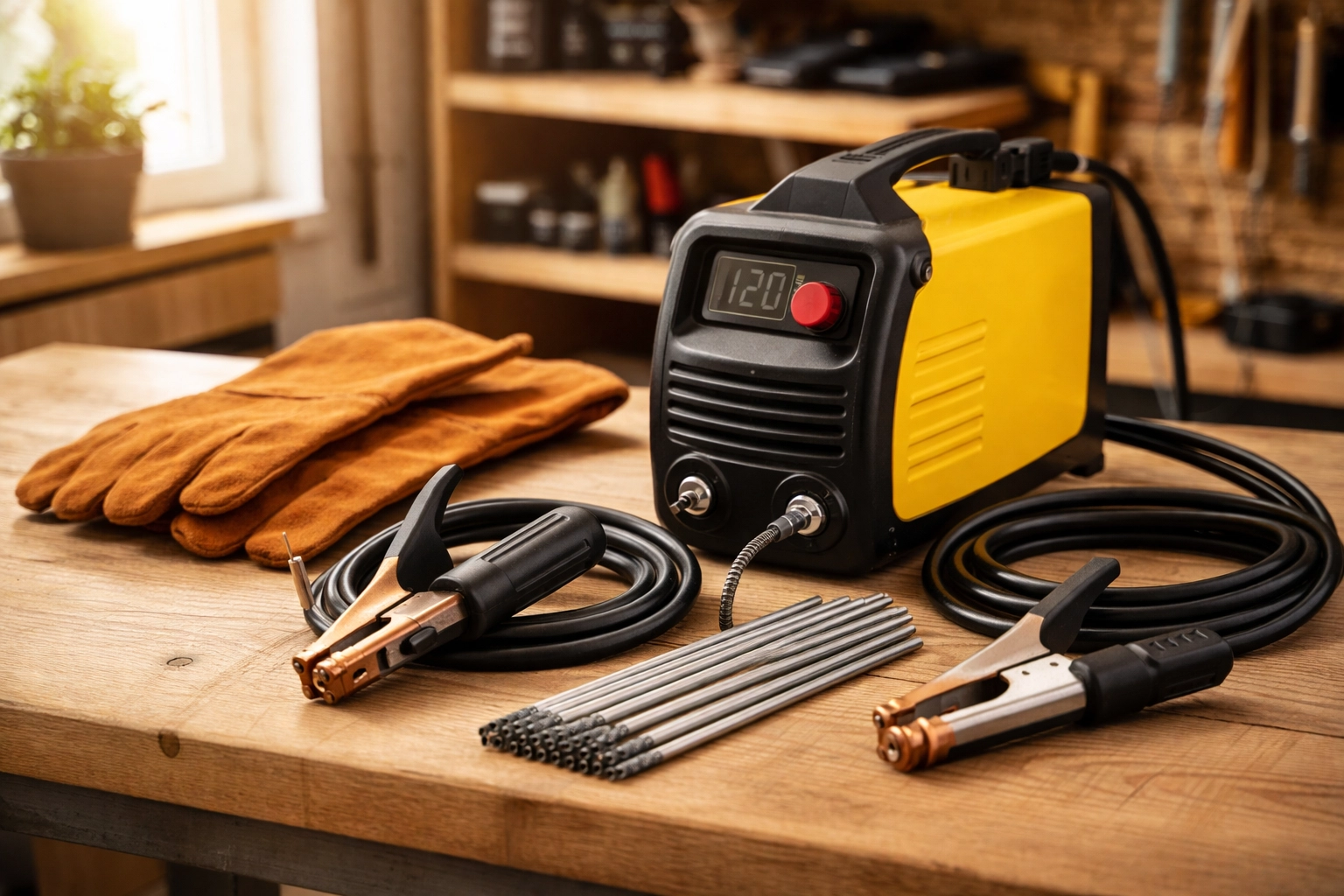
Compared to other welding processes, getting started with MMA welding won't break the bank. You need a power source, an electrode holder, a work return (earth) clamp, electrodes, and appropriate safety gear. That's essentially it. There’s no need for a gas regulator, flowmeter, or a shielding gas bottle: which can feel like a breath of fresh air if you’re just getting set up in a UK garage workshop or a small fabrication unit.
Incredible Versatility
MMA welding doesn't care about perfect conditions. You can weld in any position: flat, vertical, horizontal, or overhead. Wind and rain that would ruin a MIG weld barely affect stick welding. This adaptability makes it invaluable for outdoor repairs, agricultural work, and construction projects where conditions are far from ideal.
Portability That Makes Sense
Modern MMA welding machines are compact and lightweight. Combined with the fact that you don’t need to lug around a shielding gas bottle for the process, you can take your welding capability almost anywhere. Whether you’re fixing a gate at the bottom of the garden, patching a trailer, or repairing farm equipment in a remote field, stick welding travels with you.
What Can You Weld with MMA?
One of the strengths of MMA welding is its material versatility. With the right electrode selection, you can weld:
- Carbon steel – The most common application, perfect for general fabrication and repairs
- Stainless steel – Ideal for food industry equipment and architectural features
- Cast iron – Essential for vintage vehicle restorations and machinery repairs
- Ductile iron – Common in industrial applications
MMA welding performs best on metals thicker than 3 mm, with optimal results on materials around 10 mm or more. For very thin sheet metal, you might find MIG welding more forgiving (often with the right shielding gas), but for structural work and repairs, stick welding excels.
Essential Tips for Mastering Stick Welding
Here's the honest truth: MMA welding is simple to set up but challenging to master. Don't let that discourage you: every skilled welder started exactly where you are now. These tips will accelerate your learning curve.
Start with the Right Electrode
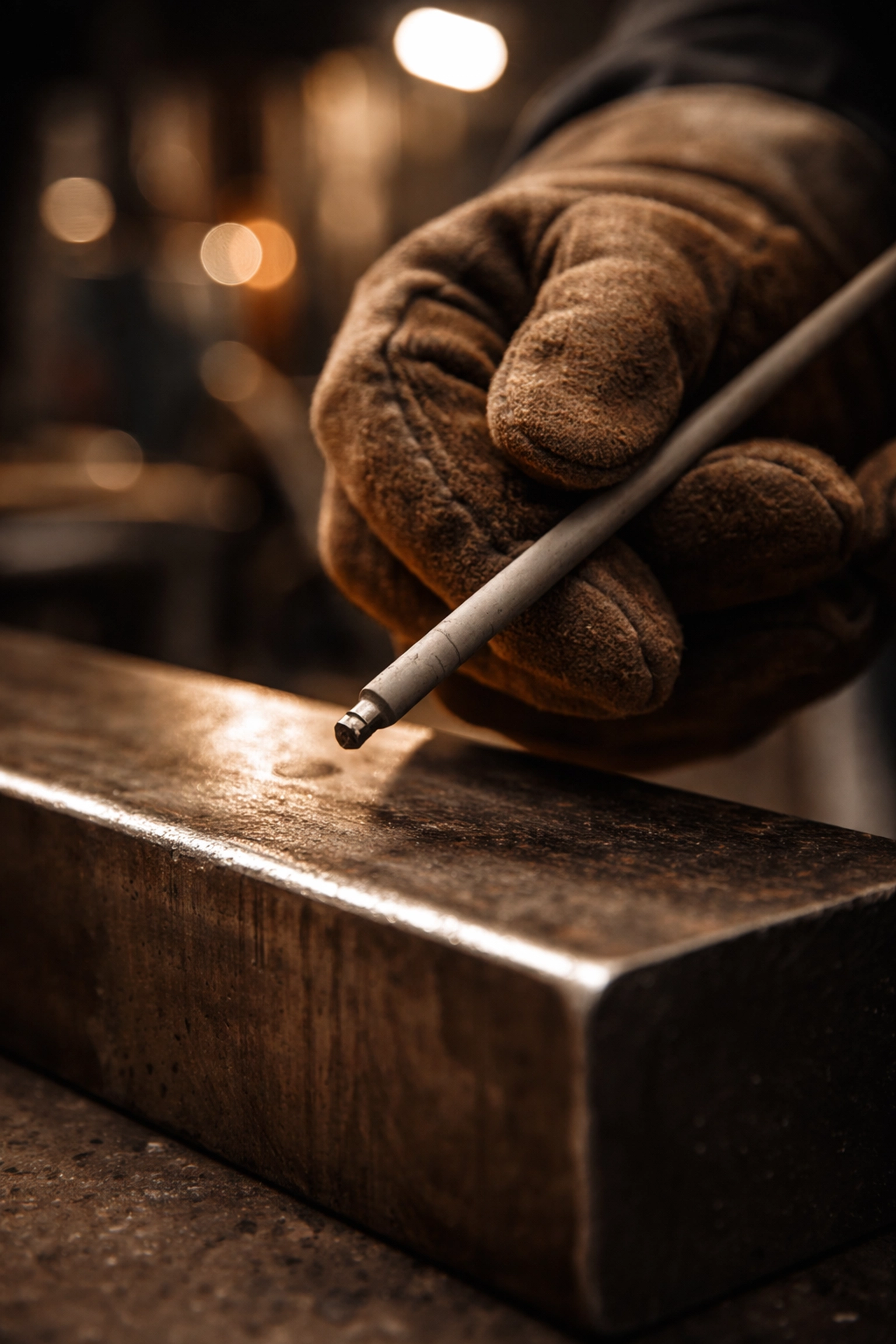
For beginners working with mild steel, E6013 electrodes are your best friend. They’re forgiving, produce a smooth arc, and work well on both AC and DC machines. As your skills develop, you can explore E7018 (low-hydrogen) electrodes for stronger, more professional results: ideal when you want extra confidence on brackets, frames, and heavier repairs.
Perfect Your Technique
Maintain a consistent arc length: roughly equal to the diameter of your electrode core. Too long, and you'll get spatter and porosity. Too short, and you'll stick to the workpiece. Practice on scrap metal until this becomes second nature.
Watch Your Travel Speed
Moving too fast leaves a thin, weak weld. Moving too slowly creates excessive build-up and potential burn-through. Aim for a consistent bead that's slightly wider than the electrode diameter with good fusion into the base metal.
Keep Your Electrodes Dry
Moisture is the enemy of good welds. Store your electrodes in a dry environment: many professionals use electrode ovens for low-hydrogen rods. Damp flux leads to porosity and hydrogen cracking.
Common Applications Across the UK
MMA welding remains indispensable across numerous industries. You'll find it used in:
- Construction and building work – Structural steelwork and on-site modifications
- Agricultural repairs – Farm machinery, gates, and equipment maintenance
- Pipeline construction – Critical infrastructure across the country
- Shipbuilding – Maritime fabrication in coastal regions
- General fabrication – Everything from metal furniture to custom metalwork
The technique's reliability in challenging conditions makes it particularly valuable for UK tradespeople who often work outdoors in less-than-perfect weather.
Safety First: Protecting Yourself
Welding at temperatures exceeding 1,000°C demands respect. Essential safety equipment includes:
- Welding helmet with appropriate shade (typically 10-12 for MMA)
- Leather welding gloves to protect against burns and UV radiation
- Flame-resistant clothing covering all exposed skin
- Safety boots with steel toe caps
- Proper ventilation to avoid inhaling fumes
Never compromise on safety equipment. Your eyes, skin, and lungs will thank you for decades to come.
Taking Your Skills Further
Understanding MMA welding meaning is just the beginning. As you develop your skills, you might explore other processes like MIG welding for faster fabrication or TIG welding for precision work. That’s where having a reliable UK supplier for welding gases and consumables makes life simpler: Bottle Gases stocks a wide range of welding gas options (including MIG mixes, Argon and CO₂), plus the everyday essentials you end up reaching for: regulators, hoses, and more, all delivered nationwide from www.bottlegases.co.uk.
For those working across different sites and industries, staying informed about gas regulations across industries helps you stay safe and compliant: especially when you’re storing or transporting bottled gas in real-world UK conditions.
Ready to Strike Your First Arc?
MMA welding offers an accessible entry point into the world of metalworking that doesn't require massive investment or perfect conditions. Its simplicity, portability, and versatility have kept it relevant for generations: and will continue to do so for generations to come.
Whether you're planning DIY projects around the house, considering a career in fabrication, or simply want to add another skill to your toolkit, mastering stick welding opens doors you might not have imagined. Start with quality equipment, prioritise safety, practice consistently, and before long, you'll be laying down welds that would make any professional proud.
The journey of a thousand welds begins with a single arc. Why not strike yours today?