Blog
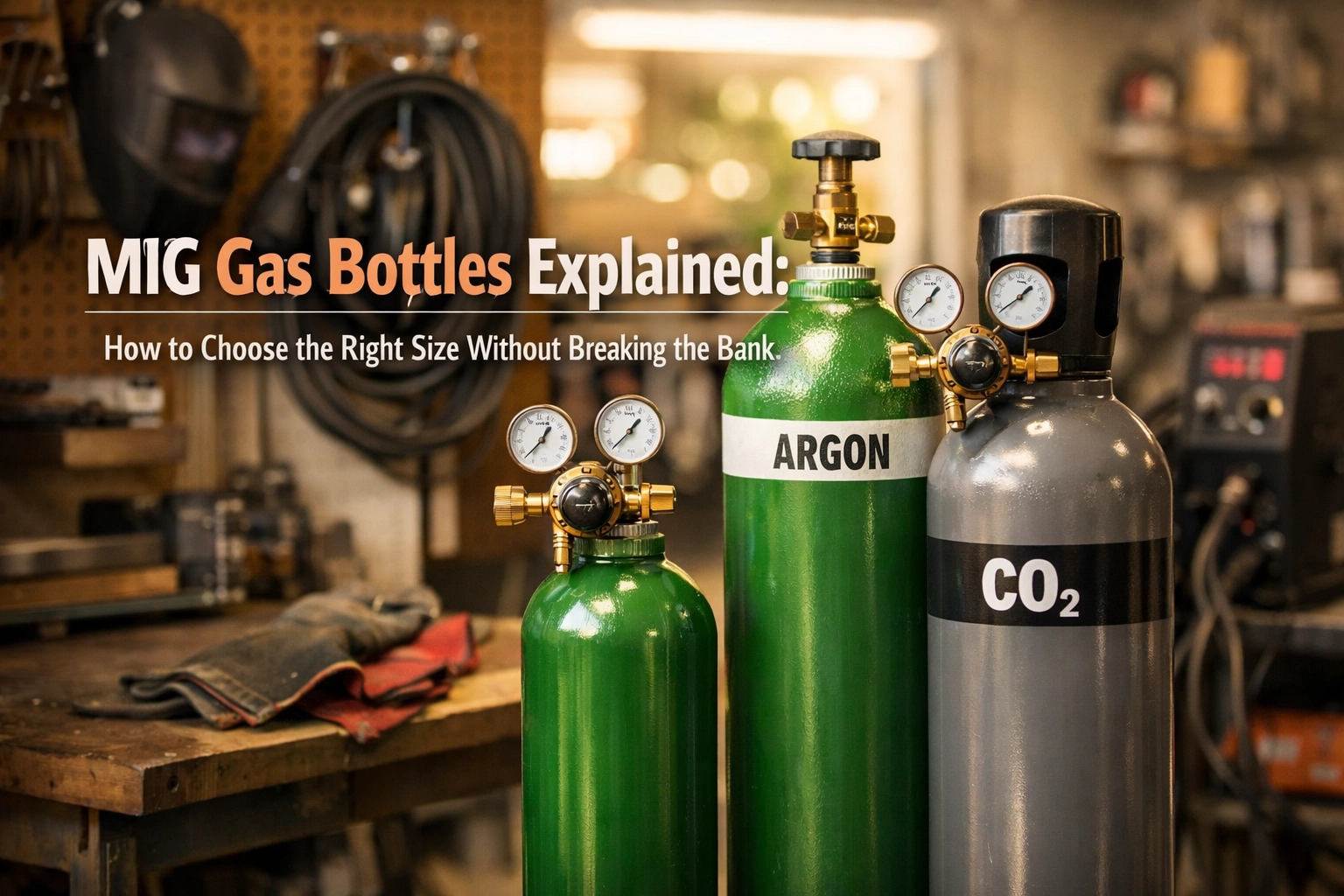
MIG Gas Bottles Explained: How to Choose the Right Size Without Breaking the Bank

Ever stood in front of a wall of gas bottles wondering which one won’t leave your wallet crying? You’re not alone. Choosing the right MIG gas bottle size feels like navigating a maze: too small and you’re running to the supplier every other week, too large and you’ve just bought a gas bottle that doubles as expensive garage furniture.
Here’s the thing: the cheapest bottle upfront often costs you the most in the long run. Let’s break down how to choose the perfect MIG gas bottle size that keeps your welds strong and your bank account stronger.
Understanding MIG Gas Bottle Sizes in the UK
MIG welding gas bottles come in various sizes, typically measured in cubic metres or litres in the UK. Think of it like buying milk: you could grab the small carton every day, or invest in the bigger bottle that lasts the week.
The most common sizes you’ll encounter are:
- Small 2L (0.4 cubic metres/400 litres): Perfect for occasional hobbyists or mobile work where portability matters more than run time
- Medium 10L (2.0 cubic metres/2000 litres): The sweet spot for most garage welders and small fabrication shops
- Large 20L (4.0 cubic metres/4,000 litres): Ideal for regular users who want fewer refill trips
- Extra Large 50L (10 cubic metres/10,000 litres): The workhorse for busy workshops and professional fabricators
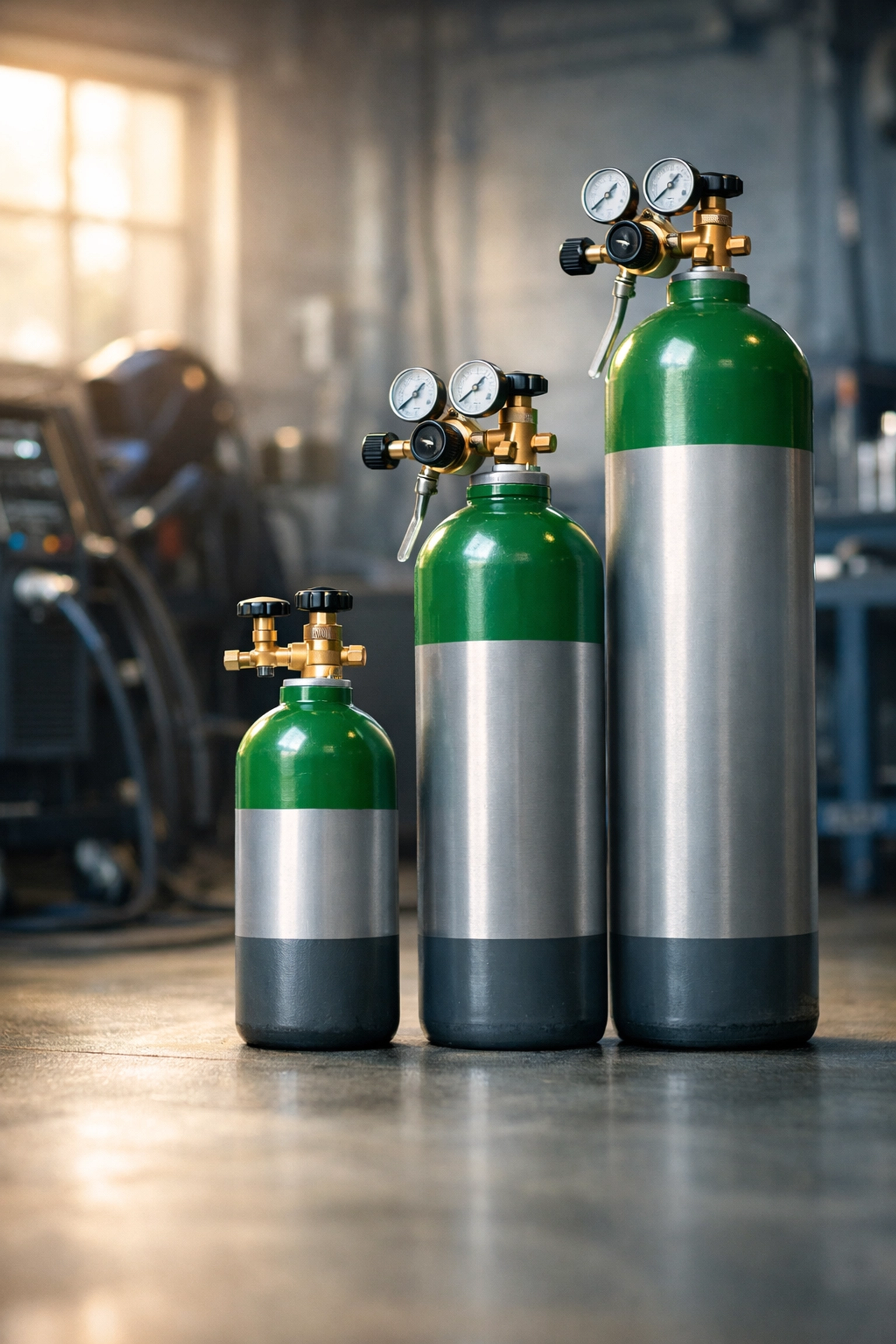
Each size has its place, but the “right” one depends on how often you’re pulling that trigger and whether you’ve got room in your workshop to swing a cat (or, more importantly, manoeuvre around a larger bottle).
The Budget Reality: Why Bigger Often Means Better Value
Here’s where things get interesting. That small 0.4 cubic metre bottle might look tempting at £53.42, while the 2 cubic metre option costs £111.18. Your brain does the maths and thinks, “I’ll save £58!”
But hold on. Let’s talk refills.
A typical refill for a 0.4 cubic metre bottle might cost you £28.42, while a 2.0 cubic metre refill runs about £56.18. You’re getting five times the gas for less than double the price. Run that small 2L bottle five times, and you’ve spent £142 on gas: £86 more than a single refill of the larger 10L bottle that gives you the same amount of welding time.
This is why experienced welders always say: get the largest bottle you can reasonably store and afford upfront. It’s like buying in bulk at the supermarket: the unit price drops significantly.
And here’s another kicker: with Bottle Gases, there are no recurring rental fees. You have a refundable deposit, which means you’re not bleeding money every month just for the privilege of renting another companies gas cylinder in your workshop.
How Much Welding Time Do You Actually Get?
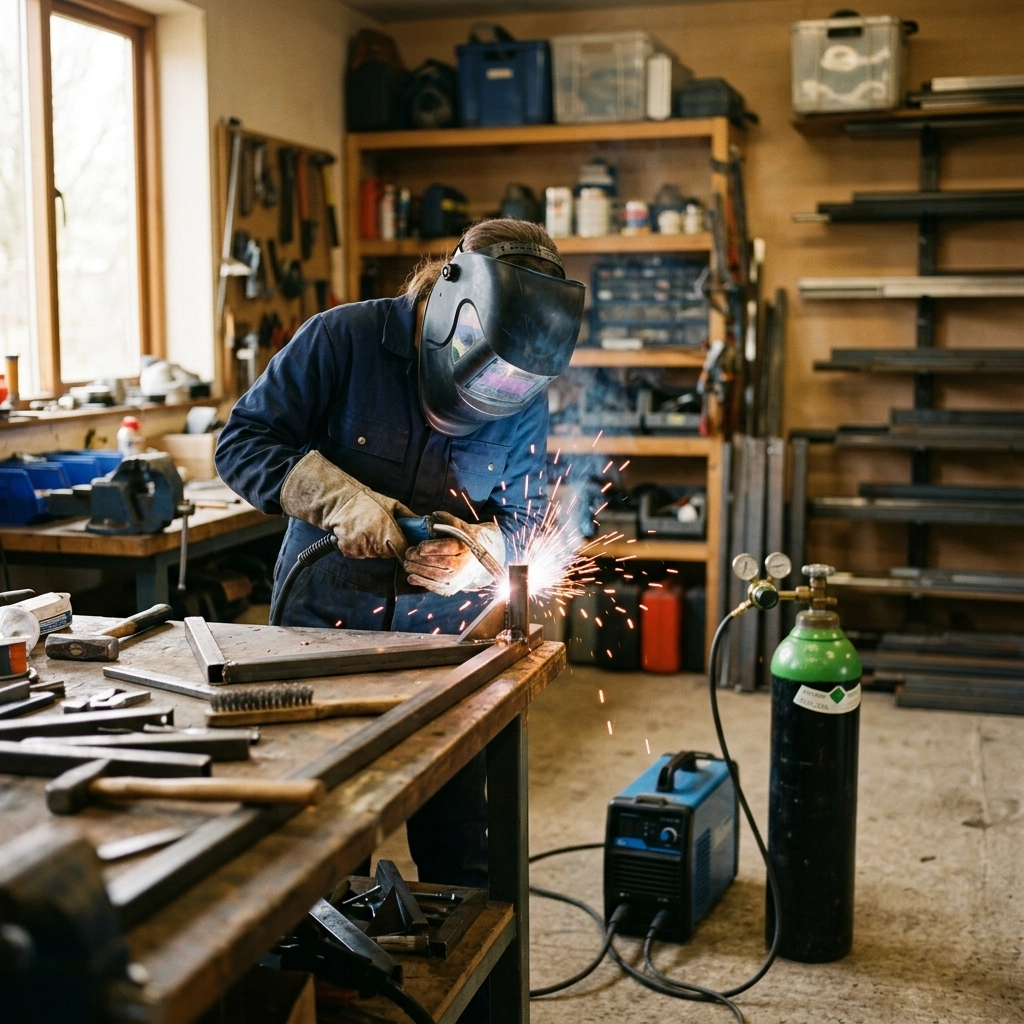
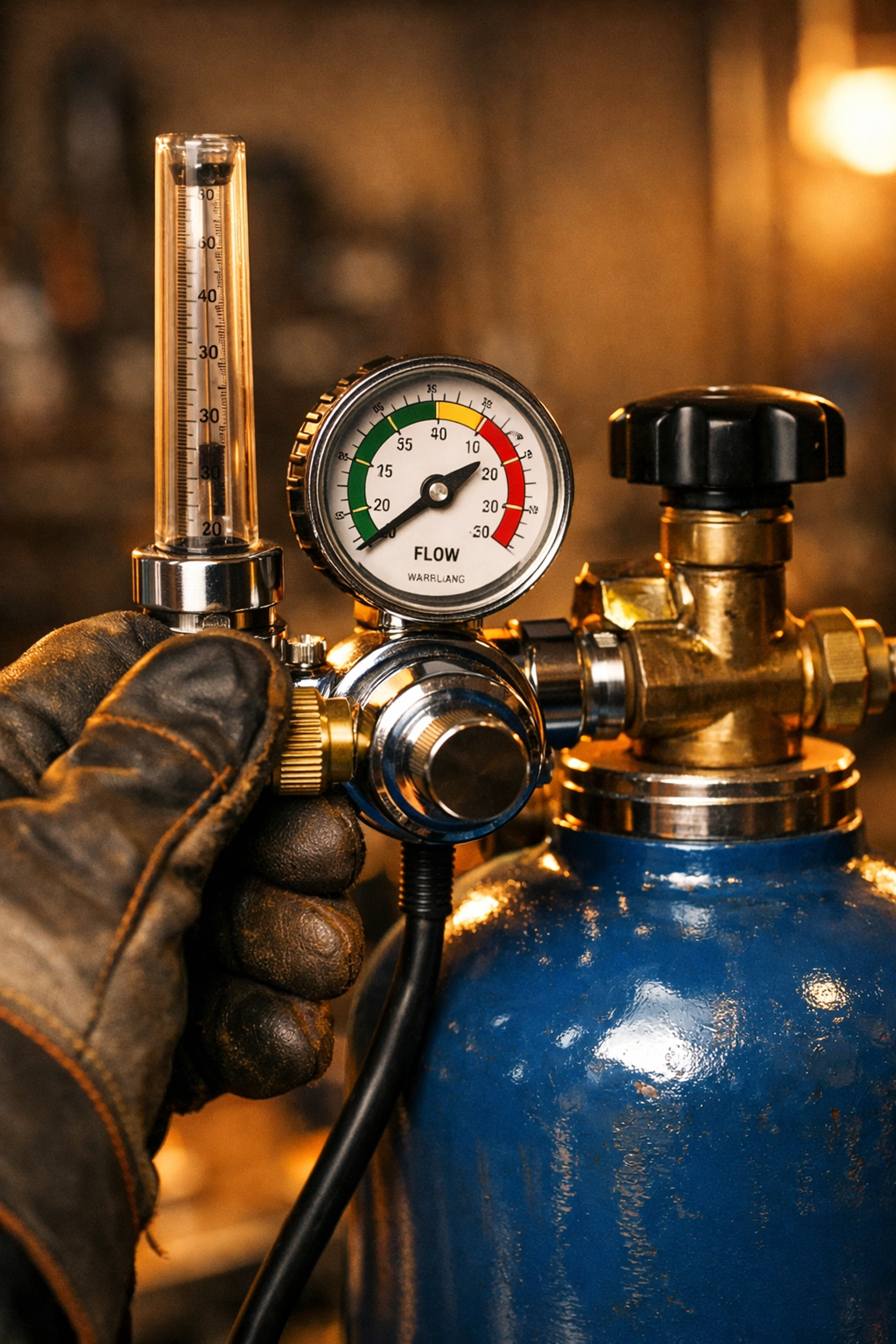
Let’s get practical. Your welding time depends on your flow rate, which typically sits between 10-15 litres per minute for MIG welding. Most welders run around 12 litres per minute.
At a 12 L/min flow rate, here’s what you’re looking at:
- 0.4 cubic metre bottle: About 0.5 hours of continuous welding time
- 2.0 cubic metre bottle: Around 2.8 hours of welding time
- 4.0 cubic metre bottle: Approximately 5.6 hours of arc time
- 10 cubic metre bottle: A solid 14 hours before you need a refill
Now, before you think “0.5 hours isn’t much,” remember that’s continuous arc time. You’re not holding the trigger for 2.5 hours straight: you’re positioning, measuring, tacking, and adjusting. For most weekend warriors, a 0.4 cubic metre bottle might last several projects. But if you’re welding gates, railings, or doing regular fabrication work, that 2.0 cubic metre or larger starts making serious sense.
Common Mistakes That Cost You Money
Let’s talk about the pitfalls people stumble into when choosing MIG gas bottles.
Mistake #1: Only Thinking About Upfront Cost
We’ve covered this, but it bears repeating. That cheap small bottle is a false economy if you’re refilling it constantly. Factor in your time, fuel costs getting to the supplier, and the hassle of running out mid-project. Suddenly that “expensive” larger bottle looks like a bargain.
Mistake #2: Ignoring Your Actual Usage
Be honest with yourself. Are you welding once a month to fix the gate, or are you running a side business fabricating custom furniture? A hobbyist who welds quarterly doesn’t need a 10 cubic metre bottle taking up valuable space. But someone welding every weekend definitely shouldn’t be nursing along a tiny 0.4 cubic metre cylinder.
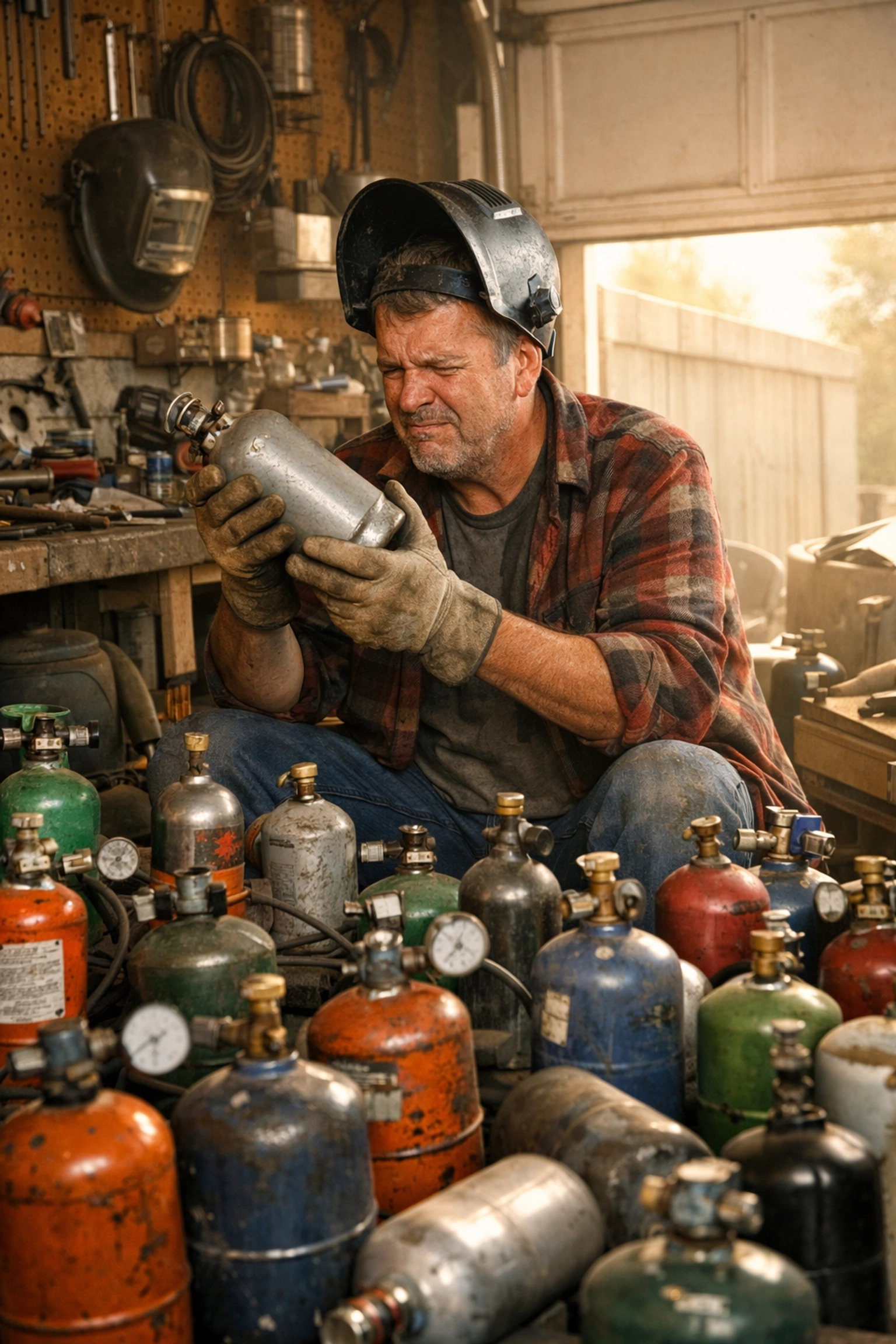
Mistake #3: Not Considering Storage Space
A 10 cubic metre bottle stands about 1.5 metres tall and weighs around 80kg when full. If your “workshop” is the corner of your garage where you’ve shoved the lawnmower, that’s not going to work. Be realistic about your space constraints: there’s no point buying something you can’t safely store or easily manoeuvre.
Mistake #4: Falling for Rental Schemes
Some suppliers lock you into rental agreements where you’re paying monthly fees indefinitely. Over a few years, those “small” monthly charges add up to more than the bottle’s worth. Deposit models, like what we offer at Bottle Gases, mean you buy once and refill as needed: no ongoing financial drain.
The Smart Buyer’s Formula
Here’s a simple way to figure out your ideal size:
- Estimate your monthly welding hours (be realistic, not optimistic)
- Multiply by 12 litres per minute (average flow rate)
- Convert to cubic metres (divide by 1,000)
- Add 20% buffer for peace of mind
For example, if you weld about 3 hours per month:
- 3 hours × 60 minutes × 12 L/min = 2,160 litres = 2.16 cubic metres per month
- Add 20% buffer = 2.59 cubic metres
- A 4.0 cubic metre bottle gives you over a month between refills
See how that works? You want enough capacity that you’re not constantly refilling, but not so much that the bottle becomes an expensive dust collector.
Why Adams Gas Deposit System Beats Rental Every Time
Let’s paint a picture. Meet Dave, a fabricator who runs a small workshop in Birmingham. He used to rent his MIG welding gas bottles from a traditional supplier: £15 per month rental plus refill costs.
After five years, Dave had paid £900 just in rental fees. That’s before buying a single litre of gas. When he switched to Adams Gas Deposit bottles with nationwide delivery, his only costs were the initial bottle deposits and refills. No monthly drain, no surprise charges, no rental extensions.
That’s the difference between deposits and rental. Over time, deposits wins: hands down.
Making Your Choice: A Quick Decision Guide
Choose a 0.4 cubic metre bottle if:
- You weld less than 0.5 hours per month
- Portability is crucial (mobile repairs, site work)
- You’re testing the waters before committing to welding as a serious hobby
- Storage space is extremely limited
Choose a 2.0 cubic metre bottle if:
- You’re a regular weekend welder or run a part-time fabrication side-hustle
- You want the best balance of value, run time, and handleability
- You’re tired of constant refill trips
- You’ve got basic workshop space
Choose a 5+ cubic metre bottle if:
- Welding is your day job or serious business
- You hate downtime and want maximum productivity
- You’ve got proper workshop facilities
- You understand that the per-litre cost makes this the most economical option
The Bottom Line: Think Long-Term, Save Money
Choosing the right MIG gas bottle size isn’t about finding the cheapest option: it’s about finding the smartest investment. That might mean spending a bit more upfront for a larger bottle that pays for itself through cheaper refills and fewer trips to the supplier.
And with competitive pricing and nationwide delivery, getting the right bottle doesn’t mean breaking the bank. You own it outright, refill when needed, and never pay another penny in rental fees.
Remember: welding is about building things that last. Your gas supply strategy should be the same: built for the long haul, not just the immediate moment. Whether you’re fabricating gates, restoring classic cars, or creating bespoke furniture, the right gas bottle size keeps you welding instead of worrying about running out mid-bead.
Ready to make the smart choice? Your future self: and your wallet( will thank you.)