Cart 0
7 Mistakes You’re Making with Nitrogen for Air Conditioning (and How to Fix Them)
Have you ever finished a long day on an air conditioning install, packed your tools, and felt that nagging doubt in the back of your mind? You’ve done the pressure test, the gauges looked steady enough, and you’ve moved on, only to get a callback three months later because the system is underperforming or, worse, the compressor has given up the ghost.
If you’ve been in the HVAC trade for any length of time, you know that nitrogen is your best friend. It’s dry, it’s inert, and it’s relatively cheap. But are you actually using it correctly? It turns out that many of us have picked up a few "bad habits" over the years that can turn a simple job into a warranty nightmare.
At Bottle Gases, we supply thousands of Nitrogen Cylinders to engineers across the UK, and we’ve heard every story in the book. Whether you’re a seasoned pro or just starting out, avoiding these seven common nitrogen mistakes will save you time, money, and your reputation.
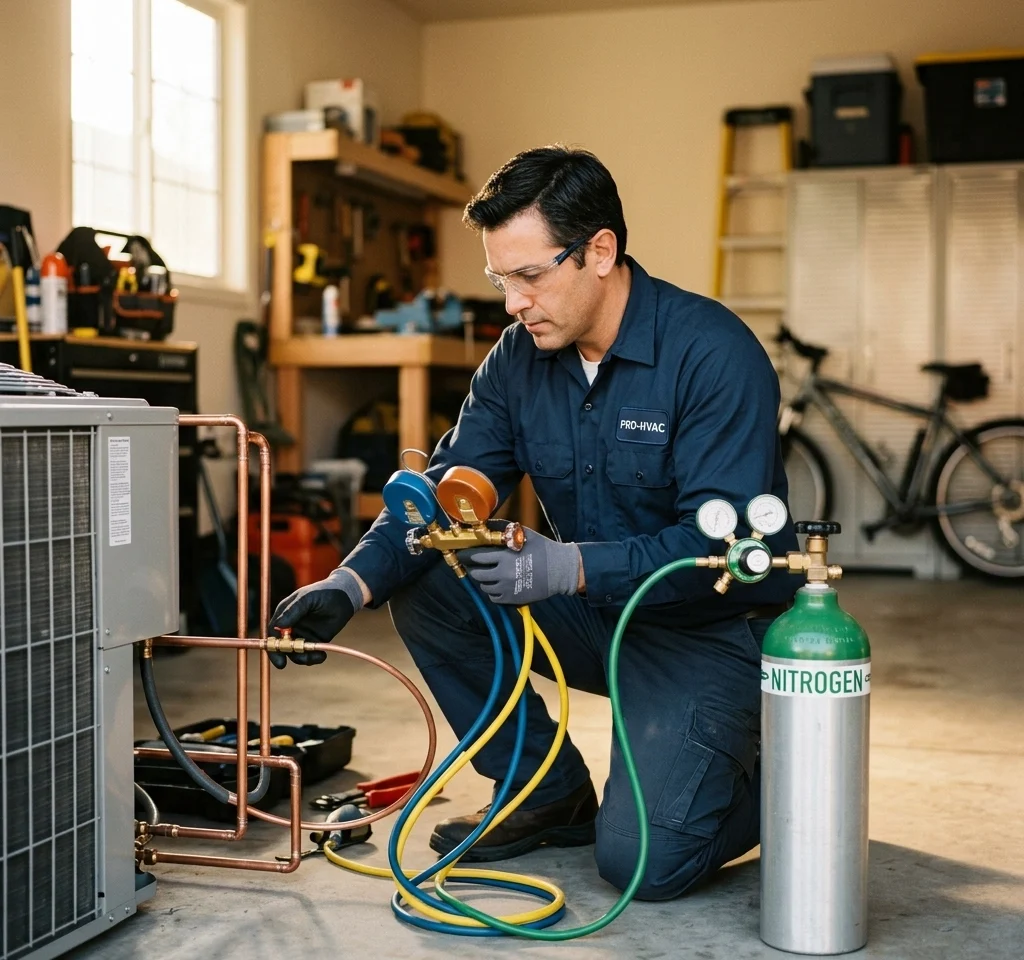
1. Treating the Pressure Test Like a 20-Minute Tea Break
How long do you leave your system under pressure before you decide it’s "leak-free"? If your answer is "about as long as it takes to eat a sandwich," you might be asking for trouble.
A common mistake is holding a pressure test for only 15 or 20 minutes. While this might catch a massive hole in a flare joint, it won’t do a thing for those tiny, "nuisance" leaks that slowly drain a system over six months.
The Fix: For a standard residential split system, you should be looking at a minimum of one hour. If you’re working on larger VRF systems or commercial refrigeration, you should ideally leave it for 24 to 48 hours. Think of it like testing a tyre; a pinprick won't show up in a few seconds, but leave it overnight and the drop is obvious.
2. Brazing Without "The Whisper" (Nitrogen Flow)
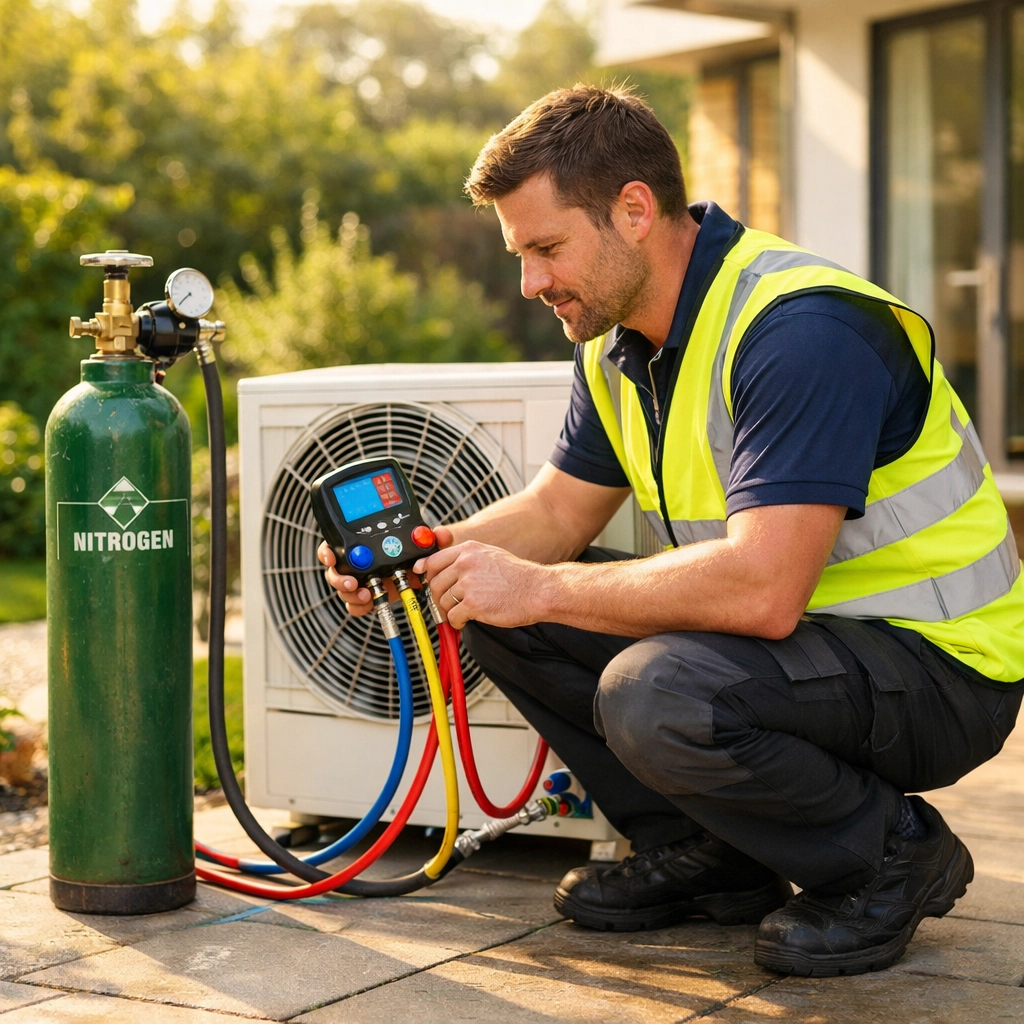
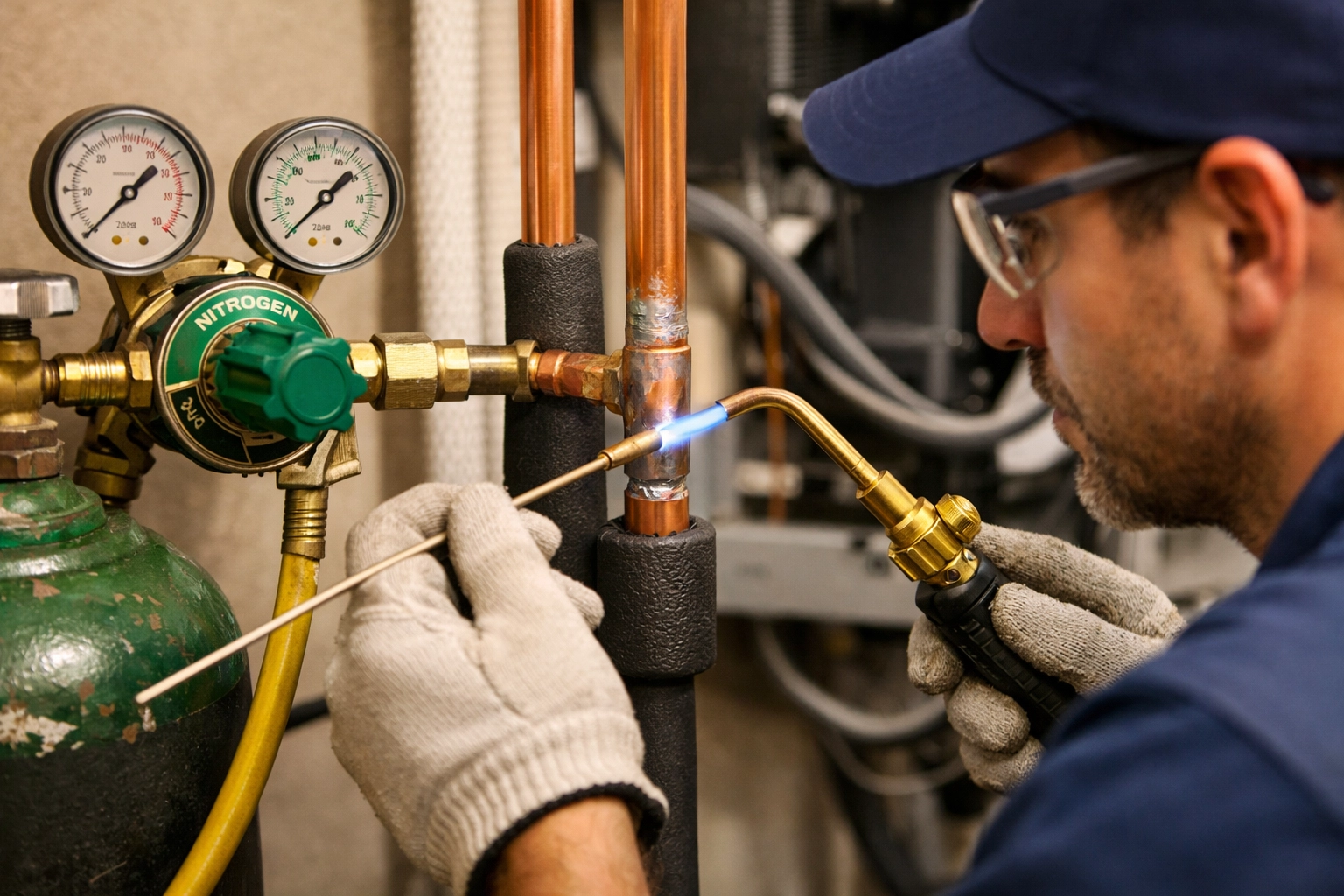
We’ve all seen it: you cut into an old pipe and a shower of black, flaky soot falls out. That’s cupric oxide, and it’s the "cholesterol" of the AC world. This happens when you braze copper pipes without flowing nitrogen through them. The heat reacts with the oxygen inside the pipe, creating that black scale.
Once the system starts running, that scale flakes off and heads straight for your expansion valves (TXVs) or capillary tubes. It’s a leading cause of premature system failure.
The Fix: You don’t need a blast of gas; you just need a "whisper." Flow nitrogen at about 3-5 standard cubic feet per hour (SCFH) while you braze. This displaces the oxygen and keeps the inside of the pipe as clean and shiny as the day it was manufactured. If you need the right gear to control that flow, check out our range of Gas Regulators & Equipment.
3. Cutting Corners with Compressed Air
It’s tempting, isn't it? If the nitrogen bottle is empty and the van is parked three streets away, you might think, "I’ll just use the compressor to check for leaks."
This is arguably the most dangerous mistake on this list. Compressed air is full of moisture. When you pump that into a refrigeration system, you’re introducing the one thing that ruins compressors faster than anything else. Moisture reacts with the refrigerant oil to create acids that eat away at the motor windings from the inside out.
The Fix: Never, ever use compressed air. Always use dry nitrogen. It’s moisture-free and won’t cause internal corrosion. If you're worried about running out mid-job, we offer competitive pricing and nationwide delivery so you can keep a spare bottle on hand without breaking the bank.
4. Forgetting to Purge Before You Flow
So, you’ve got your nitrogen bottle ready for brazing. You hook it up and start heating the joint. But wait, did you purge the lines first?
If there’s moisture or existing air trapped in a long line set, simply starting a low flow might not be enough to clear it out before the heat hits the copper. That trapped moisture can condense and contaminate the system before you've even finished the first joint.
The Fix: Before you start brazing, give the system a quick, high-pressure purge. Remove the valve cores and let the nitrogen blast through for a few seconds. This clears out any "pockets" of moisture or stagnant air, ensuring that when you drop down to your low-flow brazing pressure, the environment inside the pipe is 100% inert.
5. Falling for the "Ghost Leak" (Temperature Fluctuations)
Have you ever left a system at 40 bar, come back an hour later, and seen it’s dropped to 39.5 bar? Your heart sinks. You start spraying soapy water everywhere, but you can’t find a thing.
This is often a "ghost leak" caused by the Ideal Gas Law. If you’ve just filled a system with nitrogen from a bottle that’s been sitting in a hot van, the gas is warm. As it enters the cooler indoor environment of the building, the gas cools down. When gas cools, its pressure drops, even if the system is perfectly sealed.
The Fix: Patience is a virtue. Allow the nitrogen temperature to equalize with the ambient temperature of the room before you take your "start" reading. If you’re doing a 24-hour test, remember that the pressure will naturally fluctuate as the building warms up during the day and cools at night.
6. Ignoring Your Own Equipment (Leaky Hoses)
Sometimes, the leak isn't in the AC system at all, it's in your manifold or your hoses. Worn-out rubber grommets in your charging hoses or a loose fitting on your Nitrogen Regulator (though we link argon here, the principle is the same for all high-pressure regulators) can lead to a slow pressure drop that looks exactly like a system leak.
The Fix: Periodically "leak test" your own tools. Pressurize your manifold and hoses, then isolate them to see if they hold pressure. Replace your hose gaskets regularly. It’s a lot cheaper to replace a £1 rubber washer than it is to spend four hours hunting for a leak that doesn’t exist.
7. Paying Too Much for the Privilege (Rental Fees)
Okay, this isn't a technical mistake, but it’s a business one. Many HVAC engineers are still tied to old-fashioned gas contracts where they pay a monthly rental fee for every bottle sitting in their garage or van. If you have a slow month or the weather stays mild, you’re essentially paying for a piece of metal to gather dust.
The Fix: Switch to a "no recurring rental" model. At Bottle Gases, we believe you should only pay for the gas you use. You buy the bottle, and when it’s empty, you pay for a refill. No monthly bills, no "lost bottle" fees, and no stress. Whether you need Nitrogen, CO2 Bottles, or even MIG Welding Gas for other parts of your business, the "no-rental" approach keeps your overheads low.
Why Nitrogen Matters More Than You Think
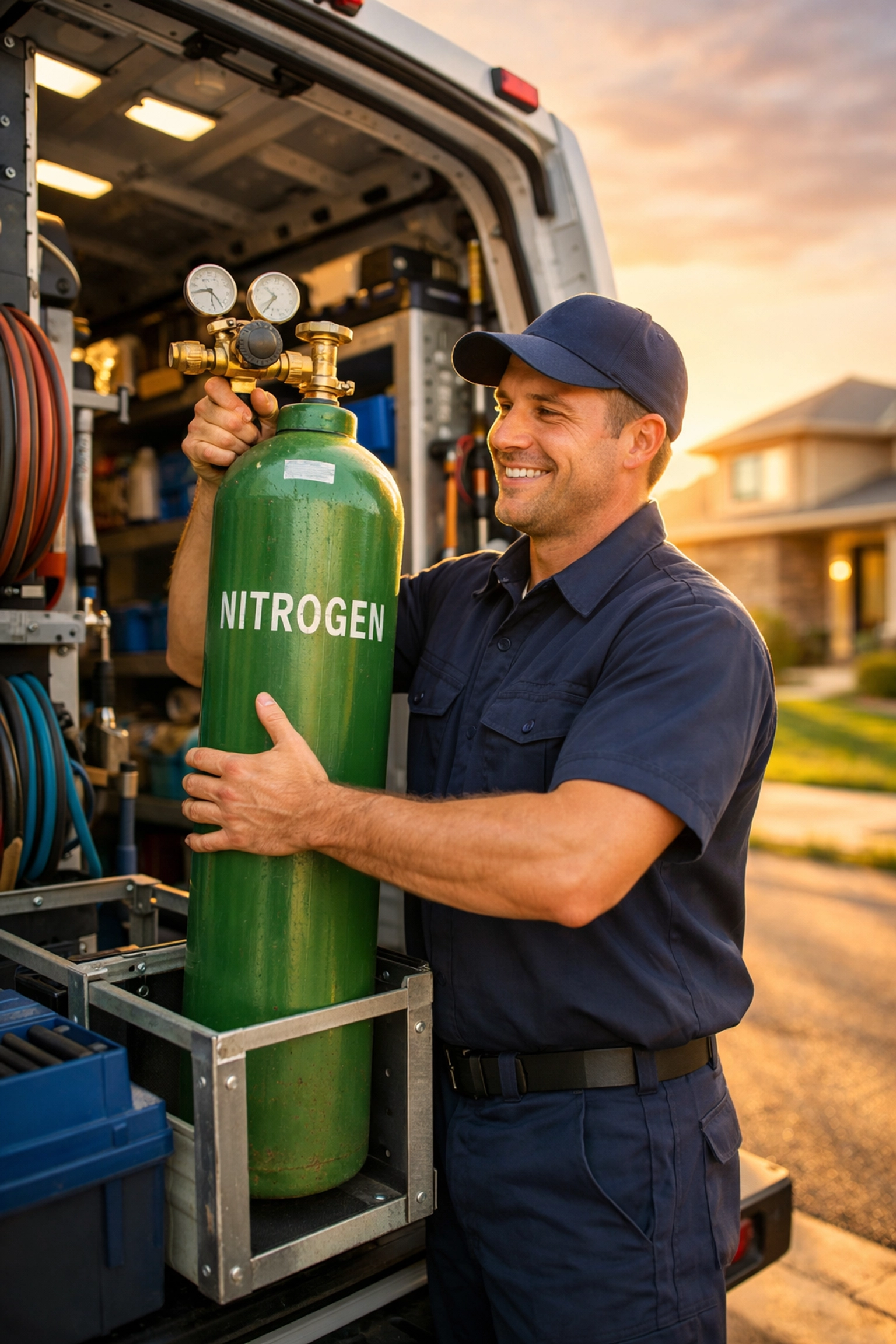
Nitrogen isn't just a tool for finding holes; it's a chemical shield for the delicate internals of an air conditioning system. When you consider that a modern inverter compressor can cost thousands of pounds to replace, spending an extra 10 minutes setting up a proper nitrogen flow during installation is the best insurance policy you can have.
Think of it like car ownership. You wouldn't put dirty oil in a brand-new Ferrari, would you? Using nitrogen correctly ensures that the "veins" of the AC system stay clean, allowing the refrigerant to flow smoothly and the heat exchange to happen efficiently.
Getting the Right Supplies
Whether you are a sole trader or run a fleet of vans, having a reliable Industrial Gas Supplier is key to keeping your jobs on track. From LPG & Calor Gas for your torch to specialized TIG Welding Gas for precision repairs, we’ve got you covered.
Your Checklist for the Next Job:
- Check your grommets: Ensure your hoses aren't the source of your pressure drop.
- Flow, don't just fill: Keep that 3-5 SCFH "whisper" going while the torch is lit.
- Purge first: Clear out the "bad air" before you start.
- Wait for it: Let the pressure stabilize before you start your timer.
- Ditch the rental: Stop paying for bottles you aren't using.
By avoiding these seven mistakes, you'll find your installs are cleaner, your callbacks disappear, and your customers stay happy (and cool!). Nitrogen is a simple tool, but in the hands of a professional who knows the "fixes," it’s the secret to a long-lasting, high-performance HVAC system.
Ready to stock up for the summer rush? Browse our full range of Nitrogen Cylinders and get back to doing what you do best: with the confidence that your installs are built to last.